Best time to post UGC on TikTok, Reels, and Shorts
Platform-specific posting windows for UGC creators. Learn the best time to post UGC on TikTok, Reels, and Shorts to maximize organic performance.

A brand DM'd me last year asking why their UGC video got 200 views when an almost identical piece of content posted two weeks later hit 84,000. Same hook, same creator, same product. The only meaningful difference was when it went live.
Posting time doesn't override bad content. But for UGC delivered to brand accounts — where you're not posting to your own audience and you have zero follower base to lean on — the window you drop content into matters more than most creators realize.
Here's what I've learned across hundreds of UGC deliverables: the "best time to post UGC on TikTok" question has a very different answer when you're posting organic content to a brand's account versus posting to your personal creator profile. And the answer changes again on Reels and Shorts. Let me break it down by platform.
Best time to post UGC on TikTok (for brand accounts)
TikTok's algorithm doesn't care about follower counts the way older platforms do. A brand account with 3,000 followers can go viral if the content catches early momentum. That makes timing both less important and more important than you'd think — less important because reach isn't purely follower-gated, more important because the first 30–60 minutes after posting determine whether the algorithm pushes the video wider.
TikTok's algorithm surfaces UGC for organic reach based on completion rate and early engagement signals. Post at 2am when your target audience is asleep and that initial engagement window is dead before it even starts.
The windows that consistently work:
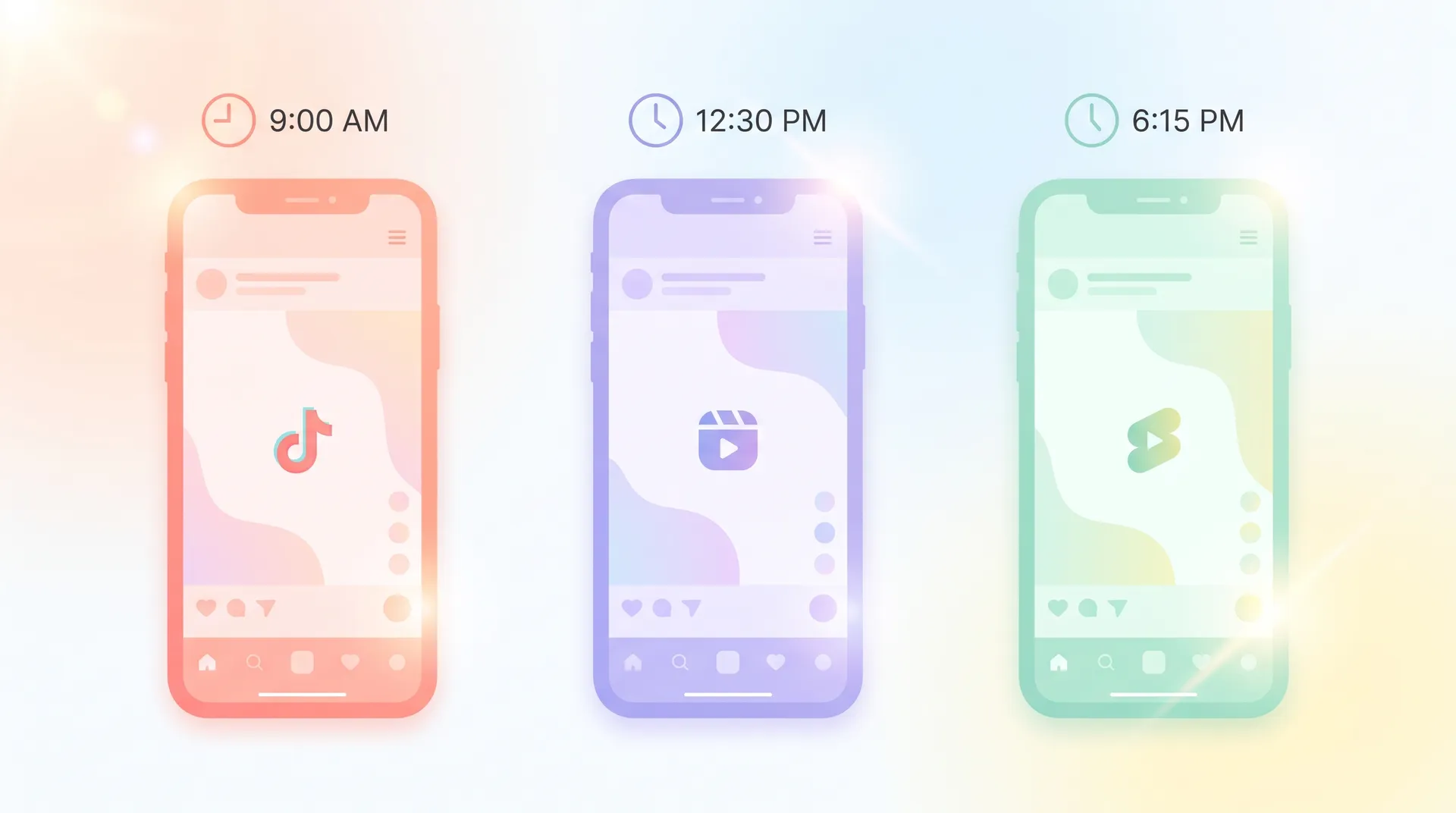
- 6–9am local time (Tuesday–Thursday): Pre-commute scroll is real. People wake up, grab their phone, and spend 15–20 minutes on TikTok before doing anything else. Early-morning posts compete with less content and catch a focused audience.
- 12–2pm (Tuesday–Friday): Lunch breaks are peak scroll time. Engagement is high and the algorithm picks up velocity quickly.
- 7–9pm (any weekday): This is the most competitive window, but also the highest traffic. For brand accounts in lifestyle, beauty, or food, evenings consistently outperform everything else.
For Saturday and Sunday, afternoon posts (2–5pm) tend to outperform morning slots. Weekends skew toward leisure scrolling — longer sessions, more discovery-mode behavior.
One thing most people don't mention: post in the timezone of the brand's core audience, not yours. If you're a creator in London posting for a US-based DTC brand, that 8am post needs to be 8am EST or PST — not GMT. I've seen creators in Europe deliver content posted at times that made zero sense for a North American audience. Coordinate with your brand contact, or at minimum ask what timezone their analytics dashboard is set to.
Pro tip: When delivering organic UGC to a brand account, include your recommended posting window in the deliverable handoff. Brands appreciate it, and it protects your reputation if performance comes in low because they posted at midnight on a Tuesday.
The TikTok UGC complete platform playbook covers the full picture of what makes content perform on TikTok — posting time is just one piece. If you're not already reading that alongside this, start there.
Best time to post UGC on Instagram Reels
Reels is a different beast. Instagram's audience is older on average than TikTok's, and the platform's recommendation engine still gives more weight to account authority than TikTok does. That means a brand account with 50,000 followers posting at the right time will reliably outperform a brand account with 500 followers posting at the same time.
But the timing windows that work are similar in shape:
- 9–11am (Monday, Tuesday, Wednesday): The Instagram audience wakes up a bit later than TikTok's heavy users. Mid-morning consistently wins for Reels reach, especially for brands targeting 25–40 year olds.
- 3–5pm (Monday–Friday): Post-work transition window. People are wrapping up their day and starting to passively scroll. Strong for lifestyle, wellness, and home product UGC.
- 6–8pm (Wednesday and Friday): Evening on mid-week and end-of-week consistently show elevated engagement on Reels. Friday evening in particular is strong for entertainment, food, and consumer products.
Sunday evenings (7–9pm) are underrated for Reels. A lot of brands ignore Sunday entirely. That means less competition in the feed and strong organic reach potential if the content catches.
The critical difference with Reels versus TikTok: Stories activity affects Reels visibility. Accounts that are actively posting Stories and getting views will see their Reels pushed harder by the algorithm. If you're delivering content to a brand account that never touches Stories, their Reels performance will be structurally capped. Worth flagging to your brand contact.
Also — captions and text overlays play a bigger role in Reels than TikTok for discovery. Check out the UGC text overlay guide for TikTok vs. Reels vs. Shorts if you're optimizing the full content package, not just the posting window.
Best time to post UGC on YouTube Shorts
Shorts is the odd one out here, and most UGC creators treat it like a TikTok afterthought. Don't.
YouTube's audience behavior is fundamentally different. People go to YouTube with intent — they're searching, they're in a watching mindset, they're staying longer. Shorts sits inside that ecosystem, which means it benefits from a different set of timing dynamics.
What works for Shorts:
- 2–4pm (Monday–Friday): After-school and early-afternoon hours are Shorts' sweet spot. The platform skews younger on Shorts versus long-form YouTube, and that demographic is scrolling hard in this window.
- 8–11pm (Thursday–Saturday): Evening viewing sessions on YouTube are longer and more dedicated. Shorts that catch momentum in this window get pushed into Shorts feeds that are already active and high-retention.
- Saturday and Sunday all-day: Shorts actually benefits from weekend posting more than TikTok or Reels does. YouTube sessions on weekends are longer, which means more Shorts loops per session, which means more chances for your content to pick up replays.
The Shorts algorithm weights replay rate heavily — how many times someone watches the same Short back-to-back. That's different from TikTok's completion rate focus. If the UGC you're delivering has a strong hook that encourages rewatching (a satisfying reveal, a before/after, a "wait for it" format), post it on Shorts during high-traffic windows and the replay loop can compound your reach fast. For hook strategy that transfers across all three platforms, the TikTok UGC hook examples guide has the best breakdown I've written on this.
Heads up for Shorts specifically: YouTube Shorts analytics has a lag of 24–48 hours versus near-real-time data on TikTok and Instagram. Don't let that fool you into thinking a Shorts video "didn't work" in the first day — performance often reveals itself over 72 hours.
Why posting time matters differently for UGC vs. influencer content
Most "best time to post" guides are written for influencers posting to their own audiences. That doesn't apply to you when you're delivering UGC to a brand account.
When an influencer posts, they're reaching followers who already know them. The algorithm seeds the content to that existing audience first. But a brand account posting UGC organic content has to earn reach from cold audiences through signals like completion rate, shares, and saves — not follower loyalty.
That changes the calculus. Cold-reach content needs to land in a high-traffic window to get the initial engagement signals the algorithm needs to push it further. There's no safety net of loyal followers absorbing the content even in an off-peak hour.
This is also why the TikTok UGC video length decisions you make upstream of posting affect how timing plays out downstream. Short, punchy content (7–15 seconds) tends to survive off-peak posting better because the completion rate is nearly guaranteed. Longer content (45–60 seconds) is more timing-sensitive because you need a quality audience actively watching to hit the completion signal.
And audio matters too. Trending audio on TikTok gets algorithmic boosts regardless of when you post — which can partially offset a suboptimal time window. Read the TikTok sound strategy guide for how to factor audio into your posting decisions.
What to tell brands about posting windows
You deliver the content. The brand posts it. That gap is where a lot of UGC performance gets wasted.
I now include a simple note in every deliverable: recommended posting window, platform, and timezone. Something like: "Best performance window: Tuesday–Thursday, 7–9pm EST on TikTok. Avoid Mondays and weekends for this content type."
Most brands genuinely don't know this. Their social media manager might be scheduling content based on their own convenience rather than audience data. Your guidance is value-add — and it protects you from getting blamed for a video that underperformed because it was posted at 6am on a Sunday.
Frame it as part of your professional service. It's one of those things that separates UGC creators who get repeat campaigns from those who get one-and-done deals.
Frequently Asked Questions
What is the best time to post UGC on TikTok for a brand account?
Does posting time matter for UGC content on a brand account with few followers?
What's the best time to post Reels for organic UGC content?
Is the best time to post on YouTube Shorts different from TikTok?
Should I tell the brand when to post my UGC content?
Does the time zone of the creator affect when UGC should be posted?
Related reading
- TikTok UGC: the complete platform playbook for creators
- How TikTok's algorithm surfaces UGC for organic reach
- TikTok vs. Reels vs. Shorts: UGC differences on each platform
- TikTok UGC video length: what actually performs in 2025
- TikTok sound strategy for UGC: trending vs. original audio
- UGC text overlay guide: TikTok vs. Reels vs. Shorts
- TikTok UGC hook examples: nail the first 3 seconds
External sources: