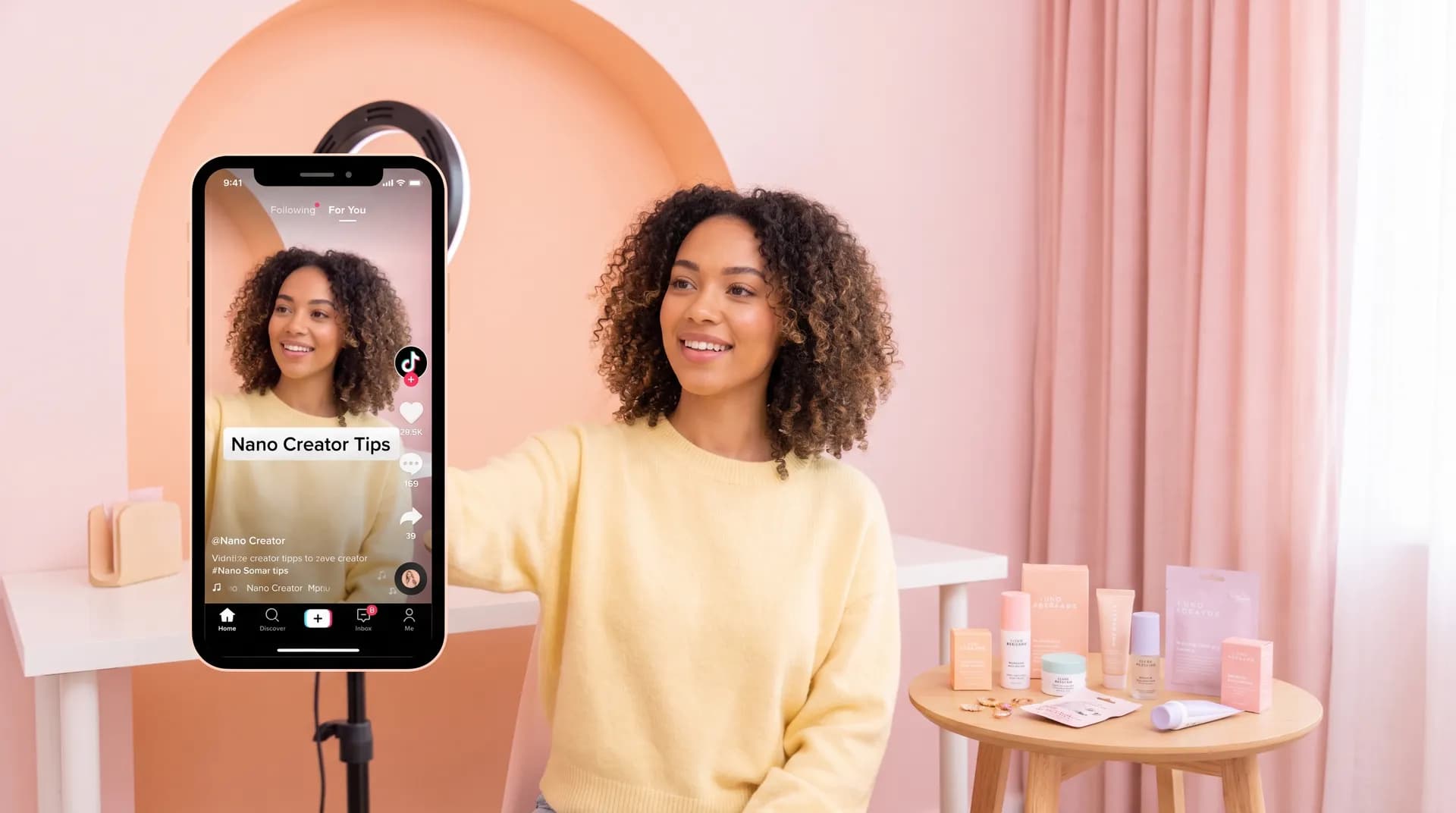
TikTok influencer marketing: how nano creators win brand deals
Nano creators with 1k–10k TikTok followers are closing real brand deals. Here's exactly how they use engagement rates and niche content to make it happen.

A creator I spoke to recently had 3,200 TikTok followers. She closed a $600 paid brand deal last month. Not a gifting collab. Not a "exposure" arrangement. Actual money, wired to her account, for two sponsored videos.
That's not an anomaly anymore. TikTok influencer marketing has quietly shifted in a direction most people haven't caught up to yet — and nano creators are sitting right at the intersection of where that shift is landing.
Why TikTok influencer marketing rewards nano creators specifically
Brands spent years chasing follower counts. A million followers meant a million potential eyeballs, and the logic held up — until it didn't.
TikTok broke the old model. The algorithm doesn't care how many followers you have. A video from a 2,000-follower account can reach 500,000 people if the content connects. That's genuinely different from Instagram or YouTube, where your follower base is essentially your ceiling.
But here's the part that actually matters for brand deals: TikTok nano creators (roughly 1k–10k followers) consistently post engagement rates between 5% and 10%. Compare that to mega-influencers, who average closer to 1–2% on TikTok. When a brand is paying for conversions, not vanity metrics, that gap is enormous.
Smart brands know this. That's why, as I covered in our breakdown of why brands choose micro & nano social media influencers, the budget allocation is genuinely moving down-funnel toward smaller accounts. It's not charity — it's math.
TikTok accelerates that trend because the platform actively surfaces niche content to niche audiences. A nano creator posting about low-waste kitchen swaps isn't just reaching her 4k followers — she's reaching everyone TikTok decides cares about low-waste kitchens. That audience self-selection is gold for brands selling in that space.
What actually makes brands pay a nano creator
Follower count gets you in the room. What closes the deal is everything else.
A defined niche with real depth. Generalist accounts are a harder sell, even at 50k followers. A creator posting specifically about budget home gym setups, or realistic travel on a teacher's salary, or curly hair care for type 4C — those accounts have an audience that trusts their opinions in a specific context. That trust converts.
Engagement that holds up under scrutiny. Brands worth working with will look at your last 10–15 videos before they reach out. They're checking if people comment with real sentences, if anyone saves or shares, if views are consistent or wildly spiky (which can signal a bought boost). Know your numbers before you pitch. A 7% engagement rate on 3,000 followers is a legitimate selling point — lead with it.
Content that already looks like branded content. This one's underrated. If your TikTok feed is chaotic, poorly lit, and inconsistent in tone, a brand has to imagine what a partnership could look like. Make that imagination unnecessary. Post content that demonstrates you already know how to integrate a product naturally. A skincare brand is looking at whether you can make a "routine" video feel authentic, not performative.
A media kit that doesn't look homemade. This matters more than most creators think. If a brand's marketing manager forwards your pitch to their CMO, that document represents you. We've written about how to build a UGC rate card that wins brand deals — same principle applies here. Clean, specific, and professional.
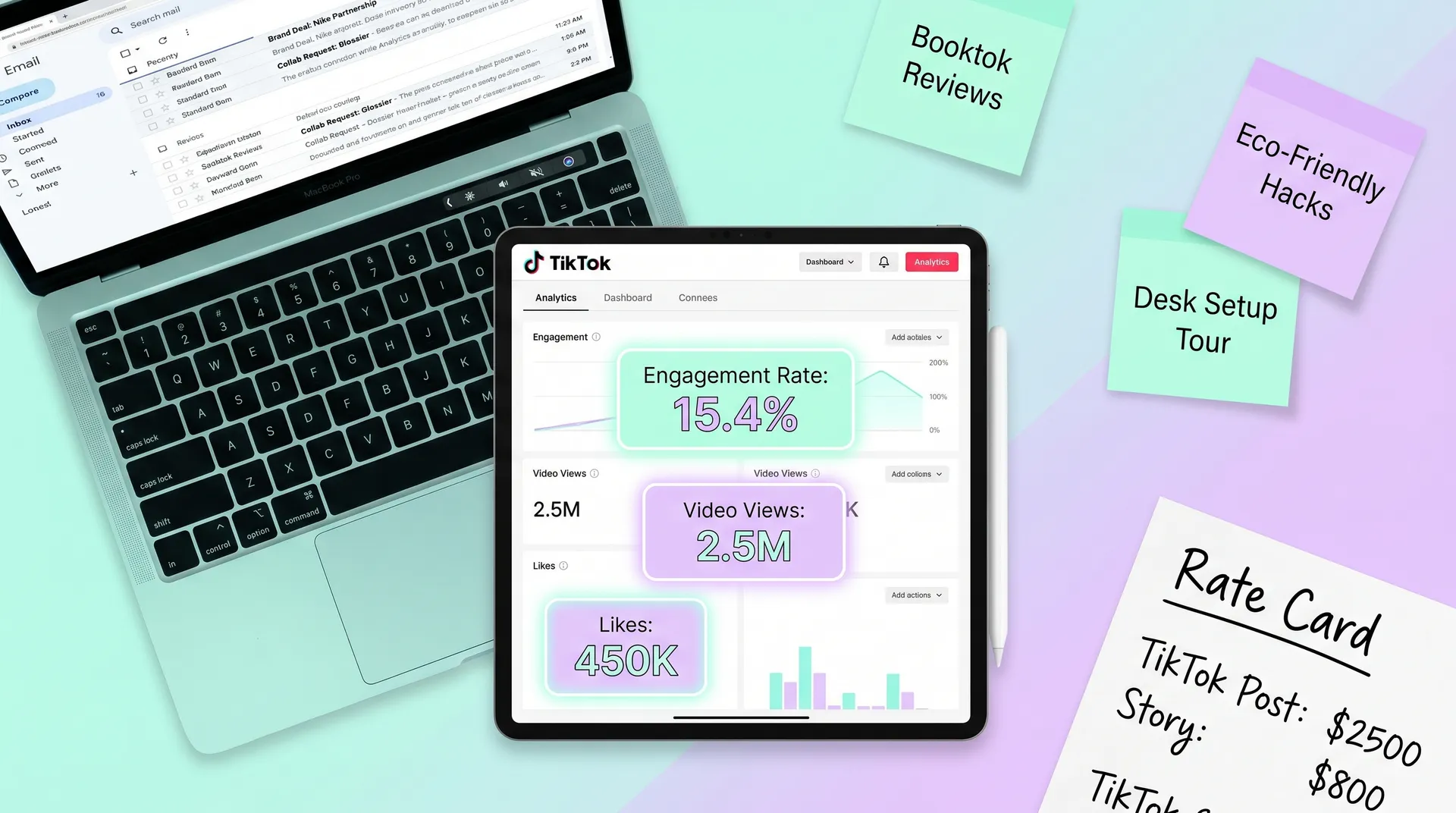
Your engagement rate is your negotiating leverage on TikTok. Before pitching any brand, calculate it properly: total engagements (likes + comments + shares + saves) ÷ total views, averaged across your last 15 posts. Anything above 4% is legitimately strong.
The mechanics of landing your first TikTok brand deal with a small account
There's no single path, but there are approaches that work consistently.
Inbound through TikTok Creator Marketplace. TikTok's Creator Marketplace lets brands search for creators by niche, engagement rate, and audience demographics. You can join with a relatively modest following. Fill your profile completely, connect your analytics, and set realistic rates. Brands actively browse here looking for exactly what nano creators offer — authentic niche reach at a reasonable price point.
Cold outreach that doesn't feel cold. Most brand deal emails from small creators are generic and forgettable. Don't lead with your follower count. Lead with a specific video you've already made that relates to their product, your engagement rate in that content category, and one concrete idea for a collaboration. Two sentences about why you fit them beats three paragraphs about yourself every time.
Organic brand mentions as a warm intro. If there's a brand you genuinely use and would naturally talk about, post about it unprompted. Tag them. Show them what a partnership already looks like before there's a contract. Some of the best brand deals I've seen come from brands reaching out after an organic mention performed well — because it removes all the guesswork about fit.
Creator platforms that connect brands to small accounts. Beyond TikTok's native marketplace, platforms like Collabstr and Billo actively list nano creators and have brand budgets explicitly set aside for smaller accounts. These aren't the $10,000 deals — but $150–$400 per video while you're building your profile is real money, and real experience.
The broader strategy here isn't that different from what I outlined in our micro influencer marketing guide, but TikTok has its own specific mechanics — the Creator Marketplace access requirements, the way the algorithm amplifies niche content, and the expectation that sponsored content still feels native to the platform. Those details matter.
Pricing: what nano creators can realistically charge on TikTok
Don't undercharge because you feel like you "only" have a small following.
A useful starting benchmark: $10–$25 per 1,000 followers for a single in-feed TikTok, plus an engagement multiplier if your rate is meaningfully above average. So a creator with 5,000 followers and a 7% engagement rate isn't pricing at $50 — she's pricing at $75–$150, depending on niche, usage rights, and whether the brand gets to use the video as a paid ad.
That last point — usage rights and licensing — is where a lot of nano creators leave money behind. If a brand wants to run your TikTok as a Spark Ad, that's an additional fee. Standard practice is 20–30% on top of your creation rate per 30-day usage window. Know this before the conversation, not during it.
For creators who want to understand the full rate structure across different deal types, our breakdown of how to become a content creator and get paid with a small following covers the pricing logic in more depth.
Never accept "exposure" as payment after you've crossed 1,000 followers on TikTok with a clear niche. Your engagement data is real business value. Price accordingly.
What separates nano creators who keep getting deals from those who don't
Repeatability.
One brand deal is luck or timing. Consistent brand deals come from being easy to work with, delivering what you said you would, and making the brand look good enough that the person who hired you wants to show their boss.
That means hitting deadlines. Providing multiple takes. Not arguing about minor creative notes (save the line in the sand for things that genuinely compromise your integrity). And proactively sending performance stats two weeks after the video goes live — because that follow-up is how a one-off becomes a retainer.
The creators I see scaling from nano into mid-tier on TikTok aren't necessarily the most talented. They're the most professional. Brands talk to each other. A good reputation in your niche travels faster than any follower count growth.
This is the same path that brand ambassador roles are built on — long-term relationships that start with one clean, professional delivery.
Frequently Asked Questions
How many TikTok followers do you need for brand deals?
What is a good engagement rate for TikTok influencer marketing?
How do TikTok nano creators find brand deals?
How much should a nano creator charge for a TikTok brand deal?
Does TikTok Creator Marketplace work for small accounts?
What niche performs best for TikTok influencer marketing?
Related reading
- Micro influencer marketing: the complete 2026 guide
- Why brands choose micro & nano social media influencers
- Brand ambassador roles: how nano creators can land them
- How to become a content creator and get paid (small following)
- Instagram influencer marketing: how small accounts land paid posts
- How to build a UGC rate card that wins brand deals
- Why brands are shifting budgets from influencers to UGC creators