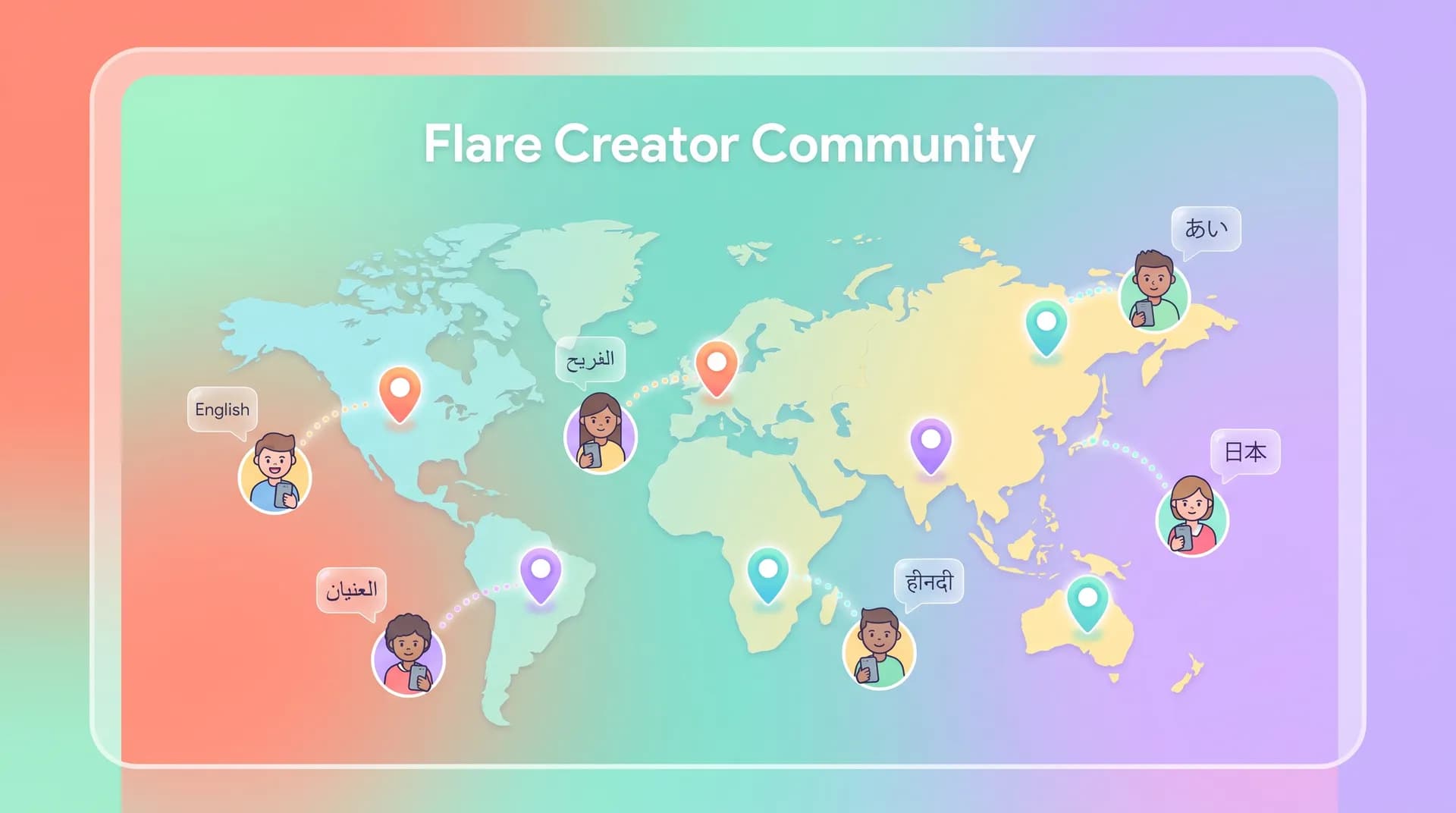
Local Creator Recruitment App Marketing: Vet for Fluency
Local creator recruitment app marketing done right means vetting for cultural fluency and platform habits, not just a passing grade in language.

I once watched a brand burn through $40,000 in creator fees for a Brazil launch, only to find out every single video sounded like it was written by someone translating from English in their head. Technically correct Portuguese. Zero cultural pulse. The campaign flopped so hard the local team asked if they could just run the US ads with subtitles instead.
That's the trap most teams fall into with local creator recruitment app marketing: they hire for language and call it a day. Fluency isn't the bar. Fluency is the floor.
Why local creator recruitment app marketing can't stop at language skills
Here's the uncomfortable truth — anyone can pass a language screen. Duolingo-level Spanish gets you through a casting call. It doesn't get you a creator who knows that in Mexico City, a joke that lands on Reels might die on WhatsApp Status, or that Gen Z in São Paulo has completely different slang than Gen Z in Lisbon despite sharing a language.
I've hired creators who spoke flawless, grammatically pristine German and still produced content that felt like a corporate memo. Why? Because they'd been living outside Germany for eight years and had lost touch with how people actually talk now. Language skill and cultural currency decay at different rates. You need both, tested separately.
If you're earlier in the process and still picking where to launch, go read our piece on app localization market selection first. Recruitment only works once you know the market you're actually recruiting for.
The real cost of a language-only hire
A creator who nails the words but misses the tone doesn't just underperform — they can actively damage trust. Local audiences spot an outsider fast. One awkward idiom, one reference that doesn't land, and the comment section turns into a pile-on. I've seen a single tone-deaf video tank engagement on an entire campaign because local users assumed the brand didn't care enough to get it right.
This is the same mistake brands make skipping the basics covered in our app localization readiness checklist — rushing content out before anyone checked if it actually fits the market.
What cultural fluency actually looks like in practice
Cultural fluency isn't a vibe you guess at. It's specific, testable behavior. Here's what I look for before I ever sign a creator for a new market.
They reference things only locals would know. Ask a candidate to pitch three video concepts off the top of their head. A culturally fluent creator brings up a local meme, a regional holiday, a brand everyone in that country complains about. Someone who's just translating for a paycheck gives you generic concepts that could run anywhere.
They know what's considered cringe, not just what's correct. Every market has its own version of "trying too hard." In Japan, overly loud American-style enthusiasm reads as fake. In Brazil, being too formal reads as cold. A creator who's actually embedded in the culture will flag this before you ask.
They understand local humor and sarcasm. This one trips up even strong translators. Sarcasm rarely survives direct translation, and timing for comedic beats shifts by region. I test this by giving candidates a script with a joke built in and asking them to localize it, not translate it. The good ones rewrite the joke entirely. The weak ones just swap words.
They have opinions about competitors in-market. If a creator can't tell me which local apps users compare yours to, or which ones they've personally tried, that's a red flag. Real embeddedness means they've actually used the competitive set, not just heard of it.
Build a short "local knowledge quiz" into your application form — three or four questions about current slang, trending local content, or a recent cultural moment. You'll filter out 60-70% of language-only applicants before you even get on a call.
Platform habits matter as much as culture
This is the part teams skip most often. A creator can be deeply culturally fluent and still be useless if they don't understand how people in that market actually use social platforms.
TikTok in Indonesia behaves differently than TikTok in the US. Shoppable content and live selling dominate in Southeast Asia in a way that barely registers in North America. Meanwhile, in Germany and parts of Western Europe, users are more skeptical of overt selling and respond better to understated, almost documentary-style content. In South Korea, short-form beauty and tech content leans heavily on dense on-screen text and fast cuts — pacing that would feel frantic to a US audience.
Posting times, caption conventions, hashtag culture — all of it shifts by market too. A creator who's genuinely active in that region will already know the local posting rhythm. One who isn't will default to whatever worked for them somewhere else.
Ask every candidate: "What app do you personally spend the most time on, and what's trending on it right now in your country?" If they can't answer specifically, they're not embedded in the local platform ecosystem — they're just a vendor with a passport.
Building a vetting process that actually catches this
Most brands run creator vetting like a resume screen: check portfolio, check follower count, check language, done. That process catches almost none of what actually determines whether a creator will work in a new market.
Here's the structure I use instead:
- Portfolio review for local content, not global content. Don't just look at view counts. Look for whether their existing work is in-language, in-culture, and clearly made for that specific audience rather than repurposed from elsewhere.
- A localization test, not a translation test. Give them a short brief in English and ask them to adapt it, not translate it. Watch what they change. The changes tell you everything.
- A platform-specific question. Ask about current trends on the exact platform you're targeting, in their exact country. Vague answers mean they're not currently active there.
- A live, unscripted call. Fifteen minutes of casual conversation in-language reveals more about fluency and cultural fit than any written test. Listen for natural idiom use, current slang, and whether they laugh at the right moments.
- A small paid pilot before a full contract. One video, modest budget, real feedback loop. This is cheaper than finding out three months in that the fit was wrong.
Don't skip the paid pilot to save time. I've seen brands commit to six-month retainers based on a great interview alone, only to discover the creator's actual output doesn't match how they talk about their work.
This kind of process is exactly why we built Flare — matching brands with creators shouldn't mean guessing based on a portfolio and a follower count. You want a system that actually surfaces the right fit before money changes hands, not after.
Where to find creators who are genuinely local, not just located there
A lot of international "local" creator rosters are full of expats and digital nomads who happen to be physically in-country. That's not the same as being culturally embedded. Expats can be great creators, but they're often months or years behind current slang and trends, especially if they're not consuming local media daily.
Look for creators who:
- Post in the local language as their primary content, not as a secondary market
- Have an audience that's majority local, which you can usually confirm through basic audience demographics
- Reference current local events, shows, or creators unprompted
- Have been active in-market for at least a year, ideally longer
Local creator networks, in-country agencies, and platform-specific creator marketplaces tend to surface better matches than global UGC platforms that just filter by country flag. If you're running this at scale across multiple markets, it's worth reading our broader guide on app localization for international creator campaigns — it covers how recruitment fits into the full localization pipeline, not just the creator-sourcing piece.
The interview questions I actually use
Skip "tell me about your experience." Ask these instead:
- "What's a recent local trend you jumped on, and why did it work?"
- "What's something brands from outside this country always get wrong?"
- "If I asked you to make this script funnier for your audience, what would you change first?"
- "What's the one app feature or UI pattern users in your country expect that might surprise someone from abroad?"
Notice none of these are language tests. They're all about judgment, instinct, and lived experience in the market. That's what you're actually buying when you pay a premium for a "local" creator.
A quick note on budget expectations
Culturally fluent, platform-savvy local creators often cost more than bilingual freelancers who just translate scripts. Pay the premium. A campaign built on three expensive, genuinely local creators will outperform one built on ten cheap, technically-fluent ones almost every time. I've run both versions of this experiment and the cost-per-quality-engagement math isn't close.