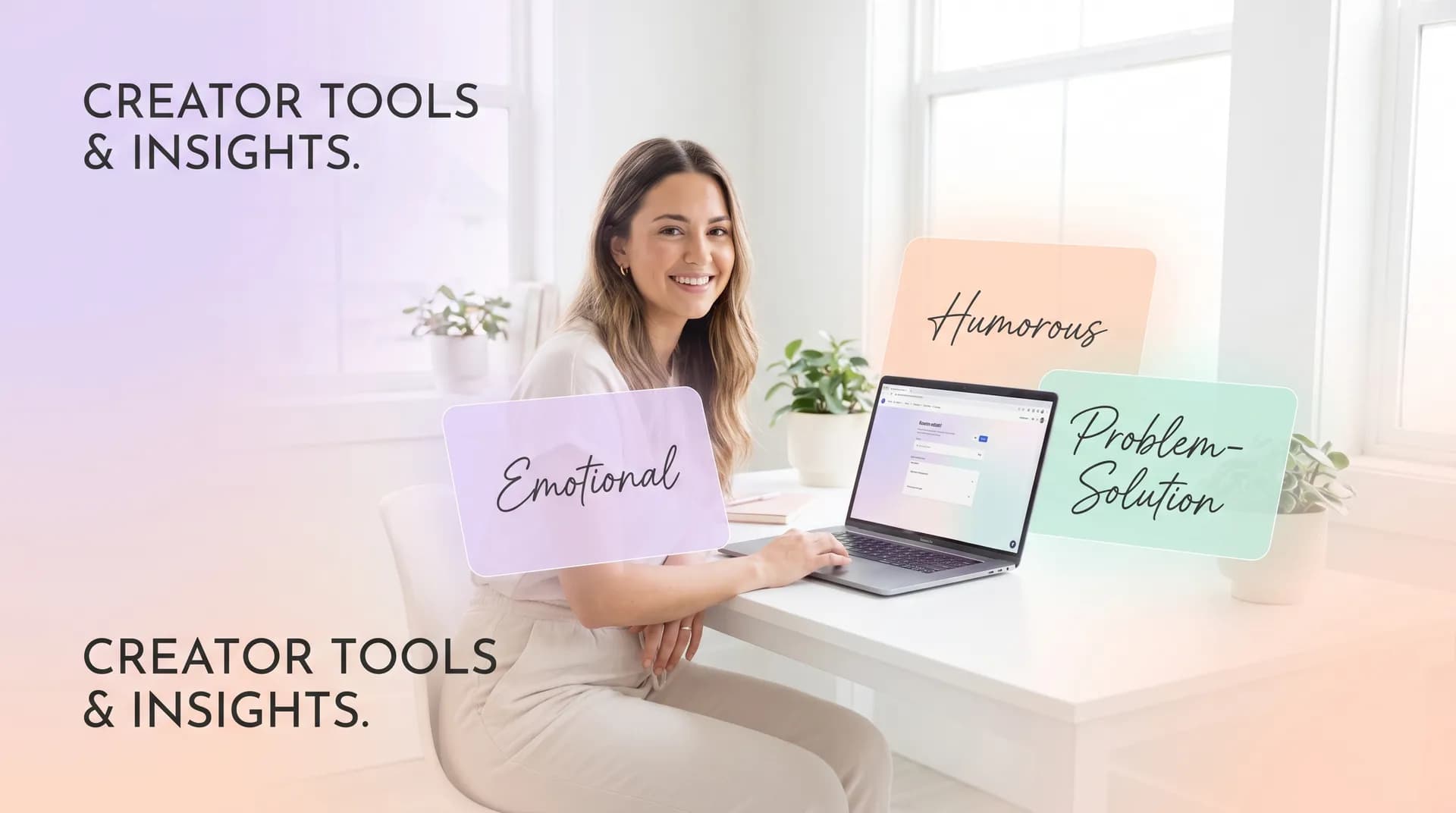
How to use AI to create UGC script variations for split testing
Learn how UGC creators can use AI to rewrite scripts across emotional, humorous, and problem-solution angles — giving brands more ad-testing ammunition.

Most UGC creators hand a brand one script and call it done. That's leaving serious money — and serious repeat work — on the table.
The brands running performance ads at any real scale aren't just hoping their one creative works. They're testing five, ten, sometimes twenty variations against each other to find the angle that converts. They need different emotional tones, different openers, different narrative structures. And they need them from you, the creator they already trust to deliver authentic-feeling content.
Here's the problem: writing three or four full script variations from scratch is brutal. Especially when you're juggling multiple campaigns. This is where knowing how to generate solid UGC creator AI script variations changes everything about what you can offer brands.
I've been deep in this workflow at Flare, watching creators go from delivering single scripts to packaging five-variation sets — and charging accordingly. Here's exactly how it works.
Why UGC creator ai script variations matter to brands right now
Brands have been shifting serious budget toward UGC because performance marketers have figured out that authentic creator content outperforms polished studio ads on Meta and TikTok. But there's a follow-on problem they run into fast: creative fatigue.
An ad that works brilliantly in week one can be exhausted by week three. The algorithm has shown it to the same people too many times. The solution isn't spending more money — it's having fresh angles ready to rotate in.
That's why the best-performing DTC brands aren't asking for one good UGC video. They're asking for one concept executed across multiple emotional angles. They want to find out if their customer responds more to a transformation story, a relatable problem moment, or a straight-up funny take. The only way to know is to test.
When you can deliver that variation set yourself — rather than making the brand write separate briefs and hire different creators for each angle — you become dramatically more valuable. You're not just a content producer. You're their creative testing partner.
The four script angles worth testing every time
Before you touch any AI tool, you need a framework. I see creators throw prompts at ChatGPT with no structure and wonder why they get watery, generic output. The issue isn't the tool. It's not knowing what you're asking for.
These are the four angles that produce meaningfully different creative — not just the same script with a few adjectives swapped:
1. Problem-agitation-solution (PAS) Opens on a pain point the target customer feels viscerally. Agitates it. Then presents the product as the obvious fix. This is the workhorse. It converts reliably and it's what most brands default to — which also means it's worth testing against the others to see if something fresher beats it.
2. Emotional/transformation No problem framing at all. Opens on a feeling or a life moment. The product is woven into a personal story. Works especially well for beauty, wellness, lifestyle, and anything where identity is part of the purchase decision.
3. Curiosity/pattern interrupt A weird opener that makes the viewer stop scrolling to figure out what's happening. Could be a bold claim, an unexpected visual cue in the script, or a non-sequitur that pays off by the end. High risk, high reward. Brands love having one of these in the test set because when it hits, it really hits.
4. Humour/relatability Self-aware, light, doesn't take itself seriously. Often structured around a joke setup or an exaggerated version of a real situation. This is the hardest to fake with AI — the output needs real editorial judgement from you — but it's worth including.
One master script. Four angles. Same product, same CTA, completely different emotional experience.
How to actually prompt AI to generate the variations
The quality of your prompt is everything. Vague instructions produce vague scripts. Here's the structure I use and teach:
Step 1: Feed it your master script first
Paste your approved base script into ChatGPT (GPT-4o works fine, Claude Sonnet is also excellent for this). Then add explicit context:
- Product name and category
- Target customer (be specific: "25–35 year old women dealing with hormonal acne", not "women who want clear skin")
- The CTA you can't change
- Any brand-mandated claims or phrases that must stay in
- Platform and format (15s vs 30s, TikTok vs Meta feed)
Step 2: Use the angle framework in your prompt
Don't just say "rewrite this four ways." Say exactly what you want each version to do:
"Rewrite this script as four distinct variations. Version 1: Keep the problem-solution structure but sharpen the pain point in the first sentence. Version 2: Rewrite as an emotional transformation story — remove the problem framing entirely and open on a life moment. Version 3: Open with an unexpected or pattern-interrupt statement that creates curiosity before revealing the product. Version 4: Rewrite in a humorous, self-aware tone with a light joke setup in the first line. Keep the CTA identical across all four."
That prompt takes 45 seconds to write and gets you usable output in under a minute.
Step 3: Edit for your voice
This is non-negotiable. AI-generated scripts sound like AI-generated scripts until you work them over. Read each one out loud. If you'd never say a line that way naturally, change it. The brand is hiring you partly because they want your delivery to feel real — and that starts with the words sounding like something a real person would actually say.
If you want a deeper look at the full range of tools available, I wrote about this in the Best AI tools for UGC creators in 2026 guide — it covers everything from script generators to video editors in one place.
For the hook specifically, the first 2–3 seconds of each variation need individual attention. Swapping the angle but keeping the same opener defeats the purpose. Check out how to use AI hook generators to generate opening lines that match each angle's emotional register before you lock the scripts in.
A quick workflow win: after generating your four variations, run a "sanity check" prompt — paste all four back into the chat and ask the AI to flag any lines that sound identical across versions. It'll catch lazy overlap you might miss on a quick read.
How to package and pitch variation sets to brands
The output is only half the equation. How you present it determines whether the brand sees this as a bonus or as something they should be paying extra for. Spoiler: it's the latter.
When I talk to creators who've started packaging variation sets, the ones who charge more for them aren't doing any more filming. They're just delivering the scripts as a structured testing package with a clear explanation of what each angle is designed to test. A simple one-page breakdown alongside the scripts — what angle each version uses, what hypothesis it's testing, what metric would indicate a winner — is the difference between a $300 deliverable and a $600 one.
You can also use this to unlock retainer conversations. If you're already delivering variation sets, you're already functioning as a creative strategist. That's retainer territory. Brands that are running ads month-over-month need new creative constantly, and a creator who understands why they're testing different angles is someone worth keeping on contract.
The AI writing tools for UGC scripts post has a good breakdown of which tools handle multiple output variations best if you want to compare options beyond ChatGPT. And if you're building out a broader offer, how to repurpose UGC video content across platforms is worth reading — the same variation logic applies when you're adapting content for TikTok vs. Meta vs. YouTube Shorts.
The mistake that kills good variation sets
Delivering variations that are structurally different but sound identical in execution.
If your emotional version and your problem-solution version have the same energy when read aloud — same pacing, same word choices, same level of formality — then you haven't actually given the brand anything to test against. You've given them the same ad with a slightly different first sentence.
Real variation means different sentence rhythm. Different emotional temperature. The humorous version should feel noticeably lighter. The transformation version should have slower pacing and more sensory language. The curiosity hook should feel slightly jarring at first. If you can't feel the difference when you read them out loud, neither can the viewer — and neither will the algorithm.
That's also where great UGC hooks earn their value. The first three seconds set the emotional contract with the viewer. Nail that differently across each variation and the rest follows naturally.
Pro tip: Record yourself reading each variation as a voice memo before filming. If they don't sound different to your own ear, go back and push the tone further. Brands testing ads need real contrast — not subtle rewordings.
What to charge for variation packages
This comes up constantly and there's no single right answer, but here's a reasonable framework.
If your standard single-video rate is $250–$400, a four-variation package should land somewhere between $700–$1,200 depending on your niche and the brand's ad spend. You're not charging four times the single-video rate because the filming is the same — but you are charging significantly more than one video because the scripting work, the strategic packaging, and the value delivered (a ready-to-run A/B test) are all substantially higher.
Some creators on Flare have started listing "UGC Creative Testing Package" as a named line item in their rate cards rather than bundling it ad hoc. The named package signals expertise and makes the upsell feel like a product, not an improvised addition. If you haven't built this into your rate card yet, here's how to structure it properly.
Performance marketers at mid-sized DTC brands spend thousands per month on ad creative. A $900 testing package from a creator who delivers structured, testable variations is an easy yes compared to spending $2,000 on a studio shoot for one polished video they're not allowed to test.
Frequently Asked Questions
What are UGC script variations?
How many script variations should I offer brands?
Can I use ChatGPT to write UGC script variations?
Should I charge extra for delivering script variations?
What makes a good UGC script variation — isn't it just rewording?
Which AI tools are best for generating UGC script variations?
Related reading
- Best AI tools for UGC creators in 2026 (full guide)
- How to use AI writing tools for UGC scripts faster
- Best AI hook generators for UGC creators (+ how to test them)
- ChatGPT prompts every UGC creator should use in 2026
- How to repurpose UGC video content for every platform
- How to build a UGC rate card that wins brand deals