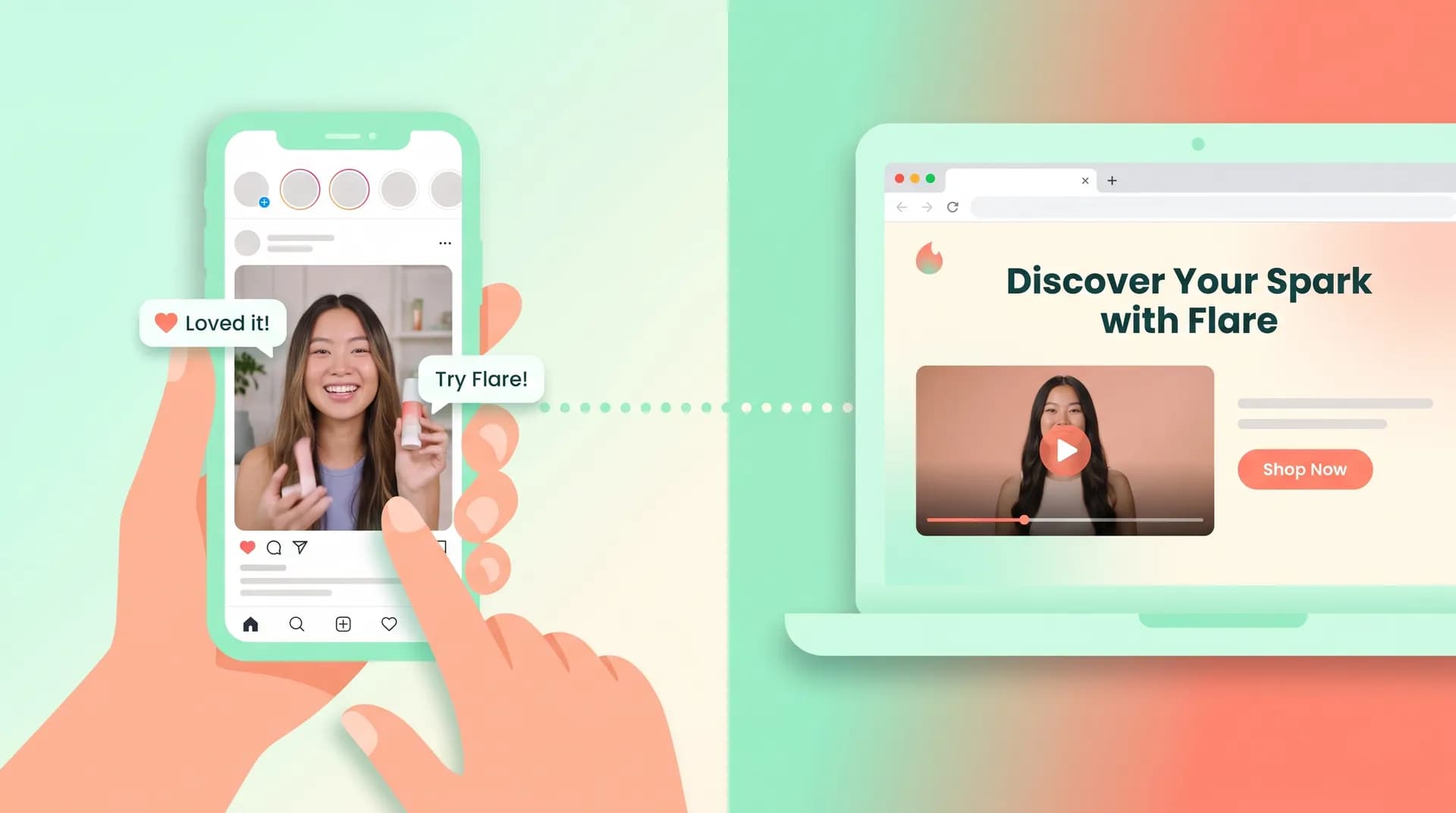
Message Match: Why Your SaaS Landing Page Examples Fail
See why the best saas landing page examples mirror the creator ad's exact promise in headline and video — and how mismatch kills your conversion rate.

I watched a SaaS client burn $40k on a creator ad campaign that should've been a slam dunk. The hook was perfect. The creator was likable. The watch-through rate on TikTok was north of 65%. And conversion on the landing page? 0.8%. Lower than their cold display ads from two years prior.
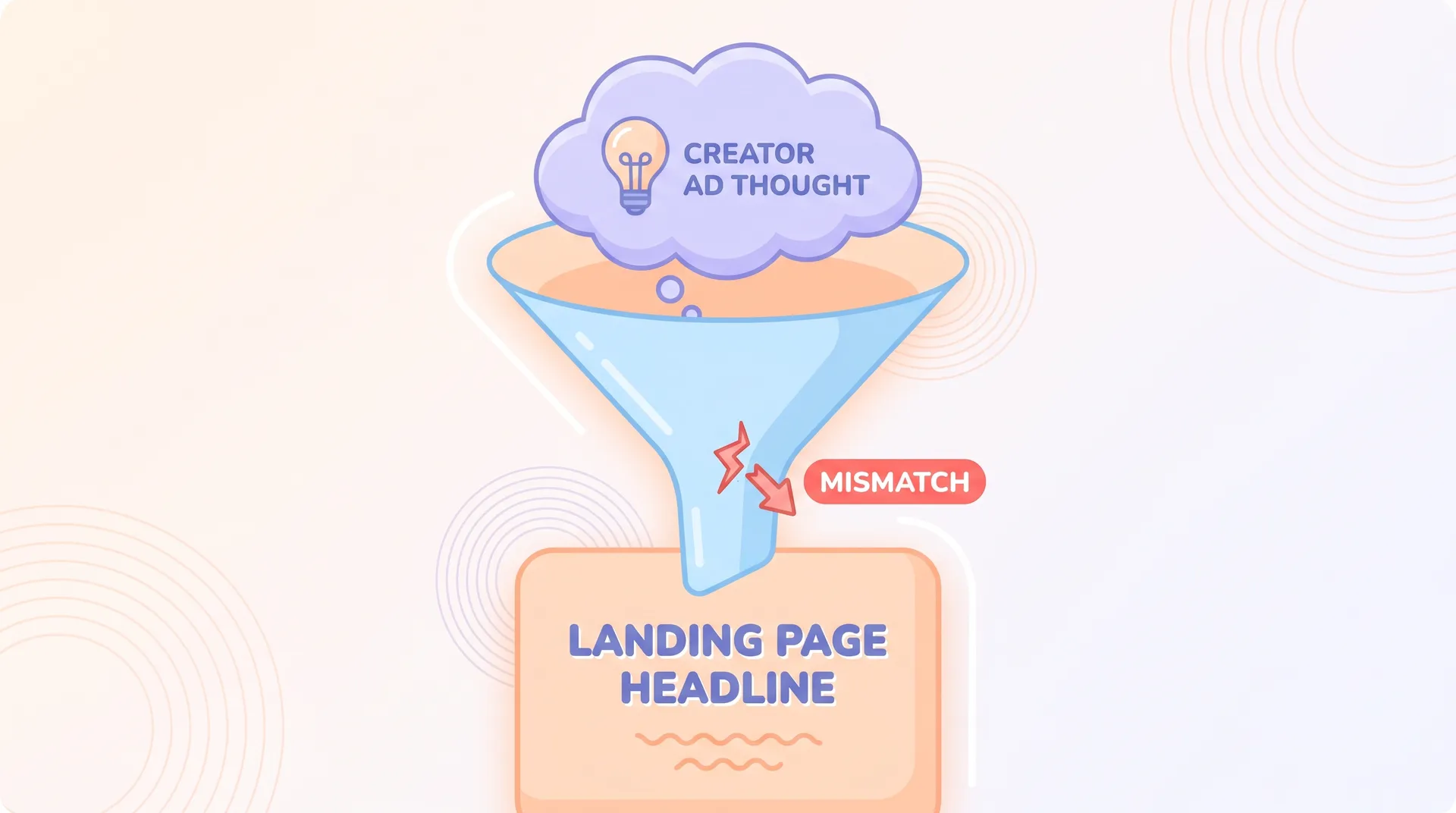
The problem wasn't the ad. It wasn't the landing page either, not exactly. It was the gap between them. The ad promised one thing. The page said something else. Visitors clicked, got confused for half a second, and bounced. That half-second is all you get.
This is the thing nobody tells you when you start running creator content as paid media: the ad is only half the conversion event. The landing page is the other half. If they don't match, you're not running one campaign — you're running two campaigns that happen to be connected by a URL.
What "saas landing page examples" actually teach you about message match
Every time I search saas landing page examples to pull inspiration for a client, I notice the same pattern in the ones that actually convert well: the headline on the page is almost a verbatim echo of the hook in the ad that drove the click. Not a rephrasing. Not a "bigger idea" version. The same promise, same words where possible.
Here's why that matters more for creator-led ads than for traditional display or search ads. When someone clicks a search ad, they typed in an intent. They're primed to read, compare, evaluate. When someone clicks a UGC video ad on TikTok or Reels, they're in scroll mode. They made a snap emotional decision based on a hook, a face, a relatable moment. The second that momentum breaks — even slightly — skepticism kicks in. "Wait, is this the same thing I just watched?"
I think of it as a promise being handed off like a baton. The creator ad runs the first leg. The landing page headline and hero video need to grab that baton without breaking stride. Drop it, and the runner behind you doesn't know the race continued.
The three places message match breaks
In my experience auditing landing pages for SaaS teams running creator ads, the mismatch shows up in three spots almost every time:
-
The headline uses company language instead of the ad's language. The ad says "stop losing leads to slow follow-up." The page headline says "The modern CRM for growing teams." Those are not the same promise. One is specific and painful. The other is generic positioning copy written by committee.
-
The hero video is a different video entirely. This one kills me. Teams spend real money getting a creator to nail a hook and a demo moment, then the landing page autoplays a totally separate polished brand video with different pacing, different voice, different claim. Visitors notice. It feels like bait and switch even when it isn't intentional.
-
The CTA doesn't continue the specific action promised. If the ad says "see how it tracks your leads automatically," and the button says "Get Started" with no context, you've lost the thread. The CTA should feel like the next sentence in the same conversation, not a reset.
If you can't draw a straight line from your ad's hook to your landing page headline in under five seconds, your visitors can't either — and they won't try.
How to actually build message match into your workflow
Message match isn't a one-time fix. It's a process you build into every campaign launch, especially if you're running multiple creator ads at once with different hooks targeting different pain points.
Start with the hook, not the page. Most teams design the landing page first and then brief creators to "sell the product." Flip it. Write down the exact hook language for each ad variant before you build or edit any page. The hook is your source of truth.
Build a headline variant for every hook variant. If you're running three different creator ad angles — speed, cost savings, ease of use — you need three different landing page headlines, not one page trying to cover all three. Dynamic text replacement or simple UTM-based headline swaps handle this without rebuilding the whole page.
Cut the hero video from the same footage as the ad, or reuse the ad itself. This is the one most teams skip because it feels "less polished." It's actually the opposite. Seeing the same creator, same setting, same energy on the landing page reassures visitors they're in the right place. If budget allows, get an extended cut from the creator shoot specifically for landing page use — same wardrobe, same location, continuation of the same sentence.
Match the CTA copy to the specific claim. Generic buttons lose the specific promise. If the ad's claim is about speed, the CTA should reflect urgency or ease — "See it in 60 seconds" beats "Learn More" every time.
If you want the fuller framework on how promise, video, and CTA need to work together across the whole page — not just the headline — I laid that out in detail in SaaS landing page conversion: matching promise, video, CTA. That piece covers the structural side; this one is about the specific ad-to-page handoff, which is honestly where I see most teams actually lose the conversion.
Why creators make message match harder (and easier) than polished ads
Polished brand video ads are predictable. You write the script, you control every word, and the landing page copywriter usually has access to that exact script when building the page. Easy to match.
Creator-led UGC ads are messier by design — that's the whole point. The authenticity that makes them perform well on TikTok and Reels comes from creators riffing, adding their own language, making unscripted claims that feel more real. Great for watch time. Risky for message match, because now your landing page team might be building copy without knowing exactly what the creator said in the final cut.
The fix is process, not creative control. Get the final ad copy — the actual words spoken — into your landing page team's hands before launch, not after. If you're working with a creator on a performance brief, make sure headline alignment is part of the deliverable checklist, the same way you'd check for usage rights or aspect ratio. We talk about what that brief process should look like in how to read a performance creative brief as a UGC creator — it applies just as much to the brand side managing the handoff as it does to the creator executing the ad.
I'd also push back on a common assumption: that creator ads "can't" be message-matched because they're too improvisational. Wrong. You just match at a different stage. Instead of writing the page first and briefing the creator to follow it, you let the creator's winning hook become the page's headline after the fact. Treat the best-performing ad copy as a living source of truth that updates your landing page, not a one-way street from page to ad.
Audio and tone need to match too
This gets missed constantly. If your creator ad has a casual, slightly imperfect tone — someone talking to camera in their kitchen — and your landing page voiceover or video audio is a slick studio voice actor, that's a mismatch too, even if the words are identical. Tone is part of the promise. People trust the vibe as much as the message. For more on getting audio right across these different formats, UGC audio: how to sound as good as you look is worth a read before you finalize your landing page's video audio treatment.
A quick audit you can run today
Pull up your three highest-spend creator ads right now. For each one, write down the exact hook sentence. Then open the landing page each one points to and check:
- Does the headline use the same words or close paraphrase, visible above the fold without scrolling?
- Does the hero video or image reflect the same scene, person, or claim as the ad?
- Does the CTA button text continue the specific promise, not a generic "Sign Up"?
If you answer no to any of these for even one ad, you've found your leak. Fix the headline first — it's the fastest change with usually the biggest lift. According to conversion research from sources like Unbounce and CXL, headline relevance alone can shift conversion rates by double digits when tested against mismatched control pages, which lines up with what we see across our own client campaigns at Flare.app.
Run message match as a checklist item in every campaign launch, not a one-off audit. The ads rotate constantly — your page updates need to keep pace.
Don't let a great ad die on a mismatched page
The creators you work with are doing their job when they get the click. A 65% watch-through rate and a strong hook mean the ad is working exactly as intended. What happens next is on you — the landing page, the headline, the video, the CTA. If those don't continue the exact sentence the ad started, you're paying for attention you then throw away.
I've seen teams double conversion rate just by rewriting a headline to match the ad's hook word-for-word, with zero changes to the actual product or offer. That's the cheapest win available to most SaaS teams running creator ads right now, and most haven't touched it yet.