B2B Influencer Marketing: Building Creator Partnerships
B2B influencer marketing works differently than consumer campaigns. Here's how to build creator partnerships that convert on credibility, not reach.

I once watched a SaaS company burn $40,000 on an "influencer campaign" with a creator who had 300,000 followers and sold productivity templates. The creator posted a glowing video about an enterprise analytics tool. It got 12,000 views, four comments, and zero trial signups. The brand's VP of marketing called me afterward, confused. The creator was huge. The content looked great. Why didn't it work?
Because B2B influencer marketing isn't influencer marketing with a different logo slapped on. It's a completely different game, and most SaaS companies play it like they're launching a skincare line.
I've spent years in the UGC and creator space building Flare, and the pattern is consistent: B2B buyers don't care how many followers someone has. They care whether that person actually knows what they're talking about. A sales ops director doesn't trust a lifestyle creator's opinion on a CRM. She trusts another sales ops director who's used three CRMs and will tell her which one breaks under pressure.
That's the entire thesis of this guide. Credibility beats reach, every single time, in B2B.
What B2B influencer marketing actually means
B2B influencer marketing is the practice of partnering with creators, practitioners, and subject-matter voices who have earned trust within a specific professional audience — then using that trust to introduce your product credibly.
Notice what's missing from that definition: follower count. It's not irrelevant, but it's a distant third behind two things that actually matter.
Domain credibility. Has this person done the job your buyer does? A former RevOps lead talking about pipeline forecasting software carries weight a general tech reviewer never will.
Audience trust, not audience size. A creator with 8,000 LinkedIn followers who are all directors of engineering at mid-market companies is worth more to a dev-tools startup than someone with 500,000 followers scattered across consumer niches.
I'd argue the term "influencer" is actually the wrong word for most of this category. These people are closer to analysts, practitioners, or niche educators who happen to post content. Some brands call this "creator partnerships" instead, and honestly, that framing holds up better. It's less about borrowing a famous face and more about co-signing with someone your buyer already respects.
This matters because the same instincts that work for consumer UGC — pick someone relatable, let them be casual, optimize for watch time — can actively hurt you in B2B. A buyer evaluating a $30,000/year contract isn't making an impulse decision off a trending sound. They're doing due diligence, and your creator partner needs to look like part of that due diligence, not a distraction from it.
Why B2B buying behavior demands a different playbook
Consumer purchases are often emotional and fast. B2B purchases are rational, slow, and involve multiple people signing off before anyone pulls out a credit card.
Think about the research. Gartner has reported that B2B buying groups typically involve six to ten decision-makers, each arming themselves with independent information before committing. That's not a buyer scrolling TikTok at 11pm and impulse-buying a $19 gadget. That's a committee.
So when a creator partnership works in B2B, it's rarely because of a single viral post. It's because the content showed up at multiple points in a long research journey — a LinkedIn post that sparked initial awareness, a YouTube walkthrough that answered a technical objection three weeks later, a comment thread where the creator defended their recommendation against a competitor's product.
This is why B2B creator content needs to do more heavy lifting per asset than consumer UGC does. A 15-second TikTok can sell a $12 product on vibes alone. A SaaS tool asking for a multi-seat annual contract needs the creator to actually demonstrate understanding of the problem, not just enthusiasm about the solution.
I'd also point out that B2B audiences are more skeptical of obvious sponsorships, not less. A B2C audience mostly accepts "yes, this is an ad, the content is still fun." A B2B audience — especially technical buyers — will pick apart a sponsored post for signs the creator didn't actually use the product. One sloppy screenshot or wrong terminology and the whole partnership backfires.
The credibility stack that actually converts
When I evaluate whether a creator partnership will move the needle for a SaaS brand, I look at four layers, roughly in this order of importance:
- Practitioner history. Did they do this job? Ran ads, managed a pipeline, shipped code, closed deals — whatever matches your buyer's seat.
- Audience composition. Who actually follows them, by job title and company size, not just raw count.
- Content specificity. Do they already make detailed, opinionated content about this category, or are they generalists who'll accept any sponsor?
- Platform fit. Where does your buyer actually spend research time — LinkedIn, YouTube, a niche newsletter, a Slack community?
Notice reach didn't make the list as a standalone factor. It shows up inside audience composition, but only after you've confirmed the audience is the right people.
Finding and vetting the right B2B creator partners
Most of the failures I've seen come down to one mistake: brands search for creators the same way they'd search for consumer influencers — by category and follower count — instead of by professional credibility.
Here's the process I actually use.
Start inside your own customer base. Some of your best creator partners are already customers. They've used your product, they have opinions, and their credibility is baked in because they're not getting paid to pretend. This overlaps heavily with building a customer video testimonial program, and honestly the line between "customer advocate" and "B2B creator" is blurrier than most marketing teams admit.
Look at who your prospects already follow. Pull a list of 20 recent deals — won and lost — and check who those buyers engage with on LinkedIn. You're not looking for the biggest names. You're looking for the names that keep showing up across multiple accounts in your ICP.
Vet based on specificity, not polish. A creator who posts rough, screen-recorded walkthroughs with real opinions is usually a better partner than one with cinematic production value and vague takes. Specificity signals real usage. Polish without substance signals an agency ghostwrote the caption.
Check how they've handled past sponsorships. Did they disclose clearly? Did their audience push back in the comments, and if so, how did they respond? A creator who handles skepticism well is more valuable long-term than one who's never been challenged.
I'll also say this bluntly: don't outsource this vetting entirely to a marketplace algorithm. Tools can surface candidates, but someone on your team who understands your buyer needs to read the actual content and decide if it holds up.
Structuring the partnership: formats that work in B2B
Once you've found the right person, the format matters almost as much as the partner. A few that consistently perform for SaaS and B2B brands:
Technical walkthroughs. The creator actually uses the product on camera, hits a real use case, and narrates their thinking — including friction points. Buyers trust content more when it's not frictionless.
Comparison content. "I tested three tools for X, here's what I'd actually pick" format works because it mirrors how your buyer is already evaluating options. Being included honestly, even without winning every category, builds more trust than a one-sided puff piece.
Co-created case studies. The creator interviews your actual customer, or becomes the case study themselves if they're also a user. This blends naturally with founder-led marketing — a founder and a trusted practitioner telling the story together outperforms either one alone.
LinkedIn-native talking content. Short, text-plus-video posts where the creator shares a specific insight tied loosely to your product, rather than a hard pitch. This format respects how LinkedIn audiences actually consume content — skeptical of ads, receptive to opinions.
Whatever format you choose, make sure the creator brief looks nothing like a consumer UGC brief. If you're used to writing briefs for performance creative, it's worth studying how creators read a performance creative brief and then stripping out everything that assumes a casual, entertainment-first tone. B2B briefs need more context on the buyer's job, not less creative freedom.
Where B2B creator content should point people
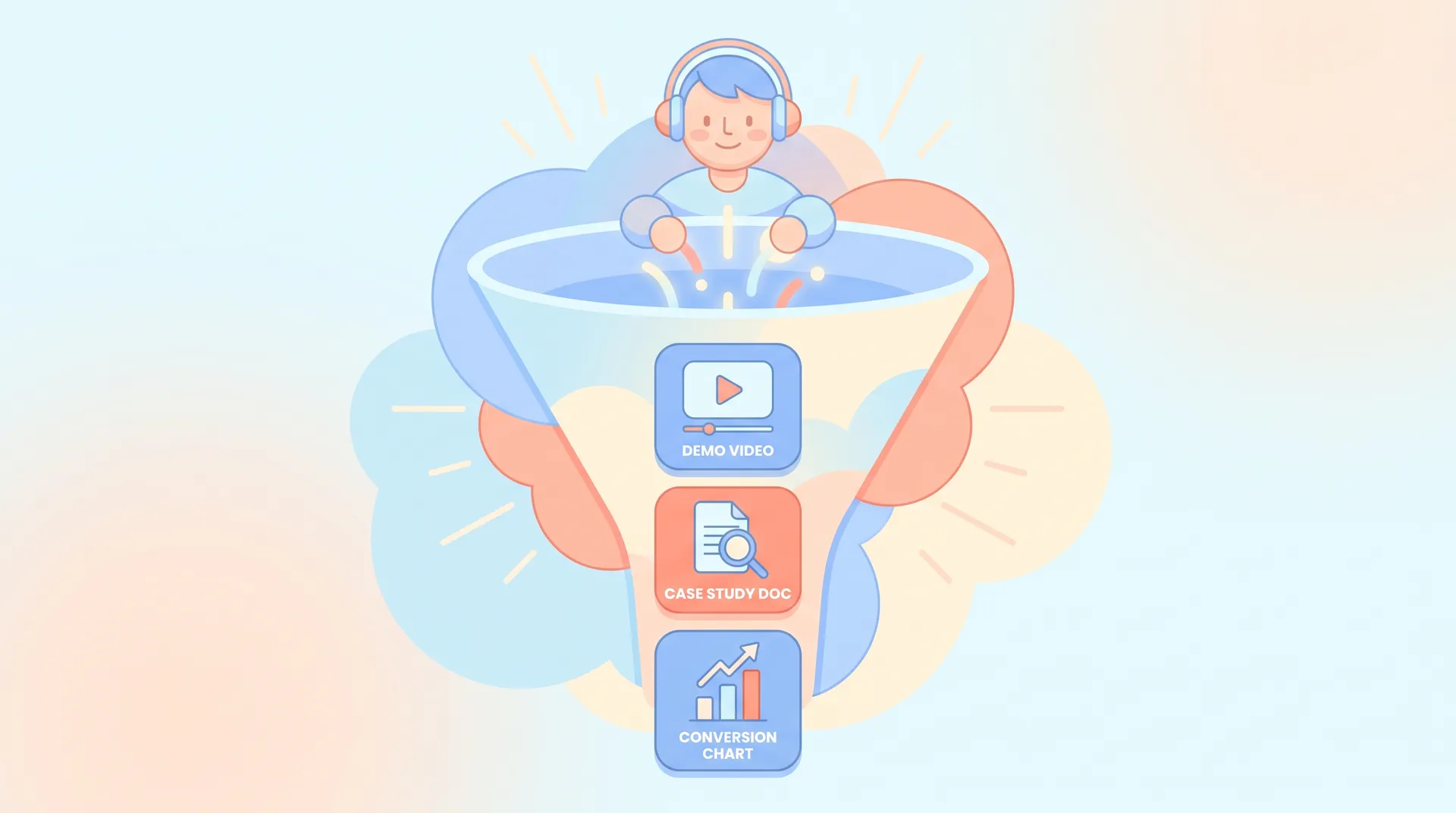
This is the part most teams get wrong, and it's avoidable. They run a great creator partnership, drive real traffic, and dump everyone onto a generic homepage that doesn't match the content's tone or specificity at all.
If a creator spent four minutes walking through a specific use case, your landing page needs to continue that conversation, not reset it. I've written before about matching the promise, video, and CTA on SaaS landing pages, and the same logic applies tenfold to B2B creator traffic. A technical buyer who just watched a detailed demo and then lands on a page with stock photos and "Revolutionize Your Workflow" copy will bounce immediately. The mismatch kills trust you just spent money building.
A few things I'd insist on for any landing destination tied to a B2B creator partnership:
- Match the specific use case or pain point the creator addressed, not your generic value prop
- Include the creator's name or a recognizable quote if they're comfortable with it — social proof compounds
- Keep the next step low-friction: a demo request, a free trial, a sandbox environment — not a 12-field contact form
- If your buyers are international, don't assume English-only content performs the same everywhere; this is where thinking about localizing campaigns for international audiences pays off, especially if your creator program expands beyond North America
Run a quick audit: pull up your last three creator-driven landing pages side by side with the actual creator content that drove the traffic. If you can't immediately tell they're connected, your conversion rate is suffering more than your attribution data shows.
Measuring what actually matters
Vanity metrics are especially dangerous in B2B influencer marketing because the sales cycle is long enough to disconnect cause from effect. A LinkedIn post from a creator in March might influence a deal that closes in August. If you're only measuring immediate clicks, you'll kill partnerships that are quietly working.
What I actually track:
Influenced pipeline, not just attributed pipeline. Ask new deals in discovery calls if they'd seen any content from your creator partners. You'll be surprised how often the answer is yes, even without a trackable link.
Branded search lift. A spike in branded search volume after a creator campaign is one of the most honest signals that awareness is converting into intent, even if it doesn't show up in last-click attribution.
Content half-life. Unlike consumer UGC that dies in 48 hours, good B2B creator content — a detailed comparison video, a technical breakdown — keeps getting found via search for months. Track views and engagement at the 90-day mark, not just week one.
Sales team feedback. Ask your AEs if prospects are mentioning the content unprompted. This is messy data, but it's some of the most honest data you'll get.
HubSpot's research on B2B content consumption consistently shows that buyers engage with five or more pieces of content before talking to sales — which is exactly why single-touch attribution undersells creator partnerships in this space.
Common mistakes that kill B2B creator campaigns
Treating it like influencer marketing with a bigger invoice. The playbook that works for a skincare brand doesn't transfer. Different trust mechanics, different buying committee, different timeline.
Chasing reach over relevance. A creator with 50,000 followers who are all your exact ICP beats one with 500,000 followers who mostly aren't.
Writing briefs that are too promotional. B2B audiences smell a pitch instantly. The best-performing content reads like an opinion piece that happens to mention your product, not an ad that happens to have a human reading it.
Ignoring the landing experience. I covered this above because it's worth repeating — great creator content sending traffic to a mismatched page is money burned.
Expecting fast ROI. If you're measuring a B2B creator partnership the same week it launches, you're setting it up to look like a failure when it's actually just early.
Skipping the comment section. In B2B, the comments under a creator's sponsored post often contain more pipeline-relevant insight than the post itself. Skeptical questions from real practitioners tell you exactly what objections your sales team needs to prep for.
Building this into a repeatable program
One-off creator partnerships are fine for testing. But the brands actually winning with this approach treat it as a program, not a campaign.
That means maintaining relationships with a roster of 5-10 credible voices in your space, rather than one-off transactional deals every quarter. It means briefing creators with real product access and real context, not a generic one-pager. And it means building the measurement muscle to track influence over months, not days.
It's slower than running a performance ad campaign. It's also harder to copy, because competitors can clone your ad creative overnight but they can't clone years of earned trust between a creator and an audience.
If you're starting from zero, don't try to run five partnerships at once. Pick one credible voice your buyers already trust, structure one piece of content around a real use case, and measure it properly for 90 days before you scale. Get that loop right and the rest of the program becomes a matter of volume, not guesswork.