Brand ambassador pitch email: templates to land retainer deals
Use these brand ambassador pitch email templates to cold-outreach brands and follow up for monthly retainer deals — built for UGC creators, not influencers.

I sent 47 cold emails to brands in one month. Got 3 replies, 1 intro call, and 0 deals. Then I rewrote the approach — same brands, similar contacts — and the next 30 emails produced 6 replies and 2 retainer conversations. The only thing that changed was what the email was actually saying, and what it was asking for.
Most creators write brand ambassador pitch emails like they're applying for a job. They lead with their stats, list their platforms, attach a rate card, and wait. Brands bin those emails because they look like every other creator inquiry they get. A pitch that converts doesn't lead with you — it leads with them.
This post gives you two tested frameworks: a cold outreach email for brands you've never worked with, and a warm follow-up for brands you've already had contact with or bought from. Both are built specifically for ambassador and monthly retainer arrangements — not one-off campaigns.
The brand ambassador pitch email mindset shift
Before you copy any template, you need to understand why most cold pitches fail. And it's not because you don't have enough followers.
Brands — especially the small-to-mid DTC brands that actually hire UGC creators for ambassador work — are drowning in outreach. A $3M/year skincare brand probably gets 40+ creator inquiries per week. Their team is small. No one has time to read a three-paragraph bio about how "passionate" you are about wellness.
What they do have time for is an email that immediately shows you've done your homework and that you're proposing something specific. That's the whole game.
The difference between a generic pitch and a converting one comes down to three things:
- Specificity about their brand — Not "I love your products" but "your SPF lip balm has been in my bag since March and I've already recommended it to people twice this week"
- A concrete deliverable proposal — Not "I'd love to collaborate" but "I'm thinking 4 short-form videos per month, licensed for paid ads"
- A clear ask — One question, not a wall of text that makes them work to figure out what you want
Get those three right and you'll stand out from 90% of the pitches hitting their inbox.
For more on what ambassador relationships actually look like before you start pitching, the brand ambassador program: the UGC creator's full guide breaks down how brands structure these deals from their side — worth reading before you send a single email.
Cold pitch email: reaching brands you haven't worked with
This is for brands you genuinely use or have researched enough to pitch specifically. Cold pitching brands you've never touched is detectable immediately and brands can tell.
Subject line options (test these):
[Brand name] x [Your first name] — monthly UGC for paid adsIdea for [Brand name]'s content — [month]UGC creator who actually uses [Product name]
The subject line's job is to get the email opened. That's it. Short, specific, no buzzwords.
The cold pitch framework:
Subject: [Brand name] x Sarah — monthly UGC for paid ads
Hi [Name],
I've been using [specific product] for [time period] — [one concrete, genuine detail about your experience with it]. I create short-form UGC for DTC brands and I think [Brand name]'s [product line or campaign direction] is a natural fit for the content I'm already producing.
I'm not looking for a one-off gifted post. I work with brands on a monthly basis — typically 4–6 short-form videos per month, licensed for paid social. The kind of content that runs as ads, not just organic posts.
I work in [your niche, e.g. "the skincare/clean beauty space"] and my recent work has [one specific result or client reference if you have one — e.g. "helped a brand reduce their CPM by 22%" or "consistently outperformed their in-house creative"].
Would you be open to a 15-minute call this week to see if there's a fit?
[Your name] [Portfolio link — one clean URL, nothing else]
Keep it under 180 words. Every sentence should earn its place. If you catch yourself writing "I am a passionate content creator who loves storytelling," delete the whole paragraph and start again.
A few things this email does deliberately:
- It opens with proof you actually use the product (immediate credibility)
- It states what you're NOT looking for (weeds out confusion)
- It names a deliverable structure up front (shows professionalism)
- It ends with a single, low-friction ask (a 15-min call, not "let me know your thoughts")
One note on the portfolio link: one URL, clean, loads fast. Not a Google Drive folder. Not five links. If your portfolio isn't in order yet, fix that before you send a single pitch. How to build a UGC portfolio that wins brand deals covers what that page needs to actually convert.
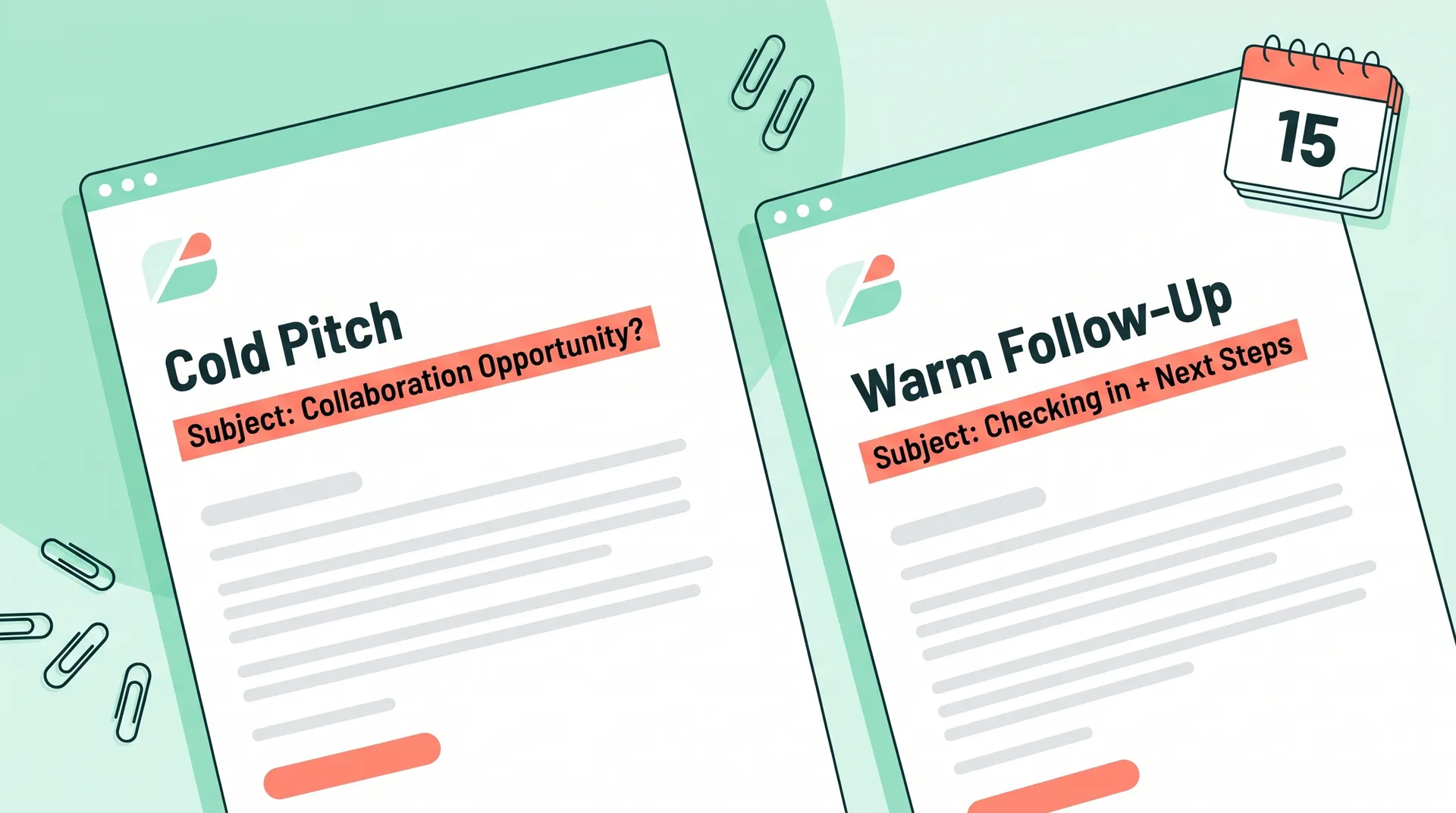
Warm follow-up email: re-engaging or escalating to ambassador
This is for three scenarios: you've already completed a one-off project with a brand and want to propose ongoing work, you've had a discovery call that went quiet, or a brand manager replied to your cold pitch but nothing materialized.
The warm follow-up is actually easier to write than the cold pitch because you have context to reference. Use it.
Subject line options:
Following up — monthly retainer proposal for [Brand name]Quick question after our call last [month]One idea for [Brand name]'s Q[X] content
The warm follow-up framework:
Subject: Monthly retainer proposal for [Brand name]
Hi [Name],
Hope [month/quarter] is going well on your end. I wanted to follow up on [our call / the project we worked on in X month / your last message].
I've been thinking about [Brand name]'s content — specifically around [ad creative / seasonal push / platform they're investing in]. I'd love to propose something more structured: a monthly package where I deliver [X videos] per month, fully edited and licensed for paid use.
The advantage of a retainer vs. one-off briefs is you always have fresh ad creative in the pipeline without having to re-brief from scratch each time. For my side, it means I can get deep on your brand voice and actually improve performance over time rather than starting cold on every project.
I've put together a quick outline of what this could look like — happy to send it over or jump on a 15-min call if that's easier.
[Your name] [Portfolio / recent work link]
Notice this email doesn't apologize for following up. Don't do that. It's professional outreach, not an inconvenience.
The retainer framing is deliberate. Most brands don't instinctively think "monthly retainer" when they think UGC — they think campaign-by-campaign. Your job in this email is to reframe the relationship and show them why recurring work benefits them, not just you. More on how to structure that conversation lives in how to turn a one-off brand deal into long-term deals.
Timing, follow-up cadence, and what to do when they go quiet
Send your cold pitch on Tuesday, Wednesday, or Thursday morning. That's it. Monday emails drown in weekend backlog. Friday emails get pushed until Monday and forgotten.
If you don't hear back in 5–7 business days, send a one-line follow-up. Not another pitch — just:
"Hi [Name] — just wanted to make sure this didn't get buried. Happy to send over some examples if that's helpful. — [Your name]"
One follow-up is fine. Two is the absolute ceiling. If they don't reply after two touches, they're not interested right now. Move on and come back in 60–90 days with something new to reference (a new video you made, a result from another brand).
The creators I've seen land the most ambassador deals are relentlessly organized about their outreach pipeline. They're tracking who they emailed, when, what stage the conversation is at. A simple spreadsheet beats nothing. Brand ambassador jobs: where brands actively recruit creators is worth reading alongside this — some brands actively want inbound applications, which means your pitch lands with a warmer audience than a pure cold email.
What to attach (and what not to)
Don't attach anything to a cold email. Full stop. Attachments from unknown senders get flagged as spam, and even when they don't, busy brand managers don't open them.
Your portfolio link is your attachment. Make it count.
If they reply and ask for more info, then you send:
- A one-page rate sheet (PDF, clean design)
- 2–3 sample videos directly relevant to their product category
- Optionally: a short case study from a previous brand if you have results to show
Keep it tight. The goal of every touchpoint is to earn the next one — reply → call → proposal → contract. Don't try to close the deal in one email.
And before you get to the contract stage, know what you're agreeing to. Ambassador deals often include exclusivity clauses that prevent you from working with competitors. Non-compete clause in brand deals: what creators must know explains what's reasonable and what's a red flag.
Subject lines worth testing
Subject lines are the most A/B testable part of your outreach. Try these variations and track open rates if your email client allows it:
- Curiosity:
Quick idea for [Brand name]'s content - Direct:
[Brand] x [Your name] — 4 UGC videos/month - Social proof:
[Brand you've worked with] creator — interested in [Brand name] - Product-specific:
Your [product name] has been in my daily rotation
Avoid subject lines with "collab," "partnership opportunity," or anything that reads like a form email. Those get deleted before they're opened.
Frequently Asked Questions
What should I include in a brand ambassador pitch email?
How do you cold email a brand for an ambassador deal?
When should I send a follow-up email after pitching a brand?
Do I need a big following to pitch brands for ambassador deals?
What's the best subject line for a brand ambassador pitch email?
Should I pitch for one-off campaigns or ambassador deals?
Related reading
- Brand ambassador program: the UGC creator's full guide
- How to become a brand ambassador with no big following
- How to turn a one-off brand deal into long-term deals
- Brand ambassador deliverables: defining your scope of work
- Non-compete clause in brand deals: what creators must know
- Brand ambassador jobs: where brands actively recruit creators
- Why brands are shifting budgets from influencers to UGC creators