How to turn a one-off brand deal into long-term deals
One sponsored deliverable doesn't have to end there. Here's the exact playbook to convert a single UGC brand deal into a recurring ambassador retainer.

I've watched creators leave thousands of dollars on the table after landing what should have been the start of something great. They deliver a solid UGC video, the brand says "thanks," and then... silence. The creator moves on, pitching cold leads from scratch, while that brand quietly books a different creator for their next campaign.
That's not bad luck. That's a follow-up problem.
Converting brand deals long term — turning a single paid deliverable into a recurring retainer — is honestly one of the highest-ROI moves you can make as a UGC creator. You already did the hard part: you got a brand to pay you. Getting them to pay you again is a completely different (and much shorter) sales cycle.
Here's exactly how to run it.
Why brand deals long term are worth fighting for
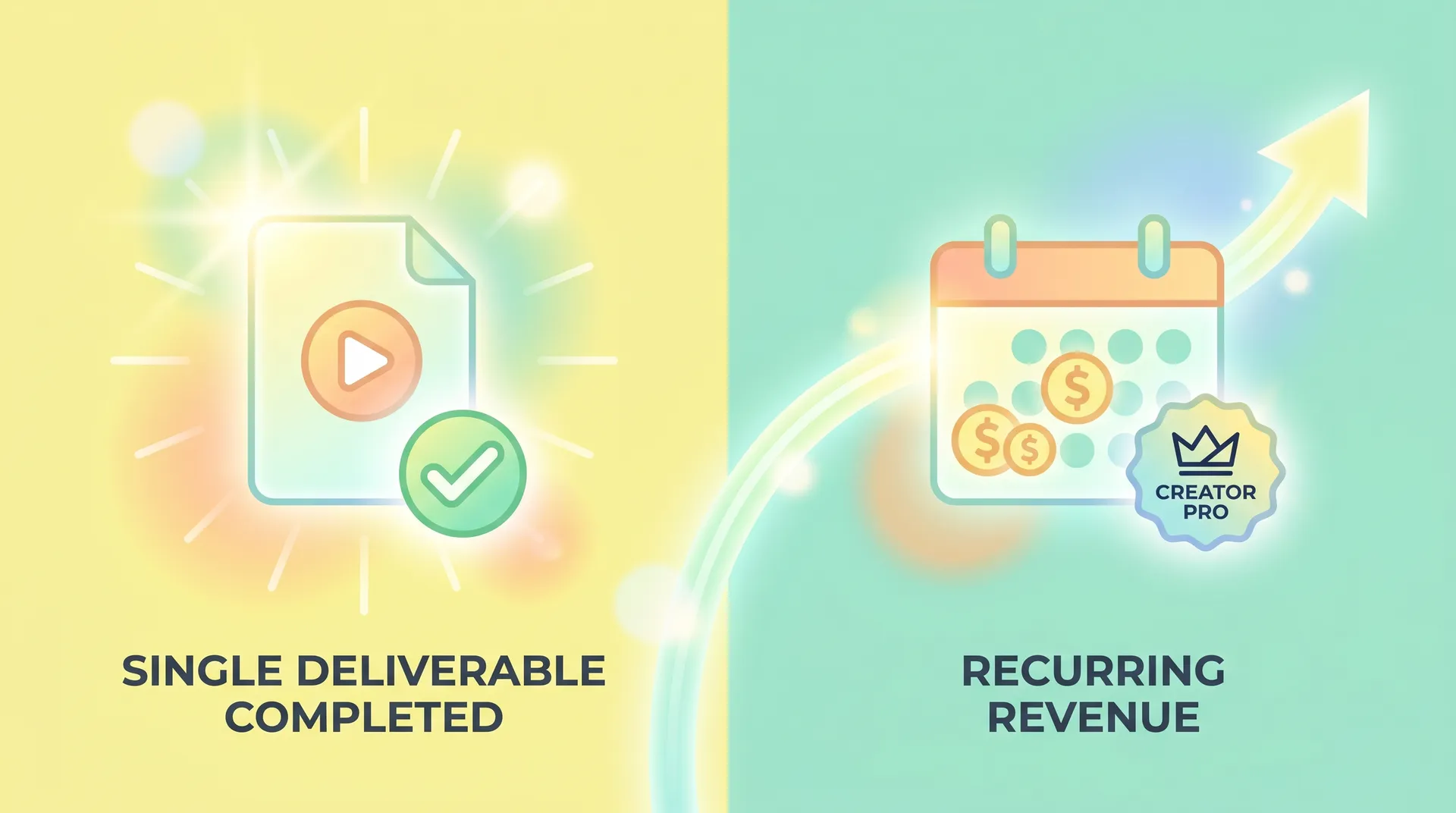
One-off deals are fine. Retainers are a business.
A single UGC video might pay you $200–$500. A monthly ambassador retainer with that same brand — say, 4 videos/month at $400 each — is $1,600/month from one relationship you already have. That's a meaningful chunk of income that doesn't require cold pitching, portfolio reviews, or lengthy back-and-forth on rates.
Brands want this too, even if they don't say it out loud. Consistency matters to them. Research from the influencer marketing space consistently shows that brands prefer working with creators who understand their product deeply over time — and that repeated exposure from the same trusted voice drives better conversion than one-and-done ad creatives. When a brand sees your video perform, they're not thinking "nice, we're done." They're thinking "how do we get more of this."
Your job is to make the answer obvious: me, on a recurring basis.
That said, you need to understand what you're walking into. Long-term partnerships often come with more contractual complexity — exclusivity windows, content approval timelines, usage rights extensions. Before you sign anything multi-month, read up on non-compete clause in brand deals so you're not accidentally locked out of competing brands in your niche.
Step 1: Deliver in a way that makes re-booking impossible to ignore
The conversion to a long-term deal starts before you hit send on the final video file.
Everything about your delivery should signal "I'm a professional partner, not a gig worker." That means:
- Deliver before deadline. Even one day early changes how you're perceived.
- Include a short note with the delivery. Something like: "Here's the final video. I kept hook A to 2 seconds based on what's been performing in your category — let me know if you'd like a variation with a different open." One sentence. Shows you thought about their results, not just your invoice.
- Submit in their preferred format without being asked. MP4, vertical, named properly. No friction.
That last delivery message is also where you plant the first seed. Mention results you're already seeing if the content has gone live. Mention something you noticed about their brand positioning. Show you're paying attention.
Brands remember the creators who felt like collaborators. They book the creators who felt like vendors again — but only when they need to fill a slot.
Step 2: Send the results email (most creators skip this entirely)
This is the single highest-impact move you can make, and almost nobody does it.
About two to three weeks after your content goes live — enough time for meaningful data to accumulate — send the brand a short results recap. Not a full report. A few sentences.
"Hey [Name], wanted to check in on how the video has been performing. From my end, [platform] is showing X views and a Y% engagement rate on the organic repost. Have you seen any lift on the paid side? Either way, I had a few creative ideas for the next round if you're open to exploring a retainer structure — happy to put something together."
That's it. Maybe 80 words.
What you're doing here is threefold. You're showing you care about their ROI, not just your payment. You're demonstrating analytical thinking — which immediately separates you from 90% of creators. And you're introducing the word "retainer" casually, before you ever pitch a number.
If they respond positively to the results check-in, you're already halfway through the door.
Step 3: Build the re-pitch around their business goals
When you're ready to formally pitch a retainer, stop thinking about what you want and start thinking about what problem you're solving for them.
Brands run UGC campaigns for a reason: they need ad creative at scale, they're A/B testing hooks, they're launching a new product, or they need authentic content for organic social. Understanding why brands are shifting budgets toward UGC creators gives you a real edge here — you can frame your pitch in the language of their internal media buying goals.
A strong re-pitch looks something like this:
Subject: Content partnership idea for [Brand Name] — Q3
"Hi [Name], loved working on the [campaign name] shoot. The early data looks promising and I have a few ideas for creative angles that could work well for your upcoming [season/launch/product]. I'd love to put together a monthly content package — [X videos/month] — that gives your team a consistent flow of tested creative without the overhead of briefing a new creator each time. Happy to send over a simple proposal if that's useful?"
Short. Confident. Framed around their workflow, not your income.
You're not begging for more work. You're proposing a solution to a logistics problem they have. That's a completely different conversation.
For a deeper breakdown of what these ongoing arrangements actually look like — scope, deliverables, expectations — the brand ambassador program full guide is worth a thorough read before you draft your proposal.
Step 4: Price it like a partner, not a freelancer
This is where a lot of creators undercut themselves.
When you move from a one-off deal to a retainer, your price shouldn't just be "my one-off rate × number of videos." You're now providing predictability, priority access to your calendar, and consistency — all of which have value. Most retainer pricing should carry a modest premium over the per-video rate, or at minimum, hold firm at your standard rate rather than offering a discount in exchange for volume.
How to build a UGC rate card that wins brand deals covers the mechanics of structuring this well. The short version: anchor on a 3-month minimum to make the relationship viable, include a usage rights clause that covers how long they can run the content as paid ads, and put your revision limits in writing.
Brand ambassador deliverables: defining your scope of work is the other piece — get specific about what's included before you both sign so there's no "can you just add one more video" creep two months in.
Step 5: Stay visible between campaigns
Here's something brands rarely tell creators: the reason they don't book you again often isn't quality. It's recency. You drifted out of their awareness.
Stay in their orbit without being annoying. Engage genuinely with their content. If you notice they launched a new product or ran an interesting campaign, send a one-line email acknowledging it. Platforms like LinkedIn are great for following the marketing managers and brand leads you've worked with — seeing their professional updates gives you natural reasons to reconnect.
You're not spamming them. You're staying top of mind so that when their Q4 budget opens up and someone says "who was that creator who did the really good unboxing video?", your name is already in their head.
What to do if they say not right now
They might love the work and still say no to a retainer. Budget cycles are real. Internal hiring freezes happen. That's not a rejection — it's timing.
Ask one question: "Would it be helpful if I reached back out in [90 days] when you're planning your next campaign cycle?"
Most brand contacts will say yes. Then actually do it. Set the reminder. Email them 90 days later with a fresh pitch and updated portfolio. The creator who follows up professionally, on schedule, wins the repeat booking almost every time.
If you're still building those initial brand relationships, how to become a brand ambassador with no big following and brand ambassador programs: how to spot the real ones are both solid places to understand what brands are actually looking for in ongoing partners.
The whole game here is reducing risk for the brand. Every action you take — the professional delivery, the results email, the structured proposal, the follow-up — is removing friction and demonstrating that you're a safer, smarter investment than starting the creator search over again.
That's the pitch. Make it easy to say yes.
Frequently Asked Questions
How soon after a brand deal should I pitch a long-term partnership?
What should a UGC creator include in a retainer proposal?
How much more should I charge for a retainer vs. a one-off deal?
What if the brand hasn't used my content yet but I want to pitch again?
How do I stay top of mind with a brand between deals?
Can I negotiate usage rights as part of a long-term deal?
Related reading
- Brand ambassador program: the UGC creator's full guide
- Brand ambassador deliverables: defining your scope of work
- Non-compete clause in brand deals: what creators must know
- How to build a UGC rate card that wins brand deals
- How to become a brand ambassador with no big following
- Brand ambassador programs: how to spot the real ones