How to choose your UGC niche (beginner's guide)
Not sure which UGC niche to pick? Use this self-assessment framework to find a niche that fits your life, attracts brands, and actually pays.

Most people starting out in UGC get this completely backwards. They scroll through TikTok, see someone doing beauty reviews, and think "I should do beauty." Then they film five videos, hate talking about foundation, and quit before they ever send a single pitch.
Figuring out how to choose a UGC niche is the single most important decision you'll make as a new creator — and it deserves more than five minutes of mimicking whoever went viral last week. Get it right, and your portfolio feels effortless to build. Get it wrong, and you'll be grinding out content you resent for brands that barely notice you.
I've watched hundreds of creators go through this at Flare. The ones who stick around and actually land consistent deals almost always chose their niche deliberately. This post walks you through the exact framework I'd use if I were starting from scratch today.
Why your UGC niche matters more than your follower count
Quick reminder before we get into the framework: UGC (user-generated content) creators are hired to make ad-ready or organic content for brands — you don't need a big audience. Brands are paying for your ability to make convincing, authentic content, not your reach. If you're not clear on that distinction yet, the UGC creator vs. influencer post clears it up fast.
That's exactly why niche matters so much. A brand selling a whey protein powder isn't looking for "a good UGC creator." They're looking for someone who looks like their customer — someone who works out, buys supplements, and can talk about macros without reading off a cue card. Specificity is what gets you hired.
A defined niche does three things for you:
- It signals expertise to brands scanning dozens of portfolios
- It lets you build a focused body of work faster (you're filming similar content repeatedly, so you get better quickly)
- It makes your pitches sharper — "I create content for fitness supplement brands" is infinitely more compelling than "I create lifestyle content"
Now. The framework.
The three-filter test for choosing your UGC niche
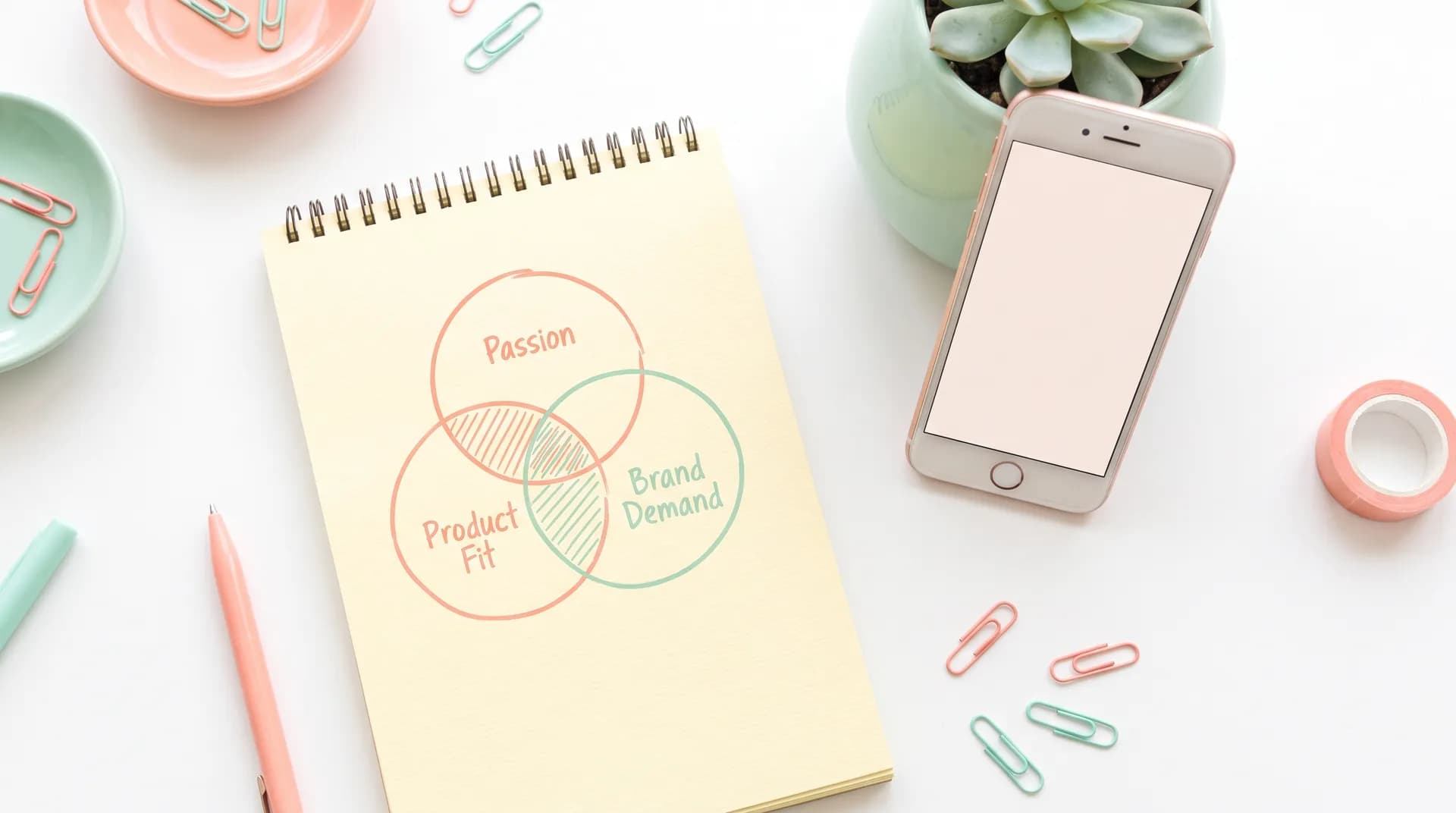
Think of this as a Venn diagram with three circles. Your ideal niche sits in the overlap of all three. Miss any one of them and you'll run into problems sooner or later.
Filter 1: Passion (or at least genuine familiarity)
I'm not going to tell you to "follow your passion" in some vague self-help way. But you do need to genuinely use or care about the products in your niche — because authenticity isn't optional in UGC. Brands are paying for content that feels real. If you've never used a skincare serum in your life, it shows on camera.
Ask yourself:
What do I already spend money on? The products you buy without thinking twice are the ones you can talk about naturally. Fitness gear, pet food, home organization tools, cooking gadgets — whatever you reach for automatically.
What do I already know enough to fake expertise? You don't need a degree. You need enough familiarity to speak with confidence. If you've been meal prepping for two years, you can absolutely make compelling food content even if you're not a nutritionist.
What could I film consistently for six months without hating it? This one's underrated. UGC isn't a one-and-done gig. You'll be making content in this space repeatedly, for multiple brands. Boredom is a real business risk.
Filter 2: Product fit (can you actually demonstrate this?)
Some categories are naturally suited to video UGC. Others are brutally hard to make engaging on camera.
Great product fit for UGC:
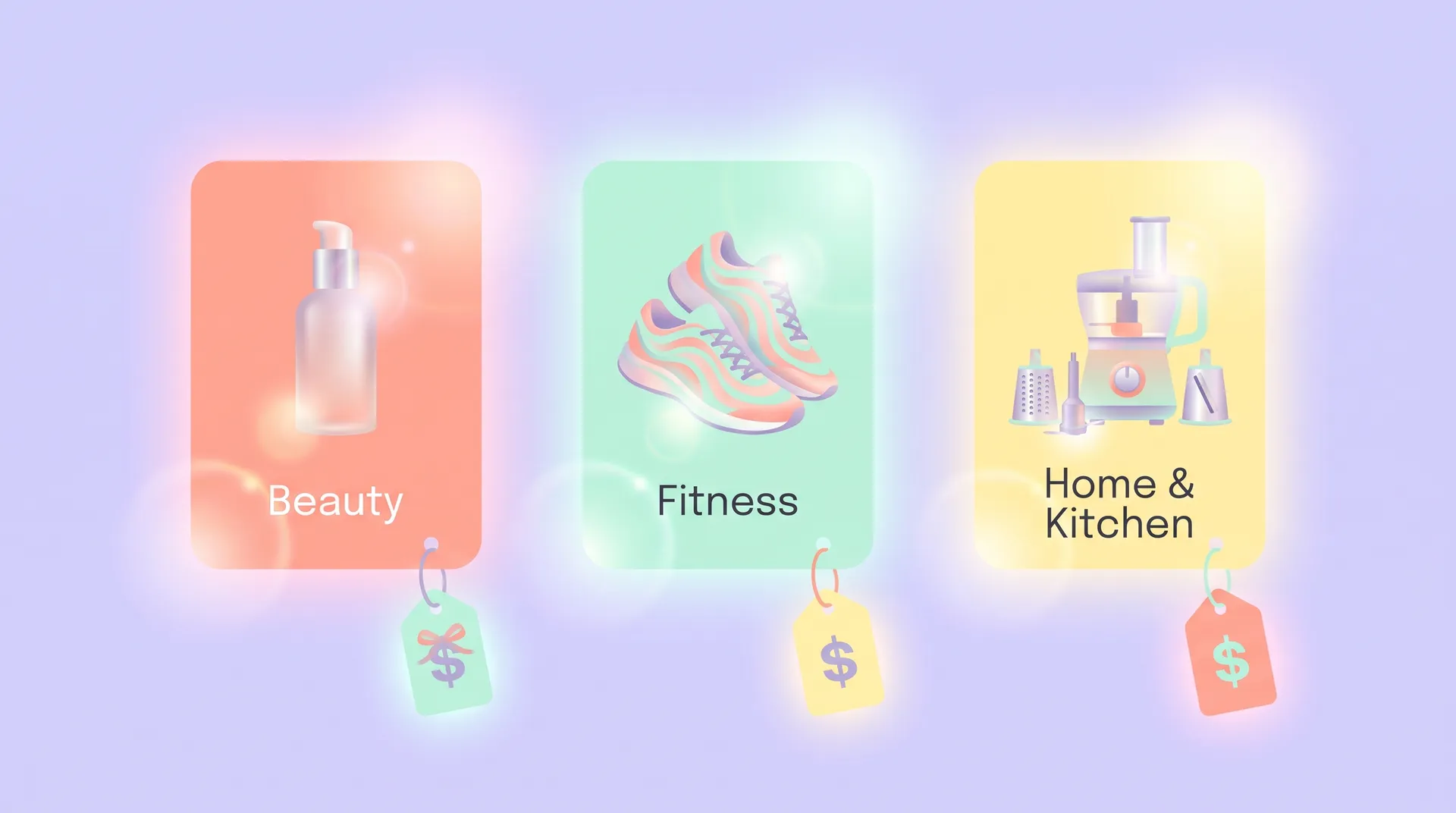
- Skincare & beauty — before/after, application routines, texture shots
- Fitness & supplements — workout context, unboxing, transformation framing
- Food & beverage — cooking demos, taste reactions, aesthetic flat-lays
- Pet products — animals are inherently watchable, product usage is obvious
- Home & kitchen — before/after organization, product demos, cleaning routines
- Tech & apps — screen recordings, unboxing, side-by-side comparisons
- Baby & parenting — high trust-purchase category, authenticity is everything
Harder to make work without experience:
- B2B software (limited visual storytelling)
- Financial products (heavy compliance requirements)
- Fashion (great for influencers, but pure UGC ads are harder to execute without styling knowledge)
This doesn't mean you can't work in harder categories — but if you're a beginner, choosing a niche with obvious visual hooks gives you a head start. You'll make better content faster, which means a stronger portfolio sooner.
Filter 3: Brand demand (do brands actually pay for this?)
This is the filter most beginners skip, and it kills them. You can be passionate about something and great on camera, but if brands in that space don't buy UGC, you're building a hobby, not a business.
The shortcut here: look at what's being advertised. Open TikTok, Instagram, or YouTube and pay attention to the ads. If you see a category of product running a lot of paid ads, that category is spending money on creative — and a meaningful chunk of that is going to UGC creators.
High-spend UGC categories right now include:
- Skincare and beauty (consistently the #1 category)
- Health supplements and fitness products
- Home goods and cleaning products
- Food and beverage, especially DTC brands
- Tech accessories and apps
- Pet products (growing fast)
According to Statista, the UGC market is valued at over $4 billion globally and growing — and most of that spend flows through exactly these categories. You're not guessing at which brands are buying; the ad spend is public if you know where to look.
A free way to validate demand: use the Meta Ad Library. Search a product category, filter to active ads, and look at how many brands are running creative. High volume = high demand for creators like you.
The self-assessment framework: your 15-minute niche audit
Stop overthinking it. Grab a piece of paper and answer these five questions honestly.
1. List three product categories you spent money on in the last 90 days. These are your gut-check candidates. Real purchase behavior beats idealized identity every time.
2. Which of those could you talk about on camera for 60 seconds without a script? Film yourself. Literally just pick up your phone and talk. If it flows, that's a signal. If you're stumbling over basic vocabulary, that niche needs more time.
3. Search that category in the Meta Ad Library. Are 20+ brands running active ads? If yes, there's a market. If you can barely find any, that's a red flag.
4. Could you create 10 different pieces of content for products in this category? If you can brainstorm 10 distinct video concepts in 10 minutes, you've got enough creative range to build a portfolio and serve multiple clients.
5. Is there a sub-niche angle that makes you more specific? "Fitness" is crowded. "Fitness supplements for women over 35" is specific. "Home organization" is broad. "Apartment organization for small spaces" is a positioning play. Specificity isn't limiting — it's clarifying, both for brands and for the algorithm if you're posting organically.
Once you've answered all five, the niche with the most green lights is your starting point.
Should you niche down hard or stay broad?
My honest take: start specific, expand later. A lot of beginners want to stay broad because it feels safer — more potential clients, more flexibility. But broad portfolios read as unfocused to brands, and unfocused portfolios don't convert.
Pick one primary niche and one adjacent niche. So: fitness supplements as primary, with healthy food products as adjacent. Or: skincare as primary, with wellness/supplements as adjacent. This gives you focus without boxing yourself into one product forever.
As you book more deals and build more clips, you'll naturally expand. But landing your first UGC campaign is dramatically easier when a brand can look at your portfolio and see themselves in it instantly.
One more thing: don't let your own demographics stop you. You don't have to be a 22-year-old woman to make skincare content. You don't have to be jacked to make fitness content. Brands need diverse representation in their ads — different ages, body types, and backgrounds make UGC more effective, not less. Research from Nielsen consistently shows that diverse creative performs better in paid media. Don't self-eliminate before you even start.
The niche isn't a life sentence
I've seen creators pivot their niche three months in and do completely fine. The portfolio you build in month one isn't going to follow you forever. What matters is that you pick something concrete, build 5–10 solid pieces of content in that space, and start pitching.
Paralysis is the real enemy here. Choosing the "wrong" niche and learning from it is infinitely better than spending four weeks agonizing and filming nothing.
Once you've landed on a niche, your next move is building a portfolio that proves you can deliver in that space — even before any brand has paid you. The how to become a UGC creator guide walks through exactly what that looks like, including spec work and how to structure your first portfolio.
And if you're not sure where to find the actual brands once you're ready to pitch? Start with best UGC platforms for creators — there are marketplaces specifically built to connect creators with paying campaigns in their niche. Influencer Marketing Hub also maintains an updated list of the top platforms worth checking.
Your niche is just the foundation. Build on it.
Frequently Asked Questions
Do I need to pick a UGC niche before I start?
What is the most profitable UGC niche?
Can I do UGC in multiple niches at once?
What if I'm not an expert in my chosen niche?
How do I know if there's brand demand in my niche?
Should I show my face in UGC content for my niche?
Related reading
- How to become a UGC creator: the complete guide
- What is a UGC creator? (And what it means in 2025)
- How to start UGC with no following and no experience
- Best UGC creator niches: which industries pay most
- How to Build a UGC Portfolio That Wins Campaigns
- UGC content creator: what you actually do day-to-day