What is a UGC creator? (And what it means in 2025)
A UGC creator gets paid to make branded content — no big following required. Here's exactly what that means, how the model works, and why brands love it.

A UGC creator is someone who gets paid to make content for brands — not to post it on their own channel. No follower requirement. No viral moment needed. Just good creative work, delivered on brief, in exchange for a flat fee.
That's the whole model. And once you understand it, you'll see why thousands of people are treating it as a legitimate income stream in 2025.
What "what is a ugc creator" actually means (the real definition)
UGC stands for user-generated content. Historically, that meant any content made by real people rather than brands — think reviews on Amazon, unboxing videos on YouTube, photos tagged on Instagram. Organic. Unsponsored. Spontaneous.
The term got hijacked — in a good way.
Brands realized that content made by real people converts better than anything their in-house teams produce. So they started paying creators to make that kind of content on purpose. The aesthetic stays authentic. The creator stays in control of the execution. But now there's a brief, a deliverable, and a payment attached.
That's what people mean when they say "UGC creator" in 2025: a freelance content creator hired by brands specifically to produce raw, authentic-looking videos or photos that the brand then uses in its own ads and social channels. Your face might appear in it. Or it might be voiceover only. Or totally faceless. Doesn't matter — the point is that you're the hired creative, not the media channel.
The brand handles distribution. You handle creation.
So you don't post it yourself?
Correct. And this trips people up constantly.
Most UGC creators deliver their content privately — through Google Drive, Dropbox, or a platform like Flare — and the brand posts it wherever they want. Their TikTok. Their Facebook ads. Their Amazon product pages. The creator never has to publish a single thing publicly if they don't want to.
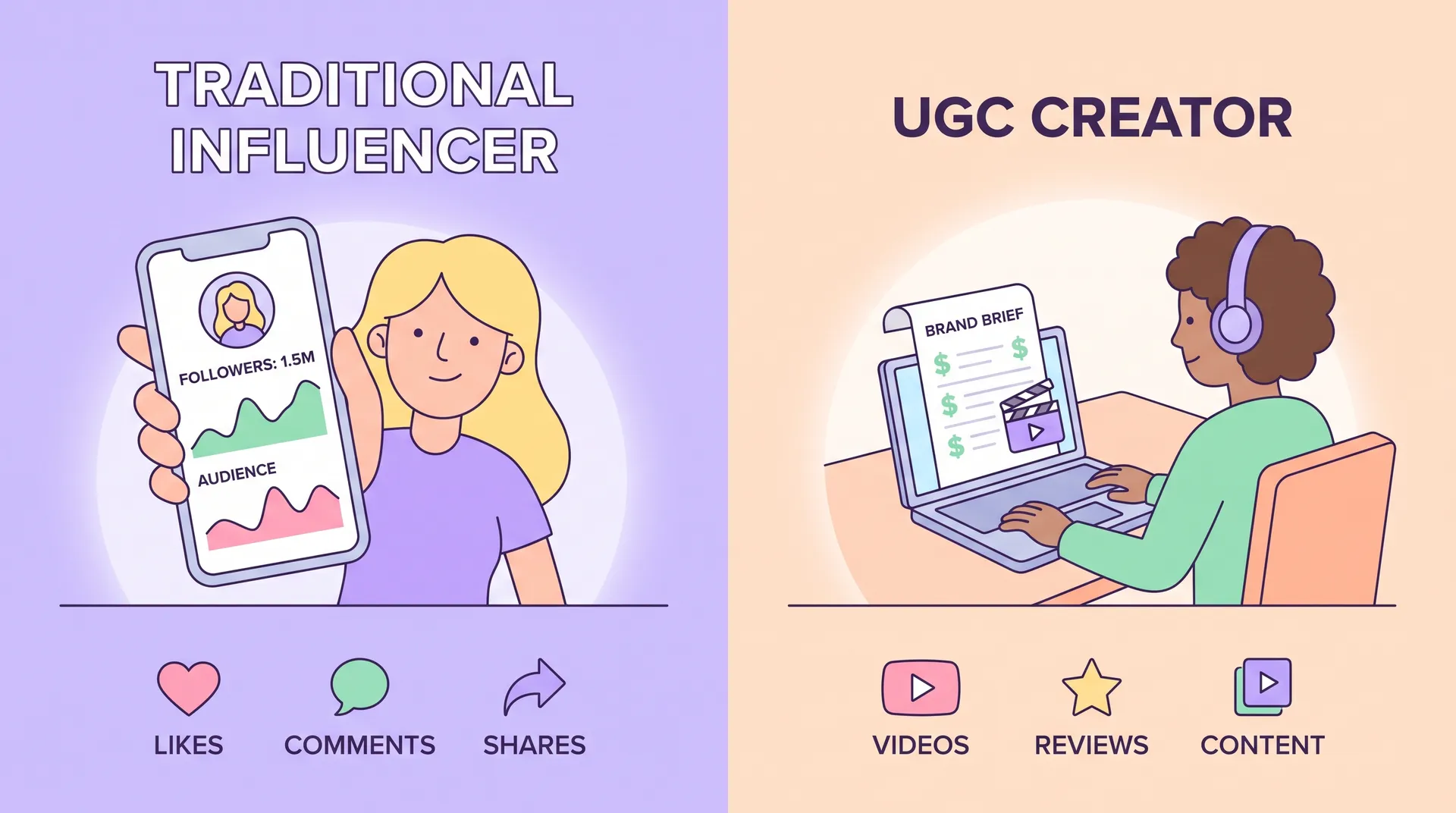
That's a massive shift from the influencer model. An influencer gets paid partly because of their audience. A UGC creator gets paid purely for their creative output.
UGC creator vs. influencer: not the same thing
This is where most beginners get confused, and the confusion is understandable — both involve creators and brands. But the commercial logic is completely different.
An influencer is paid for reach. A brand pays them to put a message in front of their existing audience. The follower count is the product. That's why a creator with 500,000 followers charges more than one with 5,000 — their distribution is the value.
A UGC creator is paid for content. Their follower count is irrelevant. A creator with 200 followers can charge exactly what a creator with 200,000 charges if their content quality is the same. The deliverable is the asset — a 30-second video, a photo pack, a testimonial clip — and the brand acquires the rights to use it however they want.
Two totally different value propositions. Two totally different pricing models.
In practice, many creators do both. They post on their own channels and do paid UGC work on the side. But understanding the distinction matters because it changes how you pitch yourself, what you charge, and what you put in a contract. Check out our piece on UGC usage rights if you want to understand exactly what brands are buying when they commission your content.
Why brands pay for UGC (and why it's not going away)
Here's something that surprised me when I first started building Flare: brands don't just like UGC-style content, they're actively shifting budget toward it. A lot of it.
The reason is performance. According to Nielsen, 92% of consumers trust peer recommendations over brand advertising. And research from Stackla found that 79% of people say UGC highly impacts their purchase decisions. These aren't soft engagement metrics — they're conversion numbers that show up directly in ROAS.
So brands are doing the math. Why spend $50,000 on a polished production shoot when they can commission 20 UGC videos for $3,000 and test which creative actually performs? It's faster, cheaper, and the winning content usually doesn't look like it came out of a studio.
That's the environment you're entering. Brands have budget allocated specifically for UGC, and they need people to fill it.
What brands actually buy
The typical UGC deliverable package looks something like this:
- 1–3 short-form videos (15–60 seconds), usually raw cuts with minimal editing
- Multiple hook variations (different opening 3 seconds to split-test in ads)
- B-roll footage shot separately
- Static photos or product lifestyle shots
A beginner UGC creator typically charges $150–$300 per video. Experienced creators with strong portfolios and proven ad performance often charge $500–$1,500+ per deliverable, especially when usage rights are included. UGC creator rates can scale surprisingly fast once you've got results to show.
The content doesn't need to be cinematic. It needs to feel real — good lighting, clear audio, a compelling hook, an honest product experience. That's it.
What makes someone a UGC creator (in practical terms)
You don't need a media kit with 10K followers. You don't need a fancy camera. You don't need to be an actor or a filmmaker.
What you actually need:
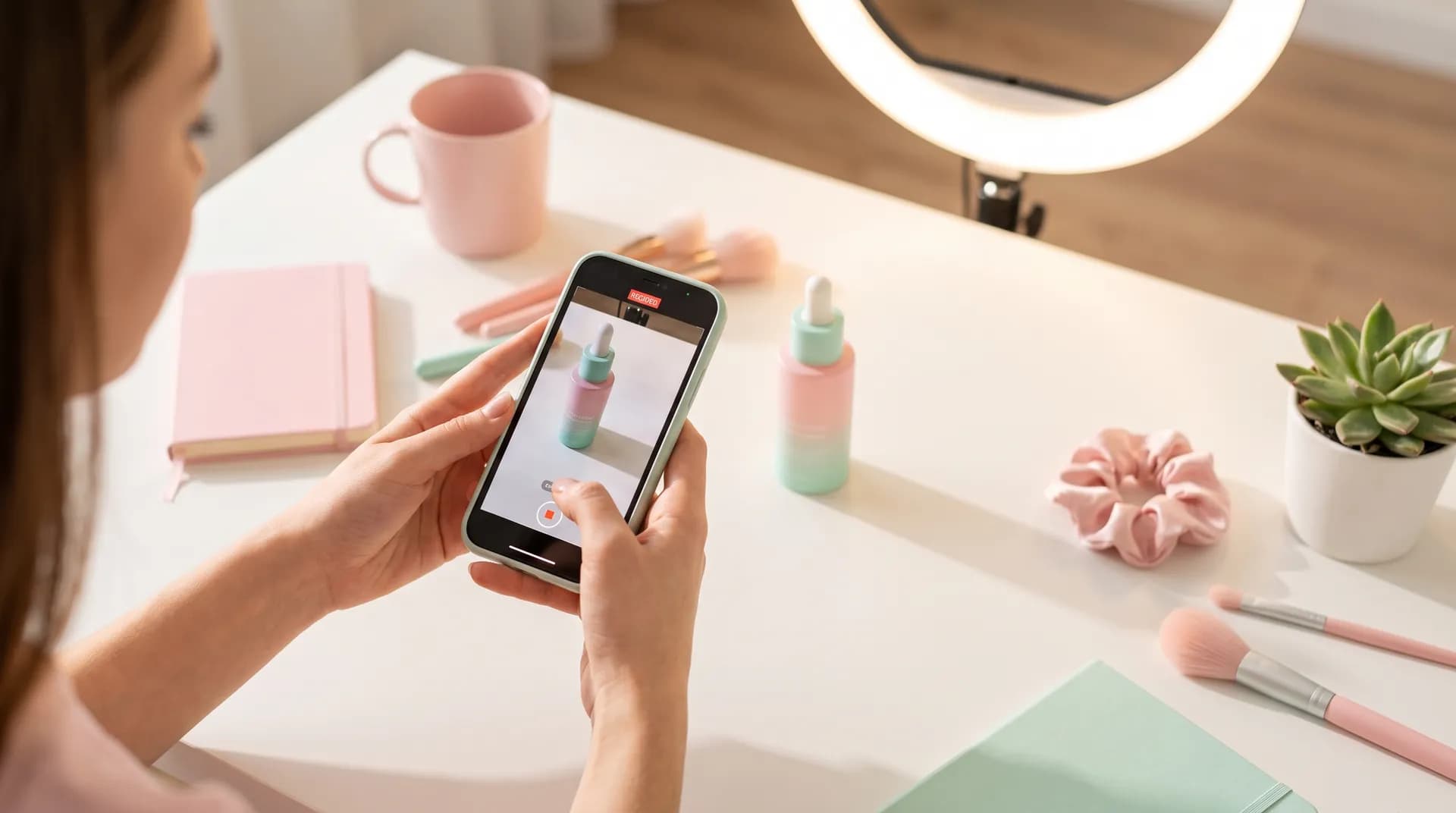
A phone that shoots decent video. Anything from the last three years works. iPhone, Android — doesn't matter. Brands want it to look like something a real person filmed, not a cinema rig.
The ability to stay on brief. This is underrated. Brands give you a creative brief — hook options, key messages, do's and don'ts — and your job is to execute it faithfully while still sounding like a human. Creators who ignore the brief or go off-script don't get rehired. Simple.
A basic understanding of what performs. You don't need to be a performance marketer, but knowing that the first 3 seconds of a video matter more than the last 27 is genuinely useful. I'd recommend learning how to film UGC content before pitching your first brand — it'll save you from basic mistakes.
A small body of work to show. Even if it's self-produced samples. Brands need to see what your content looks like before they commit. A portfolio with three solid videos beats a flashy media kit with no samples every time.
That's the baseline. Everything else — niche focus, pricing strategy, pitching brands, building retainer relationships — you layer on over time. If you want the full picture of how to get started, the complete guide to becoming a UGC creator walks through every step from zero.
The misconceptions worth clearing up
Misconception 1: You need a niche. You don't. Not at first. Some creators specialize in beauty or wellness or tech because it helps them build a targeted portfolio. But plenty of successful UGC creators work across multiple categories. Pick a niche if you have one — it's useful later — but don't let the lack of one stop you from starting.
Misconception 2: It's passive income. It's not. UGC is a service business. You're trading creative work for money, and you need to keep sourcing new clients, delivering content, and managing relationships. It can become more leveraged over time if you build retainer deals — where a brand pays you a monthly fee for ongoing content — but in the beginning, it's active work. Our piece on going full-time as a UGC creator is honest about this.
Misconception 3: You have to be on camera. Many UGC creators never show their face. Voiceover-only content, product demos filmed from the hands, unboxing videos, faceless lifestyle shots — all of these are legitimate deliverables that brands buy regularly. If being on camera feels like a barrier, it doesn't have to be.
Misconception 4: You need brand deals to prove yourself first. No brand deal required to build your first portfolio. You buy (or borrow) a product, film a sample video as if you'd been briefed by that brand, and use it to show what you can do. It's how most UGC creators get started — self-produced samples that demonstrate style and quality before anyone's paying them yet.
How this is different from traditional content creation
If you've been thinking about it as "making TikToks for money" — shift that mental model.
UGC work is closer to freelance copywriting or graphic design than it is to being an influencer. You're a creative professional delivering a service to a client. The client owns what you make (within the terms you agree to). You get paid whether the content goes viral or flops. The relationship is transactional in a clean, professional way — and that's actually a good thing, because it means your income doesn't depend on an algorithm.
Brands explain it clearly in their own marketing resources: they want authentic creative assets they can own and test. You're the person who makes those assets. That's the job.