
UGC content creator: what you actually do day-to-day
Forget the highlight reel. Here's what being a UGC content creator actually looks like — briefs, filming, revisions, and handoffs — before you start.

Most people who google "how to become a ugc content creator" picture themselves filming one short video, sending it off, and getting a Venmo notification. The reality is messier, more repetitive, and — honestly — more interesting than that.
I've watched hundreds of creators go through this at Flare. The ones who burn out fast almost always had the same problem: they didn't know what the actual job looked like before they started. So here's what it really looks like, day by day.
What a UGC content creator actually does (the honest version)
A UGC creator makes short-form video or photo content for brands — content the brand then uses in their own paid ads, organic social, or website. You're not posting to your own audience. You're a freelance production resource. That distinction matters more than most beginners realize.
That means your day isn't "post and pray for engagement." It's client work. Deadlines, deliverables, revision rounds, file formats. Closer to a freelance video editor than a lifestyle influencer. If you want to understand the full scope of what this career path involves, the how to become a UGC creator guide covers the whole journey — but this post is specifically about what you're actually doing once campaigns start landing.
On any given week you might be:
- Reading and interpreting a brand brief
- Filming 3–5 practice takes before you get a usable clip
- Editing on your phone or in CapCut/DaVinci
- Submitting a draft and waiting on feedback
- Revising based on notes you didn't fully anticipate
- Invoicing, tracking deliverable deadlines, and chasing payment
Not glamorous. But it pays $150–$500+ per video once you're established, and the skill compounds fast.
Reading brand briefs: the first real skill you build
Most beginners underestimate this. A brand brief can be two sentences or twelve pages, and both extremes are a problem.
A short brief like "make a fun video about our protein powder, keep it under 60 seconds" gives you almost nothing to work with. You have to ask clarifying questions or you'll film something that gets rejected on the first round. A 12-page brief with brand voice guidelines, competitor exclusions, required talking points, forbidden phrases, and three reference videos takes a solid 20–30 minutes just to absorb.
Either way, before you pick up your phone to film, you should be able to answer:
- Who is this ad targeting and what problem does it solve for them?
- What's the one thing the brand wants the viewer to feel or do?
- Are there specific claims I can or can't make?
- What's the hook style they want (testimonial, demo, problem-solution)?
That last question is where your scripting skills start mattering. I'd strongly recommend getting familiar with the Problem-Agitate-Solve framework — it's the structure behind most high-converting UGC ads, and understanding it makes brief interpretation much faster.
Brief reading typically takes 20–45 minutes per campaign. Budget for it.
The filming block: takes, retakes, and the 80% you delete
Here's something nobody tells you: most of your filming time is wasted footage. That's not failure — that's the process.
A typical filming session for a single 30-second deliverable might look like this:
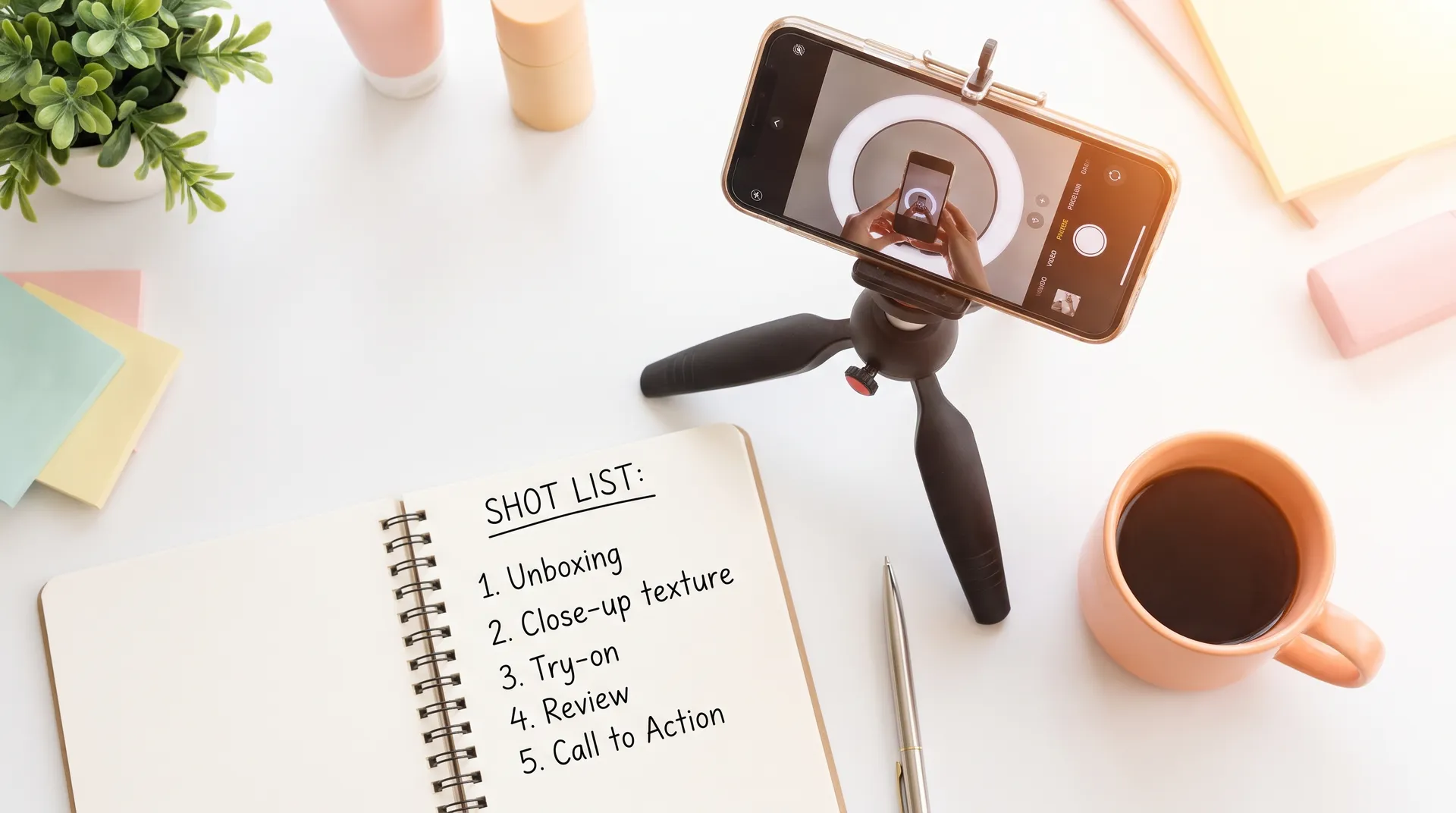
Setup: 10–15 minutes. Finding the right background, adjusting your lighting, getting your tripod or phone mount positioned, doing a test clip to check audio. If you haven't nailed your lighting setup, this phase bleeds way longer.
Takes: 30–60 minutes for a 30-second video. Seriously. You'll flub the hook, re-read the line, re-flub it, film a version you think is good, watch it back and hate it, film three more. The sixth take is usually the one you keep.
Selects: 10–15 minutes reviewing footage and marking what's usable. Most creators film 8–15 takes and use parts of 2–3.
Total filming time for one video: roughly 1–2 hours, not counting editing. When a brand orders a package of 3 videos, you're looking at a half-day shoot minimum — even from your living room.
The creators who get faster at this aren't filming fewer takes. They're getting faster at setup and at recognizing a good take on playback. That comes with reps.
Editing: fast, functional, not fancy
UGC editing is not cinematic editing. Nobody wants a 45-second UGC ad with a film-school color grade and motion graphics. Brands want clean, fast, authentic-feeling video that fits the native format of the platform it'll run on.
That said, "fast and functional" still requires real skill. You need to:
- Cut dead air aggressively (every pause longer than 0.5 seconds that isn't intentional comes out)
- Add captions — 85% of social video is watched without sound and brands know it
- Match the aspect ratio (9:16 for TikTok/Reels, sometimes 1:1 or 4:5 for Meta feed)
- Export at the right spec — most platforms want H.264, 1080p minimum
CapCut handles most of this for free. DaVinci Resolve is free and more powerful if you're doing heavy editing. Most working UGC creators I know spend 30–60 minutes editing a single video. Batch days — where you film and edit 3–5 videos in one go — cut that per-video time significantly because you're already warmed up and in the zone.
Revisions: budget for them emotionally
You will get revision requests. Not because you did bad work. Because brands are managing multiple stakeholders, legal review, last-minute strategy shifts, and sometimes a marketing manager who just rewatched a competitor's ad and now wants something different.
The industry norm is one round of revisions included in your rate. If a brand brief asks for unlimited revisions, that's a red flag — it's a rate structure problem waiting to happen, and you should push back or price accordingly. Our UGC creator rates breakdown covers how to factor revisions into your pricing so you don't get burned.
Common revision requests you'll see repeatedly:
- "Can you re-record the hook? It feels a bit flat."
- "Legal says we can't claim it's the 'fastest' anything — can you swap that out?"
- "The music feels off — can you try something more upbeat?"
The music one is worth flagging: always use royalty-free tracks from Epidemic Sound or similar, not a trending song off Spotify. Using unlicensed music is the fastest way to get a deliverable rejected and create a contract dispute.
Revision turnaround is typically 24–48 hours. Build that buffer into your deadline commitments.
Deliverable handoff: the part beginners forget to plan for
Once editing is done and approved, you still need to actually get the files to the brand. This sounds trivial. It's not.
Brands will ask for files via Google Drive, WeTransfer, Dropbox, a shared Notion folder, a dedicated platform like Billo or Trend, or sometimes just email (which is always a problem when files are 500MB). Make sure you know their preferred handoff method before you start a campaign — it goes in your brief intake questions.
You'll also need to keep organized local copies. Six months from now, a brand might come back and ask for the raw footage for a new cut. If you've deleted it, that's a missed upsell opportunity and a bad client experience.
A simple folder structure for each campaign: /ClientName_CampaignName/raw_footage, /edits_v1, /edits_final, /delivered. Takes two minutes to set up and saves hours of chaos.
The business layer that runs underneath everything
Here's what nobody romanticizes about this job: the admin.
Every campaign involves a contract, an invoice, and usually a few back-and-forth emails that eat 15–20 minutes you didn't account for. If usage rights are in play — like a brand wanting to run your video as a paid ad — that triggers a whole separate conversation about licensing fees. Understanding UGC usage rights and what to charge for them is non-negotiable once you're past your first few deals.
The UGC creator vs. influencer comparison is relevant here too, because the business model is genuinely different. Influencers monetize attention. UGC creators monetize production skill. That means your pricing logic, your contracts, and your client relationship all work differently.
Most established creators I know spend roughly 20–30% of their working time on business operations: contracts, invoicing, pitching new brands, updating their portfolio. If you're doing $3,000/month in UGC revenue, expect to spend 6–8 hours a week just on the business side of things.
What a real week looks like (rough numbers)
To make this concrete — here's a typical active week for a part-time UGC creator juggling 2–3 active campaigns:
| Task | Approx. time |
|---|---|
| Reading briefs + Q&A with brands | 1–2 hrs |
| Scripting / prep | 1–2 hrs |
| Filming (3 videos) | 4–5 hrs |
| Editing (3 videos) | 2–3 hrs |
| Revisions (1–2 rounds) | 1–2 hrs |
| Handoff + admin + invoicing | 1–2 hrs |
| Total | 10–16 hrs |
At $200/video average with 3 deliverables, that's $600 for 10–16 hours of work — roughly $37–$60/hr. Not bad for a skill you can build in a few months. And as you get faster at filming and editing, the hourly rate climbs without needing to raise prices.
Frequently Asked Questions
What does a UGC content creator actually do?
How long does it take to film a single UGC video?
How many revisions should a UGC creator offer?
Do you need a big following to be a UGC content creator?
How much can a UGC content creator earn per video?
What tools do most UGC content creators use?
Related reading
- What is a UGC creator? (And what it means in 2025)
- How to become a UGC creator: the complete guide
- UGC creator vs. influencer: what's the real difference?
- UGC scripting: the Problem-Agitate-Solve framework
- UGC whitelisting rights: what they are & what to charge
- How to read a UGC contract before you sign