UGC Creator Personal Brand: Get Brands to Come to You
Build a UGC creator personal brand that generates inbound leads. Learn the LinkedIn, portfolio, and content moves that get brands sliding into your DMs.

Six months into full-time UGC work, I stopped pitching brands entirely. Not because I got lazy. Because my inbox started doing the pitching for me.
That shift didn't happen by accident. It happened because I treated my own social presence like a storefront instead of a diary. Most creators post content for their audience and hope brands notice. I built mine so brands couldn't not notice. There's a difference, and it's the whole game.
If you're still spending your mornings scrolling creator marketplaces and firing off cold emails, this post is for you. I want to show you exactly how a ugc creator personal brand turns into a lead-gen machine that works while you sleep.
Why your ugc creator personal brand matters more than your portfolio
Your portfolio proves you can execute. Your personal brand is what gets someone to open your portfolio in the first place.
Here's the uncomfortable truth: brand marketers are on LinkedIn and Instagram every single day, and they're actively searching for creators who already look like the kind of person their audience trusts. A polished portfolio site sitting on a shelf does nothing if nobody's walking past the shelf. Your personal brand is the foot traffic.
I've landed retainer deals worth more than my first six months of cold-pitched gigs — and every single one started with someone finding me, not the other way around. A brand marketing manager saw a LinkedIn post I wrote about UGC hook structures, checked my profile, and DMed me before I'd even mentioned I was looking for work.
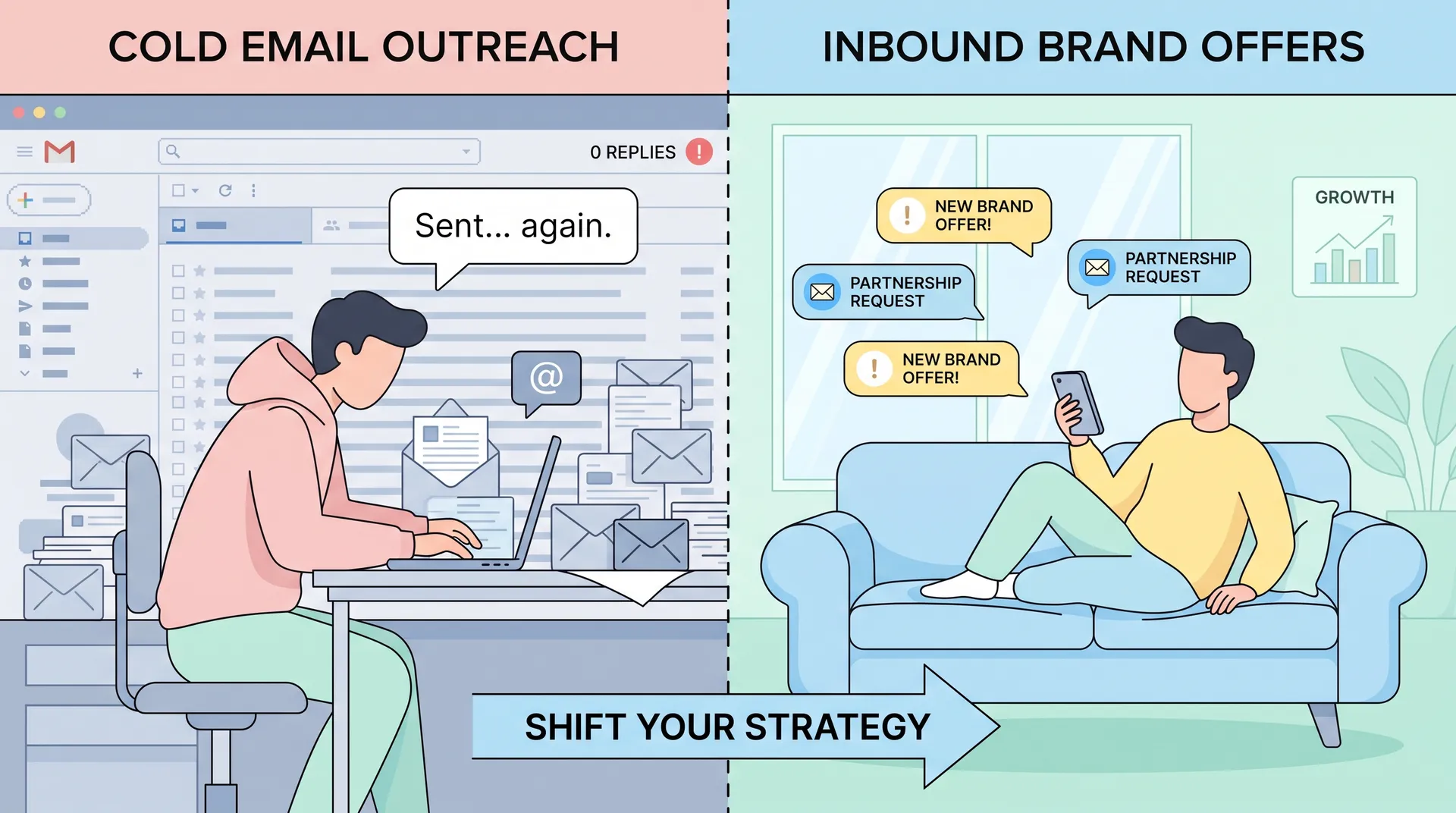
That's the flip nobody talks about enough when they cover how to go full-time as a UGC creator. Everyone focuses on outreach volume. Almost nobody talks about making outreach unnecessary.
The math on inbound vs. outbound
Cold pitching has a brutal reply rate — most creators I talk to land somewhere between 2% and 8% on cold emails, even with a decent template. Inbound leads convert at a completely different level because the brand has already pre-qualified themselves by reaching out. They've seen your work, they like your vibe, and they're not shopping five other creators against you on price alone.
That last point matters more than people realize. When a brand comes to you, you set the terms. When you chase a brand, they set the terms. If you've ever wondered why some creators seem to raise their rates without losing clients, this is usually why — they stopped competing on price because they stopped competing at all.
Building the three pillars of an inbound personal brand
I break this into three channels, and they each do a different job. Skip one and you leave money on the table.
1. Your niche content on TikTok or Instagram
This is your proof of life. Not your portfolio reel — your actual, native content that shows you understand a category, not just how to hold a phone steady.
If you're a beauty UGC creator, don't just post generic "get ready with me" videos. Post breakdowns of what makes a skincare ad convert, or a duet reacting to a brand's bad hook. Show that you think like a marketer, not just a talent. Brands don't just want someone who can film — they want someone who gets why the content works. This ties directly into niche specialization: the narrower and sharper your expertise looks from the outside, the easier you are to remember.
2. LinkedIn — yes, really
I know. LinkedIn feels like the wrong platform for a creator who makes TikToks about skincare. It's actually one of the highest-leverage channels going, because it's where the people who hire creators — brand marketers, agency buyers, in-house social leads — spend their working hours.
Post about your process. Post about a campaign result (with permission). Post a hot take on why a brand's ad campaign flopped. You don't need thousands of followers. You need the right 200 people seeing you show up consistently as someone who understands performance creative, not just aesthetics. According to LinkedIn's own creator research, posts from individual professionals routinely out-engage brand pages — which means your personal voice carries weight brands can't manufacture themselves.
3. Your creator platform profile
Fiverr, Billo, Creator marketplaces — whatever you use, treat your profile like a landing page, not a filing cabinet. Most creators write a bland one-liner and call it done. That's a wasted opportunity. Your bio should state your niche, your best result, and a hook that makes a brand curious enough to click through to your actual portfolio.
If your portfolio itself needs work, this is worth pairing with a deeper look at how to build a UGC portfolio that wins campaigns — the personal brand gets attention, but the portfolio closes the deal.
Treat every public post as a mini case study. Instead of "here's my UGC video," try "here's why I framed this hook around a pain point instead of a product feature — and what happened when the brand tested it." Specificity sells expertise.
What actually shows up in your feed matters
I've seen creators build gorgeous portfolios and still get ignored, because their public feed told a different story. If a brand clicks through to your TikTok and sees six months of unrelated content — travel vlogs, memes, random reposts — they can't tell what you actually do. Confusion kills inbound interest faster than bad content does.
Audit your last 20 posts. Would a stranger know your niche within 30 seconds of scrolling? If not, you've got a personal brand problem, not a talent problem.
This connects to something I cover when talking about managing a UGC creator client pipeline — the leads you generate inbound are only as good as the signal you send before they ever reach your inbox. Sloppy signal means sloppy leads, or worse, no leads.
Consistency beats virality
I'd rather post three focused, on-topic videos a week for six months than go viral once with off-brand content. Virality brings eyeballs. Consistency brings credibility, and credibility is what gets you DMed by a brand's marketing director instead of tagged by a random follower.
Full-time creators who build sustainable inbound pipelines usually pair this consistency with a repeatable production system — something I get into in the UGC creator batching workflow piece, because posting three times a week for six months straight isn't a motivation problem, it's a systems problem.
Turning inbound interest into an actual pipeline
Getting DMed is step one. What you do next decides whether it turns into paid work or just a nice compliment.
- Respond within 24 hours. Brands reaching out organically are often comparing a few creators at once — speed is a differentiator.
- Have your rates and packages ready to send immediately. Don't make them wait a week while you figure out pricing.
- Always link to your portfolio and one or two case studies, not your whole content library.
- Follow up if they go quiet. Inbound leads still need nurturing — they're just warmer than cold ones.
Brands researching creators often check multiple signals before reaching out, which HubSpot's research on B2B buyer behavior backs up broadly — buyers do the vast majority of their evaluation before ever contacting a seller. UGC brand buyers behave the same way. By the time they DM you, they've already decided you're probably a fit. Your job is to not blow that trust with a slow or sloppy reply.
Inbound leads don't replace outreach entirely — they reduce your dependence on it. Most full-time creators I know run both simultaneously, but as their personal brand strengthens, the ratio shifts from 80% outbound to 70% inbound within a year or two.
Once inbound starts working, you'll notice something else: your income stops looking like a single stream from marketplace gigs. Personal-brand-driven leads often come with better rates, retainer potential, and referral chains — which is part of why creators who build this well end up with multiple revenue streams instead of one shaky pipeline.
Common mistakes that kill inbound momentum
I've made most of these myself.
Posting inconsistently and expecting algorithmic favor anyway. Platforms reward creators who show up — TikTok's own creator guidance is blunt about posting cadence mattering for reach, and reach is what gets you seen by brand teams scouting talent.
Never stating what you actually do. "Creator" isn't a niche. "I make UGC for skincare and wellness brands" is.
Treating LinkedIn like a resume instead of a content channel. Nobody reaches out to a static profile. They reach out to someone actively posting insight.
Ignoring DMs from smaller or unfamiliar brands. Some of my best long-term clients started as small, unglamorous first orders that turned into repeat business and referrals once I delivered well.
Frequently Asked Questions
What is a UGC creator personal brand?
Do UGC creators really need LinkedIn?
How long does it take to get inbound brand deals?
Should I niche down for my personal brand?
Can I build a personal brand without showing my face?
Does personal branding replace cold outreach entirely?
Building a personal brand isn't a side project you squeeze in between paid gigs. It's the infrastructure that determines whether you're still hustling for every dollar two years from now, or whether brands are lining up in your DMs. Start posting like the expert you already are — the inbound will follow.
Related reading
- How to go full-time as a UGC creator in 2025
- How to Build a UGC Portfolio That Wins Campaigns
- UGC creator niche specialization: does going narrow pay more?
- How to get repeat UGC clients and build referrals
- UGC creator multiple revenue streams: stack your income
- How to manage a UGC creator client pipeline