How to write a UGC video brief for beginners (no brand needed)
Learn how to write a UGC video brief for beginners when no brand brief exists. Self-brief your spec video with objective, hook, message, and CTA.

Most beginners wait for a brand to send them a brief before they film anything. That's why most beginners never film anything.
Here's the truth nobody tells you when you're starting out: brands don't send briefs to creators with zero portfolio. You don't get a brief invitation — you get ignored, or you get a generic "send us your rates" reply with no direction at all. If you're waiting for someone else to hand you an objective, a hook idea, and a script outline, you'll be waiting a long time.
So you write your own. That's what a UGC video brief for beginners actually is — a one-page plan you create for yourself before you ever land a real client, so your practice videos look like they came from an actual campaign instead of a random phone recording. I've reviewed hundreds of creator portfolios at Flare, and the difference between the ones that get booked and the ones that get skipped almost always comes down to this: did the creator brief themselves, or did they just hit record and hope?
Why a self-written UGC video brief matters before you land clients
A brief isn't paperwork. It's the thing that turns "I filmed a video of my skincare routine" into "I filmed a 30-second ad with a hook, a problem, a solution, and a CTA that mirrors what a paid campaign looks like."
Brands scrolling through your portfolio aren't grading your acting or your camera work first. They're checking whether you understand structure. A spec video with no objective wanders. It shows the product, maybe says it's nice, and ends with nothing. A spec video built from a real brief has a job to do in under 30 seconds — and it shows.
This is also the fastest way to practice the skill you'll be paid for. Once you land real work, brands will send briefs constantly, and half of them will be vague or incomplete anyway. Learning to fill in the gaps yourself now means you'll never freeze up later when a client's brief just says "make it feel authentic, you know what we mean." (They send that more often than you'd think.)
If you haven't picked a lane yet, it's worth reading how to choose your UGC niche first — briefing gets a lot easier once you know who you're pretending to sell to.
Treat every practice video like it's for a real client with real money on the line. That mindset shift alone will improve your output more than any camera upgrade.
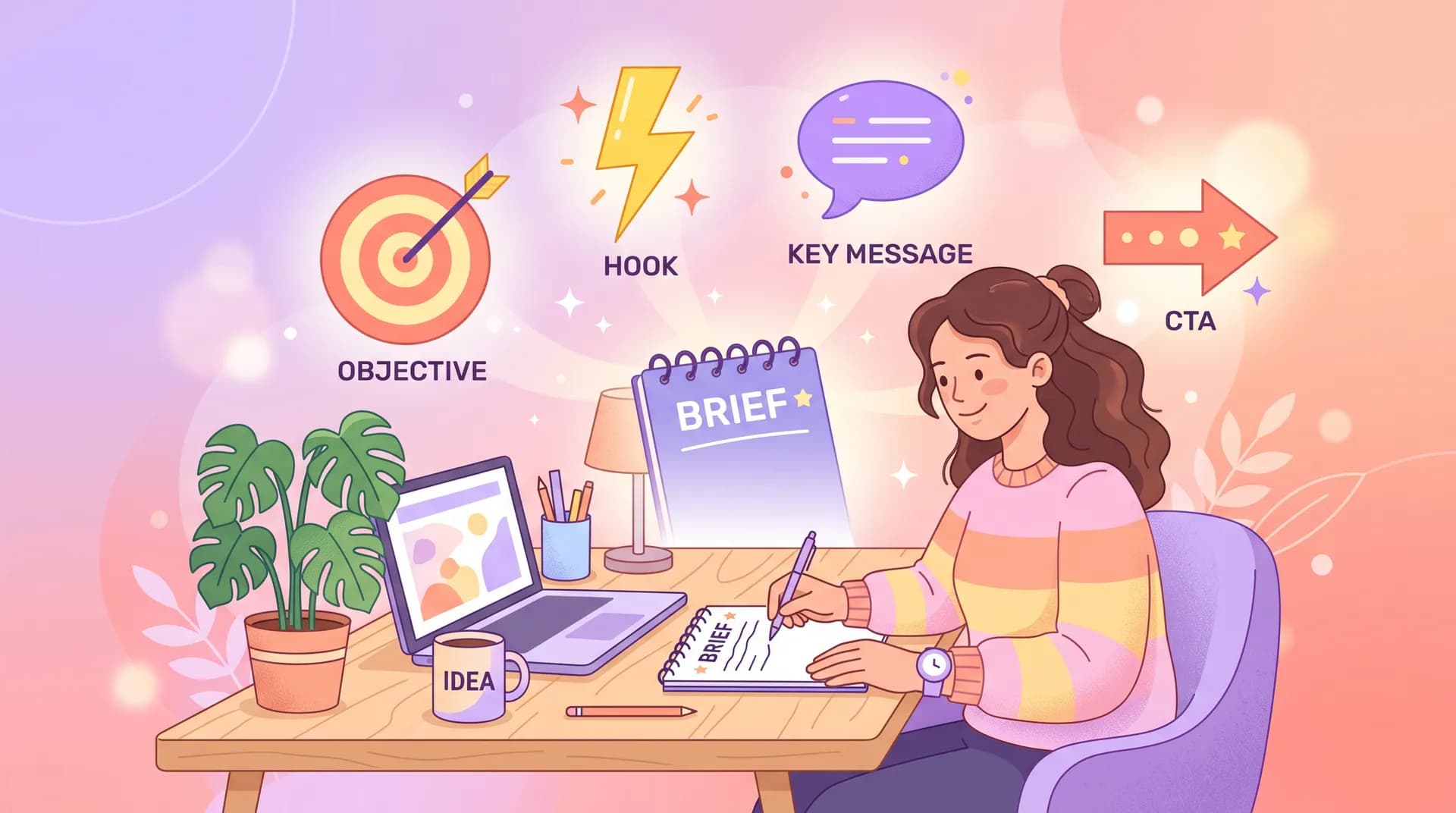
The four things every UGC brief needs
Strip away the templates and jargon and a brief is really just four decisions. Make these four calls before you press record, and you're ahead of most beginners.
1. Objective — what is this video supposed to do?
Pick one. Not three. One.
Common objectives for spec videos:
- Drive a click or a swipe-up (performance ad style)
- Build trust in the product (testimonial style)
- Educate on how to use it (demo style)
- Entertain first, sell second (organic-feeling style)
If your objective is "show the product," that's not an objective — that's a description. An objective answers: what do I want the viewer to do or feel after watching? For a deeper look at which formats map to which objectives, check out UGC video formats brands actually buy.
2. Hook — what happens in the first 2 seconds?
This is the part beginners skip and it's the part that matters most. Meta and TikTok both report the majority of ad performance is decided before the three-second mark — if the hook doesn't stop the scroll, the rest of your brief is irrelevant because nobody sees it.
Write your hook as an actual line before you film, not something you'll "figure out in the moment." Options that work for beginners:
- A blunt statement ("I wasted $40 before I found this")
- A visual surprise (product doing something unexpected)
- A question that calls out the viewer directly ("Still using [old method]?")
3. Key message — what's the one thing they need to remember?
If someone watched your video with the sound off and scrolled away after 10 seconds, what's the single idea they should walk away with? Write it down as one sentence. Everything else in the script supports that sentence — it doesn't compete with it.
Beginners often try to cram three selling points into 30 seconds. Brands don't do this in their own ads, and you shouldn't either. Pick the strongest claim and build the whole video around it.
4. CTA — what do you want them to do next?
"Link in bio" is not a CTA, it's a location. A real CTA tells the viewer what action to take and why now: "Grab yours before the restock sells out again" hits different than "check it out."
Even in a spec video with no actual product link, write a CTA anyway. It shows brands you understand that UGC exists to move people toward a decision, not just to look nice.
A simple brief template you can copy right now
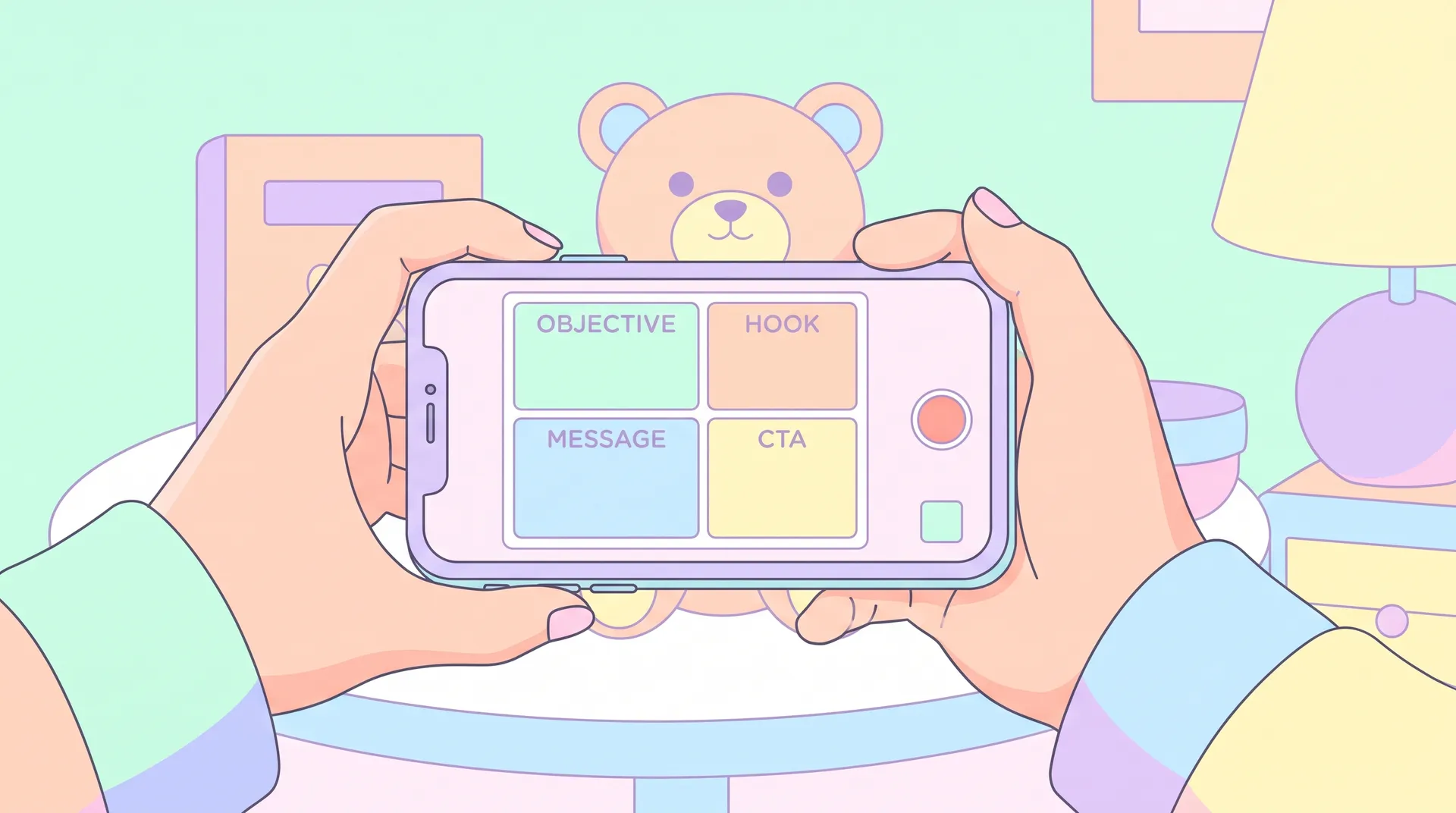
Here's the exact four-line format I tell new creators to fill out before every practice shoot. Takes five minutes, saves you from filming something aimless.
Objective: [what action/feeling this video should drive]
Hook (0-2 sec): [exact line or visual]
Key message: [the one thing they remember]
CTA: [specific action + urgency if possible]
Fill that out, then write a rough script underneath it. You don't need fancy software — a Notes app or a Google Doc works fine. The point isn't the format. It's forcing yourself to make four decisions before you hit record instead of during editing, when it's too late to fix a wandering video.
Keep every brief you write, even the bad ones. Once you land your first real client, having 10-15 self-written briefs and matching videos becomes proof you can follow structure — which is exactly what brands are hiring for.
Where this fits into your bigger UGC plan
A self-written brief is a skill, not a one-time exercise. You'll use this same four-part structure for your first practice video, for portfolio pieces, and eventually for real paid campaigns — except at that point you'll be filling gaps in someone else's brief instead of starting from a blank page.
This is also a good gut check on your gear situation. You don't need a full studio setup to execute a good brief — phone settings alone get you most of the way there, and a basic understanding of what equipment is actually worth buying will save you from overspending before you've even booked a client.
If you're still fuzzy on what this whole path looks like end to end — from your first video to your first paycheck — the complete guide to becoming a UGC creator walks through the entire on-ramp, and this brief-writing skill is one piece of that bigger picture.
Once you're applying to actual campaigns, you'll start seeing real brand briefs, and they range from three bullet points to five-page documents. Knowing how to read those — and fill in what they leave out — is a related but slightly different skill worth studying once you get there.
FAQ
Frequently Asked Questions
Do I need a brief for practice UGC videos if there's no brand involved?
What's the difference between a UGC brief and a script?
How long should a beginner UGC brief be?
Can I use the same brief format for TikTok, Reels, and Shorts?
What should the CTA be if I'm filming a spec video with no real product link?
Related reading
- How to become a UGC creator: the complete guide
- How to film your first UGC video (practice shoot guide)
- UGC video formats brands actually buy (with examples)
- How to read a UGC campaign brief (and what brands want)
- Best phone settings for filming UGC videos
- How to choose your UGC niche (beginner's guide)
External resources worth a look: Meta's guide on creative best practices for hooking viewers, TikTok's Creative Center for trending ad formats, and the IAB's UGC and creator content guidelines.