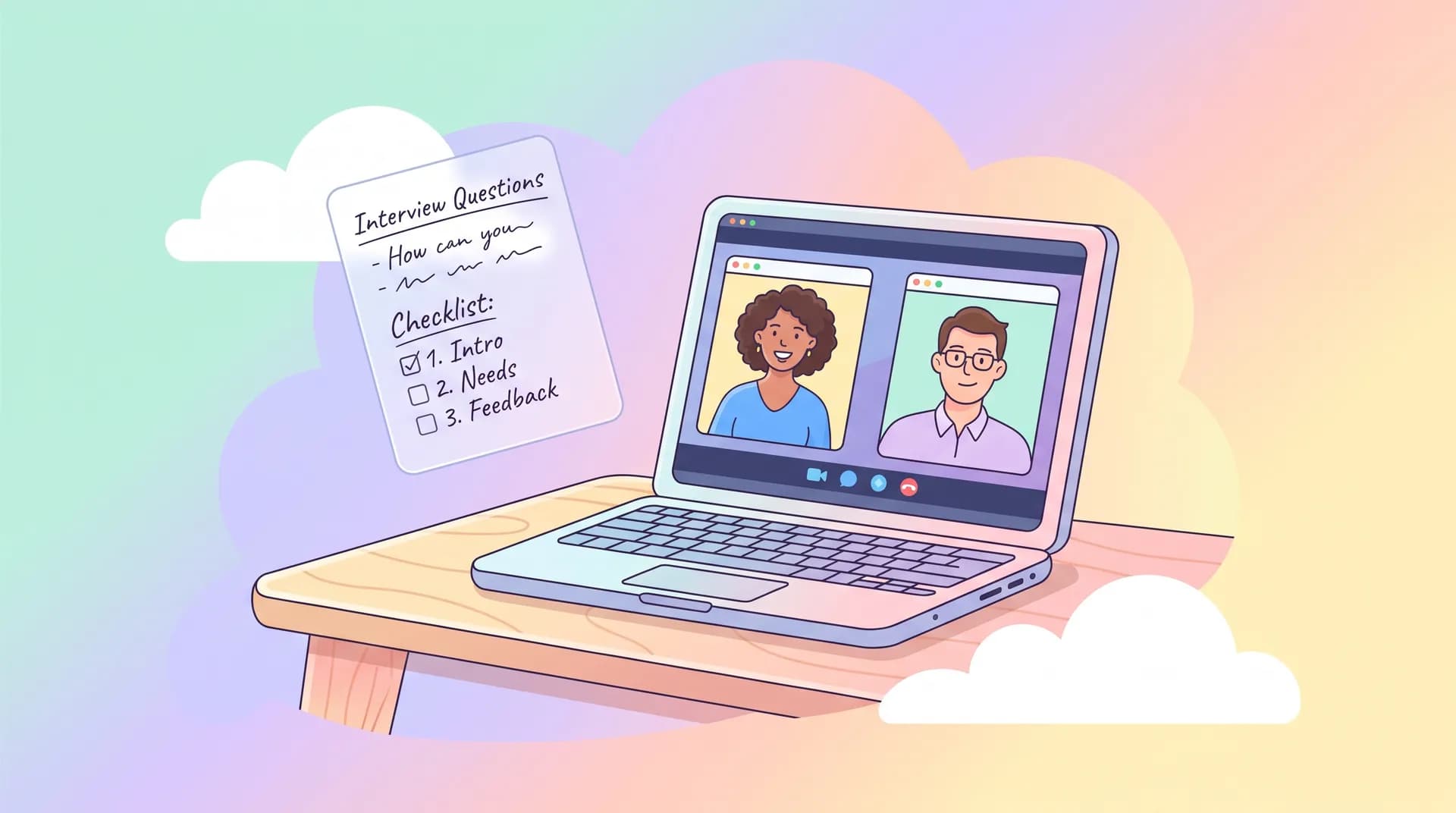
Testimonial Questions That Get Quotable SaaS Answers
A question bank of testimonial questions for SaaS interviews, organized by activation, ROI, and switching stories, so you stop getting generic answers.

Ask "What do you like about our product?" and you'll get "It's great, really easy to use." Thanks for nothing. That's the sentence I've watched kill more testimonial videos than bad lighting, bad audio, and nervous customers combined.
I've sat through probably 150 customer interviews at this point, either running them myself or reviewing footage other teams shot. The difference between a testimonial that converts and one that sits unused on a hard drive almost never comes down to production value. It comes down to the questions. Good testimonial questions pull out numbers, moments, and before/after contrasts. Bad ones invite your customer to say something polite and forgettable.
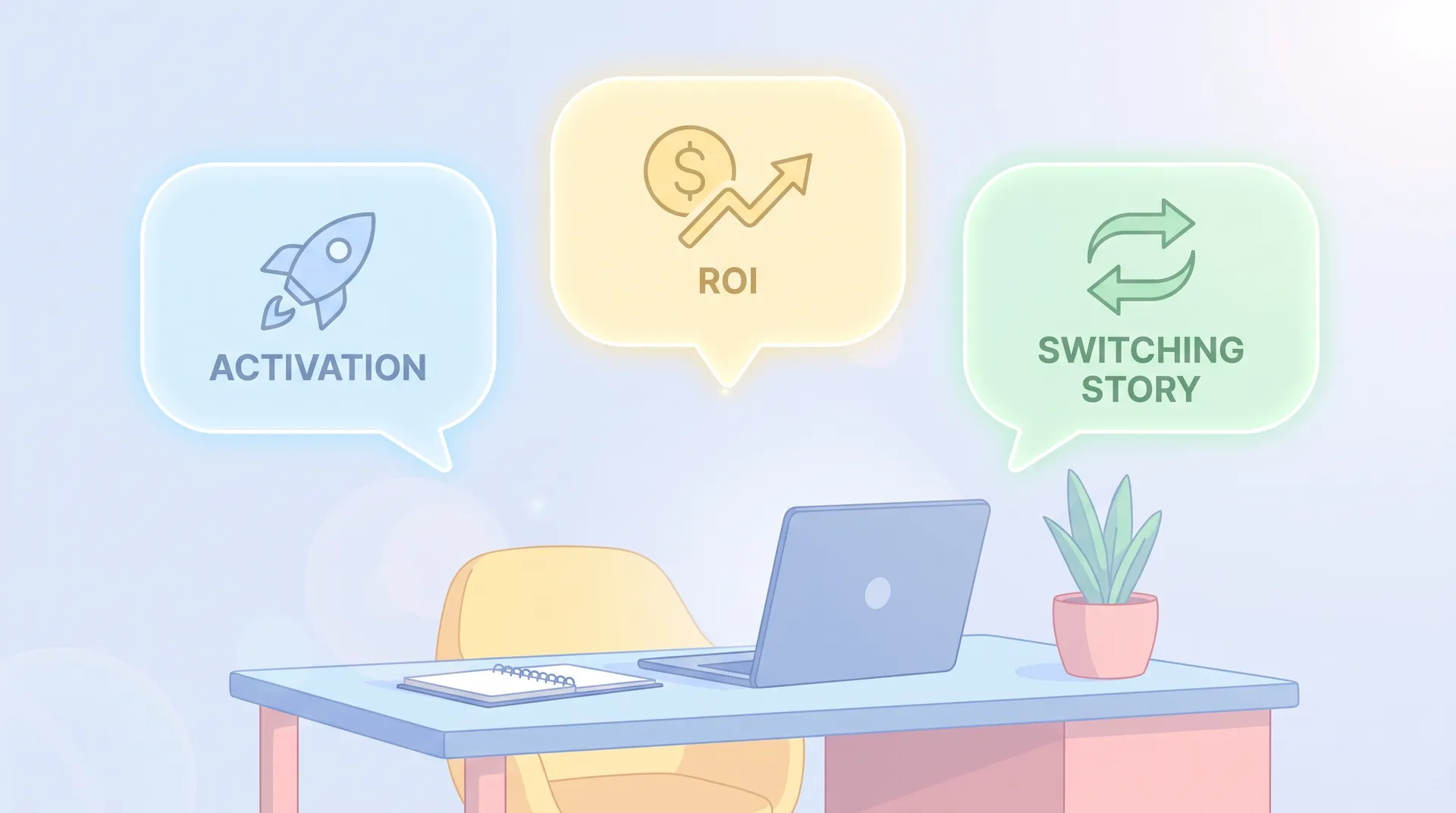
This post is the question bank I actually use. I've organized it around three angles that consistently produce quotable, specific answers: activation (the moment it clicked), ROI (the number that justifies the spend), and switching stories (why they left whatever they were using before). If you're building a testimonial program from scratch, start with the pillar guide on building a customer video testimonial program for SaaS — this post assumes you've already picked your customer and booked the call, and goes deep on exactly what to ask once the camera's rolling.
Why most testimonial questions fail before the interview starts
The root problem is almost always the same: your questions are too broad, and they ask the customer to evaluate your product instead of describing their experience with it.
"What do you think of [Product]?" is an invitation to generalize. Nobody opens with "Well, at 2:47pm on a Tuesday, I realized our support ticket volume had dropped 40%." They open with "I think it's been really helpful." That's not their fault — it's yours, for asking a question that doesn't require a specific answer.
The fix is to ask questions that can only be answered with specifics. "Walk me through the day you realized this was working" forces a scene. "What number did you report to your boss?" forces a figure. "What were you using before, and what made you finally switch?" forces a story with a beginning and an end.
If you haven't already nailed down who you're interviewing, that matters just as much as what you ask — a mediocre customer with great answers still beats a great customer with vague ones. I wrote a whole piece on choosing the right customers for video testimonials if you're still at that stage.
The activation angle: questions about the moment it clicked
Activation questions dig into the specific point where the customer stopped evaluating your product and started depending on it. This is gold for your homepage and onboarding flow because prospects are trying to picture that same moment for themselves.
- "What was the first thing you tried to do with [Product], and what happened?"
- "Walk me through the day you realized this was actually going to work for you."
- "What almost made you give up on it, if anything?"
- "How long did it take before you'd call yourself a 'power user'?"
- "What's the one feature you showed a coworker first?"
- "If you had to onboard a new hire tomorrow, what's the first thing you'd tell them to do?"
- "What did your workflow look like the week before you started, versus the week after?"
Notice none of these ask "was onboarding easy?" That question gets you a yes/no. "Walk me through the day" gets you a narrative, and narratives are what you clip into 15-second ads.
This angle pairs naturally with onboarding content elsewhere in your funnel. If activation is a weak point for your product generally, it's worth reading how we think about SaaS onboarding and user activation separately from testimonials — the two problems (helping new users activate, and capturing proof that activation happened) tend to reinforce each other.
Ask activation questions even for customers who've used your product for years. Memory fades, but most people can still describe the specific moment something clicked — and that memory is more vivid and quotable than their current, more neutral opinion.
The ROI angle: questions that produce a number
If activation questions get you a story, ROI questions get you a number — and numbers are what finance-approver personas actually care about. The trick here is phrasing questions so the customer has to commit to a figure instead of hedging with "it's saved us a lot of time."
- "If you had to put a dollar amount on what this has saved you, what would it be?"
- "How many hours a week did this used to take, and how many does it take now?"
- "What did you report to your manager or board about this tool's impact?"
- "What would happen to your team's output if we took this away tomorrow?"
- "How did you justify the cost of this internally?"
- "What metric moved the most after you adopted this, and by how much?"
- "Did this replace a headcount, a tool, or both?"
That last one is underrated. "This replaced a $60k contractor" is a far more powerful line than "this is cost-effective." Push for the replaced-cost framing whenever it's true — it translates directly into a buyer's budget conversation.
Don't be afraid of silence after you ask an ROI question. People often need five or ten seconds to do the mental math on what they actually saved. Resist the urge to fill that silence — the number they land on after thinking is usually better than whatever they'd have blurted out immediately.
Timing matters here too. A customer three weeks into using your product won't have ROI numbers yet. Ask these questions once they've hit a full billing cycle or reporting period, so the number they give you is real and not a guess. I go deeper on timing in how to ask for testimonials by lifecycle stage.
The switching-story angle: questions about what they left behind
Switching stories are the most persuasive testimonial content for one simple reason: your prospects are currently living the exact frustration your customer describes leaving behind. A good switching story is basically a mirror.
- "What were you using before, and why wasn't it working anymore?"
- "What was the breaking point — the thing that finally made you start looking for alternatives?"
- "What did you try before settling on us? Why didn't those work out?"
- "What were you most worried about when switching tools?"
- "What did you expect to be painful about the switch that actually wasn't?"
- "Looking back, what do you wish you'd switched sooner for?"
- "What would you tell someone who's in the exact situation you were in six months ago?"
That last question is the one I use to close almost every interview. It reliably produces the most quotable line of the whole call, because you're explicitly asking the customer to speak to their past self — which is functionally the same as speaking to your prospect.
Switching stories work especially well if your buyer is coming from a specific, well-known competitor. Naming names (with the customer's permission) makes the comparison concrete instead of implied.
How to actually run the interview
A question bank doesn't help if the interview itself feels like an interrogation. A few operational notes from doing this too many times:
Send the questions ahead of time, but only as a rough outline — not a script. Customers who see the exact questions in advance tend to over-rehearse and sound stiff. I usually send three or four themes ("your switching story," "numbers you've tracked," "a specific win") and let the actual phrasing happen live.
Ask the same question two or three different ways if the first answer comes out generic. "What's saved you time?" followed by silence or a shrug often becomes something great once you follow up with "okay, walk me through last Tuesday."
Keep a follow-up habit: whenever someone gives you a specific number or anecdote, immediately ask "can you say that again, but imagine you're explaining it to a friend who's never heard of us?" That reframe consistently produces the cleanest, most usable soundbite of the whole interview.
Don't lead the witness with your own language. If you ask "would you say this saved you a ton of time?" you'll get "yeah, totally" — a phrase you can't actually use because it's your words, not theirs. Ask open questions and let them land on their own phrasing.
If you're still figuring out logistics — how to request the interview in the first place, what tools to use, how to make the ask feel low-pressure — the testimonial request email templates post has the exact wording I use to get a yes.
A shortlist to bring into your next interview
If you only take five questions from this whole post, take these:
- "Walk me through the day you realized this was working."
- "If you had to put a dollar amount on what this has saved you, what would it be?"
- "What were you using before, and what finally made you switch?"
- "What would you tell someone who's in the exact situation you were in six months ago?"
- "Can you say that again, but imagine you're explaining it to a friend who's never heard of us?"
Every other question in this post exists to set up one of those five. If the interview runs long or your customer is short on time, these are the ones you don't skip.