How to Choose the Right Customers for Video Testimonials
Picking happy customers isn't enough. Learn the framework for choosing customer testimonial videos that map to real buyer segments and actually convert.

I once watched a SaaS company spend $18,000 producing five beautiful customer testimonial videos. Great lighting, great editing, great subjects. All five were enterprise customers who'd been using the product for three years and loved a feature set the company had actually started deprecating.
Conversion on the page those videos lived on? Flat. Worse than flat — it dropped slightly, because new visitors watched videos describing a product experience that didn't match what they were about to buy.
That's the thing nobody tells you about customer testimonial videos: picking "happy customers" is the easy part. Picking the right happy customers is where almost everyone gets it wrong, and it's the single biggest lever in whether your testimonial program actually moves pipeline or just sits there looking nice.
Why "most satisfied customer" is the wrong filter for customer testimonial videos
Most teams build their testimonial shortlist from an NPS report or a CS manager's gut feeling. Whoever's loudest in the Slack channel, whoever replies fastest to the "would you be open to a quick video?" email — that's who ends up on camera.
The problem is that satisfaction and relevance are two completely different axes. A customer can be thrilled with your product and still be a terrible testimonial choice because their story doesn't map to anyone currently sitting in your pipeline.
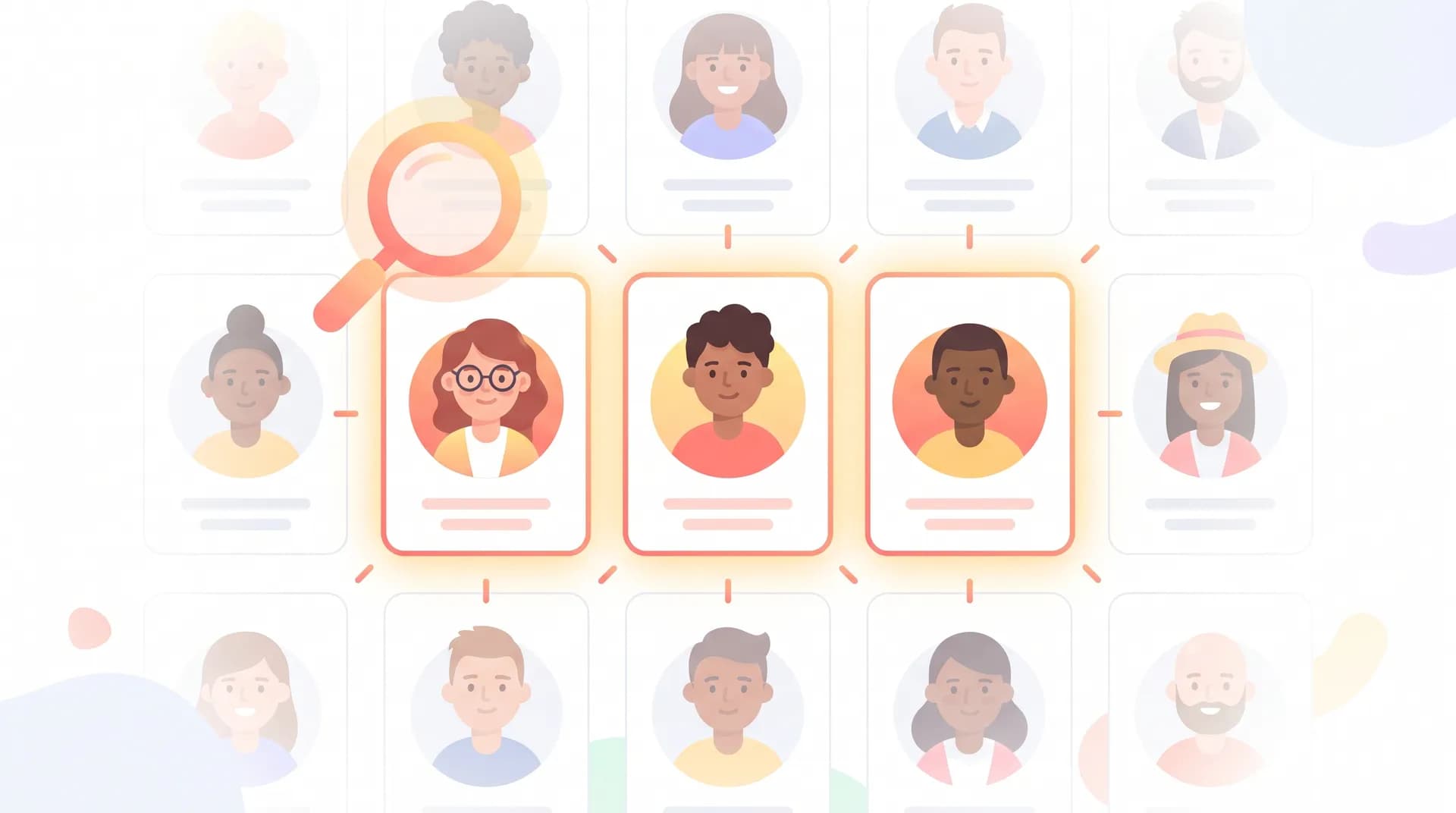
Think about who actually watches these videos. It's not your existing customers patting themselves on the back — it's a prospect three weeks from a buying decision, scanning your site for proof that someone like them succeeded. If the person on screen runs a 400-person marketing team and your prospect runs a 12-person startup, the story doesn't land. Doesn't matter how articulate or enthusiastic the customer is.
I wrote about the full build-out process in how to build a customer video testimonial program for SaaS, but the selection step deserves its own breakdown because it's where most programs quietly fail before a single camera turns on.
The three variables that actually matter
Before you send a single outreach email, map candidates against three things:
- Use case — what job are they using the product for, specifically? Not "marketing" — "replacing a $40k/year agency retainer for UGC production," or "cutting onboarding time from 6 weeks to 9 days."
- Tenure — how long have they been a customer, and does that length match the buying stage you're targeting them for?
- Outcome — what changed, in a number, because of your product?
If you can't fill in all three with specifics, that customer isn't ready yet. Enthusiasm alone doesn't count.
Build a segment map before you build a shortlist
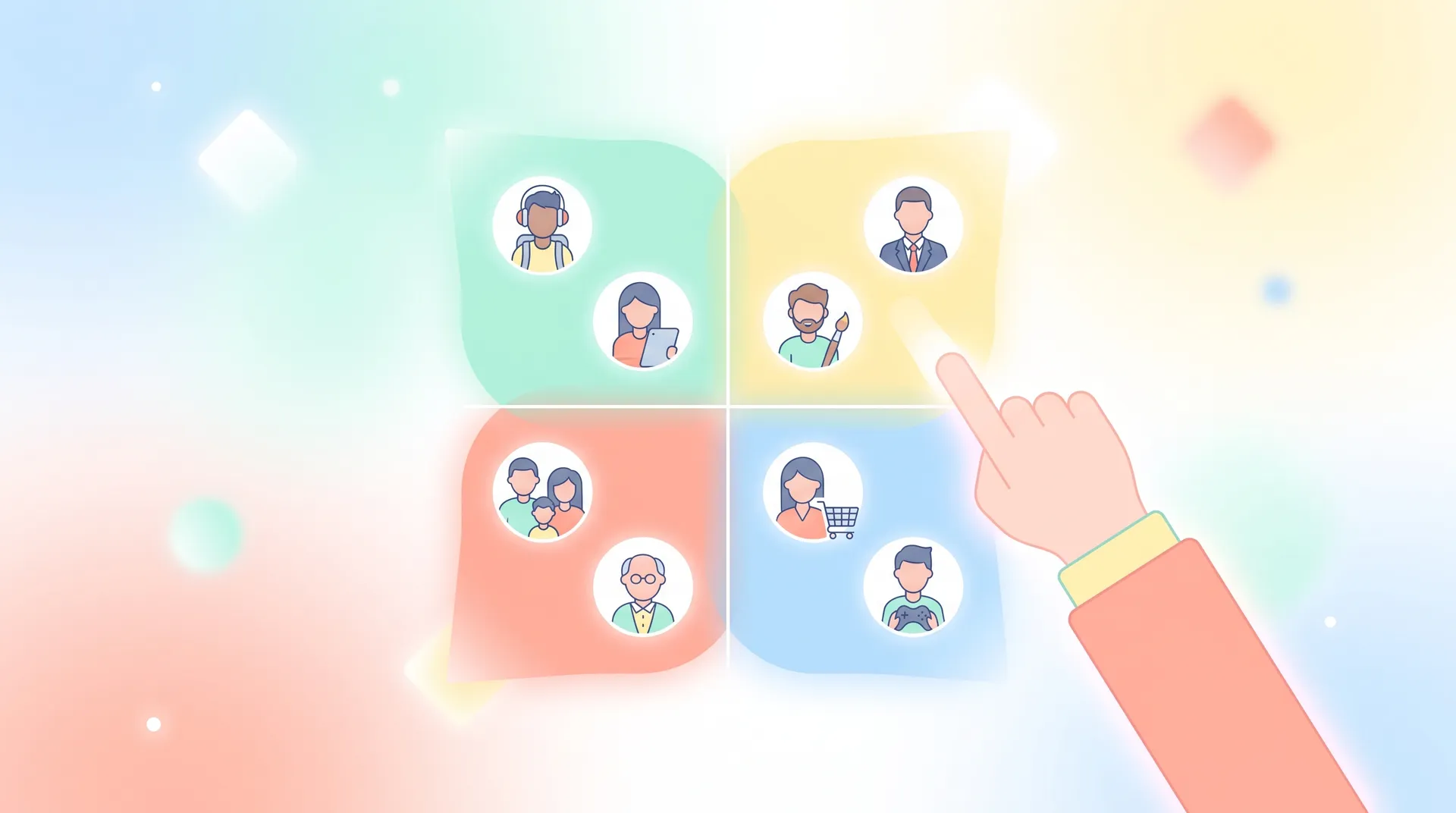
Here's the exercise I run with every team I advise on this: before anyone names a single customer, list out your 4-6 real buyer segments. Not personas from a slide deck — actual categories your sales team can name off the top of their head. Something like:
- Solo founders doing their own marketing
- Mid-market ops teams replacing manual workflows
- Agencies managing multiple client accounts
- Enterprise teams needing compliance sign-off
For each segment, write down the objection a prospect in that bucket raises most often. Solo founders worry about price and time-to-value. Agencies worry about whether it scales across clients. Enterprise worries about security and admin control.
Now — and this is the part teams skip — go find a customer for each segment who overcame that specific objection. Not just a customer who happens to fall into the segment. One whose story directly answers the fear a prospect in that bucket is quietly sitting with.
This is basically matching supply (your happy customers) to demand (what your buyers actually need to hear) instead of just grabbing whoever's available. It's the same logic that makes a good SaaS demo video work — you're not showing every feature, you're showing the features that answer the viewer's specific hesitation.
Keep a living spreadsheet with columns for segment, use case, tenure, measurable outcome, and "objection answered." Update it every quarter as new customers hit milestones. This turns testimonial selection from a scramble into a pipeline you can pull from anytime.
The tenure trap: why your best customer might be the wrong pick
Tenure is the variable people underweight the most. It feels intuitive to grab your longest-tenured, most loyal customer — they're the safest bet, right? Often wrong.
A three-year customer's testimonial is full of context your prospect doesn't have yet. They talk about "how far we've come," evolving use cases, team growth alongside the product. That's a great story for an existing-customer upsell page. It's a confusing story for someone evaluating you for the first time, because the gap between "day one" and "year three" doesn't give the prospect anything to anchor on.
What actually converts top-of-funnel and mid-funnel prospects is a customer who's 60-120 days in. Recent enough that the "before" state is still vivid in their memory. Far enough along that they've hit a real, measurable outcome. That window is gold, and most companies never go looking for it because the loudest internal voices point at long-tenured accounts by default.
Match tenure to funnel stage:
- Early funnel (awareness): customers 1-3 months in, describing the immediate "aha" moment
- Mid funnel (consideration): customers 3-9 months in, with a specific number attached to the outcome
- Late funnel (decision): customers 12+ months in, speaking to retention, ROI compounding, or expansion
If you only ever film the second group — which most testimonial programs end up doing by accident — your early-funnel pages have nothing speaking to someone who's still just curious.
Outcome specificity beats outcome size
A $2M enterprise account saving "a lot of time" is a worse testimonial than a $400/month customer who cut their creator sourcing time from 14 hours a week to 2. Specific, modest numbers beat vague, impressive-sounding ones almost every time, because specificity is what makes a claim feel true.
When you're vetting candidates, ask them to quantify before you ever book the shoot. If they can't give you a number — percentage, dollar amount, hours saved, anything concrete — either coach them toward one with their usage data, or move them down the list. This is also where your CS or analytics team becomes useful: pull actual usage data to help the customer articulate what changed, rather than relying on their memory of "it's been great."
This matters even more if the testimonial is going to live alongside other proof points like a SaaS onboarding video or a demo. Viewers are stitching together a story across your whole page. Vague claims next to vague claims compound into a page that feels like marketing fluff instead of evidence.
A simple scoring framework
For every candidate, score 1-3 on each of these, then only shoot the ones scoring 10+ out of 15:
- Use case clarity (can they describe their workflow in one sentence?)
- Outcome specificity (do they have a real number?)
- Tenure fit (does their timeline match a funnel stage you need?)
- Segment representation (does their company size/industry match an underrepresented buyer type?)
- On-camera comfort (will they actually be watchable, not just willing?)
That last one matters more than people admit. A customer with a perfect story but a flat, nervous delivery will undersell everything else. If you're coaching someone through their first shoot, the fundamentals in UGC audio: how to sound as good as you look are worth sending them before the call — audio quality alone can make or break how trustworthy a testimonial feels.
Don't let one department pick the entire shortlist alone. CS tends to nominate the friendliest accounts. Sales tends to nominate the biggest logos. Marketing needs both — plus the segment map — to avoid a lopsided set of videos that all sound the same.
What to do when you don't have a perfect match yet
Sometimes you map out your four segments and realize you simply don't have a great customer yet for, say, the agency bucket. That's fine — it's useful information. Don't force a mediocre fit just to check a box.
Instead, treat it as a pipeline gap. Flag it to CS so they can watch for a strong agency customer hitting a good outcome in the next quarter. A testimonial library built over 6-12 months, filled deliberately, will always outperform one rushed out in a single sprint with whoever said yes first.
And don't be afraid to go back to past interviews. Sometimes a customer you filmed a year ago for a different purpose has a clip buried in the raw footage that fits a segment you're short on today. Good testimonial programs re-mine old footage constantly instead of treating every project as a from-scratch shoot.
FAQ
Frequently Asked Questions
How many customer testimonial videos do I need to cover my buyer segments?
Should I choose customers based on company size or use case?
How long should a customer be using the product before filming a testimonial?
What if my best customers don't want to be on camera?
Can I reuse old customer interviews instead of filming new testimonials?
Related reading
- How to Build a Customer Video Testimonial Program for SaaS
- How to Plan and Produce a SaaS Demo Video That Sells
- SaaS Onboarding Videos: Driving Real User Activation
- UGC audio: how to sound as good as you look
- B2B Influencer Marketing: Building Creator Partnerships
For more on segment-matching and buyer psychology, Gartner's B2B buying research is a solid starting point, along with HubSpot's data on testimonial conversion impact and Nielsen's trust-in-advertising studies for the broader case on why peer proof outperforms brand messaging.