How to Build a Customer Video Testimonial Program for SaaS
A founder's guide to building a video testimonials program for SaaS: requests, incentives, tooling, and distribution that actually drives pipeline.

Most SaaS companies have dozens of customers who'd happily say nice things about them on camera. Almost none of them have a system for actually getting that footage. They wait for testimonials to happen organically, get a trickle of text quotes from a NPS survey, and call it social proof. That's not a program. That's luck.
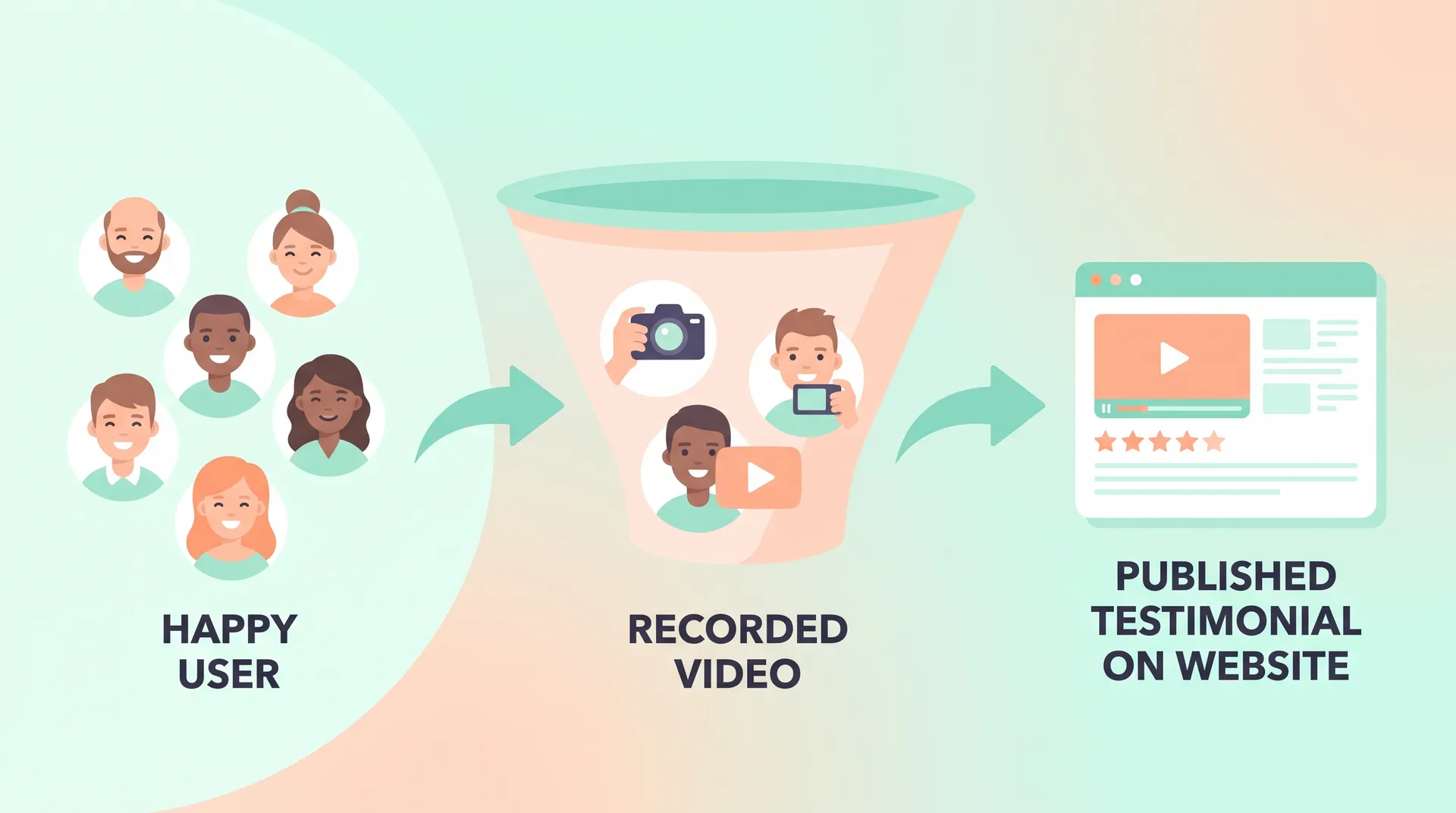
I've spent the last few years building Flare around exactly this gap — helping apps and SaaS teams turn happy users into real video testimonials instead of hoping someone tags them on Twitter. Here's what I've learned about building this the right way, from the first ask to the moment that clip ends up on your pricing page.
Why video testimonials outperform every other kind of social proof
Text reviews are easy to fake, easy to skim, and easy to ignore. A video of a real person, in their own words, saying your product saved them six hours a week — that's much harder to dismiss. Viewers process faces and voices differently than text. There's tone, hesitation, enthusiasm. You can't fully fake that, and prospects know it.
Wyzowl's research on video marketing consistently finds that a huge share of consumers say video has helped them decide to buy a product, and testimonial-style content ranks among the most trusted formats precisely because it doesn't feel like marketing. It feels like a recommendation from someone who's been in the buyer's shoes.
For SaaS specifically, video testimonials do three jobs that written quotes can't:
- They reduce perceived risk during the trial-to-paid decision, right when prospects are nervous about switching tools
- They work across the funnel — a 15-second clip on your homepage, a 2-minute case study video for sales calls, a TikTok cut for paid social
- They humanize a product category that's otherwise all dashboards and feature lists
If you've already read our guide on SaaS demo video production, think of testimonials as the emotional counterpart to that functional walkthrough. The demo shows what the product does. The testimonial shows why someone cares.
The mistake most SaaS teams make with testimonial requests
Here's the pattern I see constantly: a CS or marketing lead sends a mass email to "happy customers" asking if anyone would be willing to record a video. Maybe 2% respond. Of those, half send a blurry selfie video with bad audio recorded in a loud office. The founder gives up and goes back to text quotes.
The problem isn't that customers don't want to help. It's that the ask is vague, the effort required is high, and there's no clear payoff for the customer. You're asking busy people to become amateur video producers on your behalf, for free, with no script, no guidance, and no deadline.
A real program fixes every piece of that. You need:
- A specific, narrow ask (not "say something nice" — give them a prompt)
- A low-friction recording method (phone, no editing software, no downloads)
- A reason to say yes (incentive, visibility, or genuine relationship)
- A process for review, light editing, and rights before anything goes live
Treat testimonial collection like a mini UGC campaign, not a favor. The same structure that works for brand-creator collaborations works here — clear brief, clear deliverable, clear usage terms.
Who to ask and when to ask them
Timing matters more than most teams realize. The best moment to ask for a testimonial isn't randomly — it's right after a win. That could be:
- A customer hitting a usage milestone (100th automation run, 10th invoice sent, first big month of revenue through your platform)
- A support interaction that resolved a real problem and ended with a "thank you, this saved me"
- A renewal or upgrade, when satisfaction is objectively high
- An NPS survey response that scored a 9 or 10
Build a lightweight trigger system. If your product analytics or CRM can flag these moments automatically, even better — you want the ask to land within days of the positive experience, not three months later when the feeling's faded.
Power users and vocal community members are your best early targets. They already talk about your product unprompted in Slack communities, Reddit threads, or on social. If someone's already a fan, asking them to put a face to it is a much smaller lift than converting a neutral user into an advocate.
Segmenting by persona matters
A testimonial from a solo freelancer and one from a VP of Ops at a 200-person company serve completely different parts of your funnel. Map your customer base before you start asking:
- Who represents your ideal customer profile?
- Who has a dramatic before/after story (not just "it's good," but "we cut onboarding time from 3 weeks to 3 days")?
- Who's articulate on camera, even if you haven't seen them on video yet?
You're not trying to collect 50 testimonials. You're trying to collect 8-10 that each speak to a different objection or segment.
How to actually run the request
Skip the generic mass email. Send a short, personal message from someone the customer actually knows — their CS rep, their onboarding contact, or you, if you're early stage. Reference the specific win. "I saw you just hit your 90-day mark and your team's shipped 40% more releases since onboarding — would you be up for a quick 5-minute video chat about your experience? We'll send you questions in advance and it takes 10 minutes."
Give them an easy recording path. Tools like Tolstoy, Testimonial.to, or even a simple Loom/Zoom recording work fine — the key is removing any need for the customer to edit, trim, or format anything themselves. They talk, you handle the rest.
Provide 3-5 prompts, not a rigid script. Something like:
- What problem were you dealing with before you found us?
- What almost stopped you from trying us?
- What's different now that you're using the product?
- Would you recommend us, and who to?
This is the same Problem-Agitate-Solve logic we cover in our UGC scripting guide for creator content — it works just as well for customer testimonials because it gives structure without sounding scripted.
Incentives: what actually moves the needle
Money works, but it's not always the best lever for B2B customers who don't need the $50 gift card. What actually gets busy professionals to say yes:
- Visibility: offering to link to their company, tag their LinkedIn, or feature them in your case study hub gives them something back — brand exposure for their own business
- Reciprocity: a genuine thank-you gift, charitable donation in their name, or extended plan credit
- Access: early access to new features, a seat at your customer advisory board, or direct line to your product team
- Simple appreciation: for smaller customers or individual users, acknowledging them publicly can be enough
For consumer or prosumer apps, small cash incentives or account credit tend to convert better since the customer isn't representing a company brand. Either way, be upfront about the incentive before the ask, not as an afterthought — it reads as more honest.
Don't make the incentive the whole pitch. Lead with the relationship and the win, mention the thank-you second. Testimonials that come from genuine enthusiasm read far more authentic on camera than ones chasing a reward.
Rights, releases, and why this step gets skipped (and shouldn't)
This is the part founders hate dealing with, and it's exactly why so many companies end up with testimonial footage they can't actually use. If you're going to put a customer's face and name on your website, run their clip as a paid ad, or cut it for social, you need their explicit written consent — not just a verbal "yeah sure, use it."
A basic release should cover:
- What content you're collecting (video, audio, likeness, name, company name/logo)
- Where you can use it (website, ads, social, sales decks — be specific)
- Duration of the license (perpetual vs. time-limited)
- Whether they can request removal and under what terms
- Any compensation or incentive tied to the agreement
This overlaps heavily with concepts in standard UGC agreements — the same logic around usage rights that UGC creators negotiate applies to customer testimonials, just with the leverage flipped: you're the one requesting rights rather than granting them. Get this in writing every single time, even for your most enthusiastic customers. The one time you skip it is the one time legal becomes a problem.
Tooling: how to actually collect and manage footage
You don't need a production studio. Most testimonial programs run well on a stack like:
- Collection: Tolstoy, Testimonial.to, Senja, or simply asking for a Loom/phone-recorded video upload
- Storage and organization: a shared drive or lightweight CRM tagging system so you know what's been collected, approved, and published
- Light editing: trimming dead air, adding captions (critical — most people watch muted), and basic color/audio cleanup
- Distribution: wherever the testimonial needs to live — website, ads manager, sales enablement deck, email sequence
If you're building a library of customer footage and want it to feel like a cohesive brand asset rather than a pile of disconnected clips, treat it the way you'd treat any UGC portfolio — consistent format, consistent length, consistent captions, so they slot together cleanly whether someone's watching one or five.
Flare was built around this exact workflow — helping SaaS and app teams request, collect, and organize customer video content without chasing people through email threads or juggling five different tools.
Where testimonials actually drive results
Collecting the footage is half the job. Distribution is where most programs quietly die — teams get a folder of great clips and never systematically push them anywhere beyond a single "customer stories" page nobody visits.
Place testimonials where buying decisions actually happen:
- Pricing page: a 15-30 second clip addressing price objections directly ("I was skeptical about the cost until I saw...")
- Trial-to-paid email sequence: a testimonial from a similar persona right before the trial expires
- Sales decks: full 1-2 minute case study videos for AEs to drop into calls
- Paid social ads: cut-downs optimized for the first 3 seconds, same hook discipline you'd use in any UGC ad creative
- Onboarding flow: showing new users what success looks like, from someone who's already there
Don't treat this as a one-time asset. Rotate testimonials seasonally, refresh them as your product evolves, and keep collecting — a testimonial from 18 months ago describing features you've since rebuilt can actually hurt more than help.
An outdated testimonial praising a feature you've since deprecated or redesigned is worse than no testimonial at all. Audit your library at least twice a year.
Building this into a repeatable system, not a one-off project
The teams that get the most value from video testimonials treat it as an ongoing motion, not a quarterly scramble before a board meeting. That means:
- A standing trigger system (milestone hit, high NPS score, renewal) that flags testimonial candidates automatically
- A templated outreach message that your CS team can send without reinventing it each time
- A clear, repeatable recording and release process so there's no ambiguity about what happens next
- A tagging system so footage gets reused across multiple channels instead of sitting in one folder
If you're earlier stage and don't have a dedicated customer marketing hire yet, this can live with whoever owns customer success — they already have the relationships. As you scale, this becomes its own lane, often alongside how brands manage UGC creator pipelines for paid content, since the collection and distribution muscles are nearly identical.
Research from the Content Marketing Institute and similar industry surveys consistently shows customer testimonials and case studies rank among the top-performing content types for B2B buyers doing vendor evaluation — right alongside free trials and peer reviews on sites like G2. If your competitors aren't doing this well (and most aren't), it's a real differentiator, not just a nice-to-have.