How to Ask for Testimonials: Timing by Lifecycle Stage
Learn how to ask for testimonials at the right lifecycle moment — activation, renewal, expansion — instead of a generic post-purchase blast.

Most teams ask for video testimonials at the worst possible moment: right after checkout, when the customer has zero proof your product actually works. I've made this mistake myself. We sent a "would you mind recording a quick testimonial?" email 48 hours after signup, got a 2% response rate, and the two videos we did get were generic nonsense like "great tool, easy to use!" Not exactly compelling conversion fuel.
The fix isn't a better email template. It's timing. Figuring out how to ask for testimonials really comes down to one thing: catching customers at the exact moment they're feeling the win, not before and not long after they've moved on mentally.
How to Ask for Testimonials That Actually Convert: The Lifecycle Approach
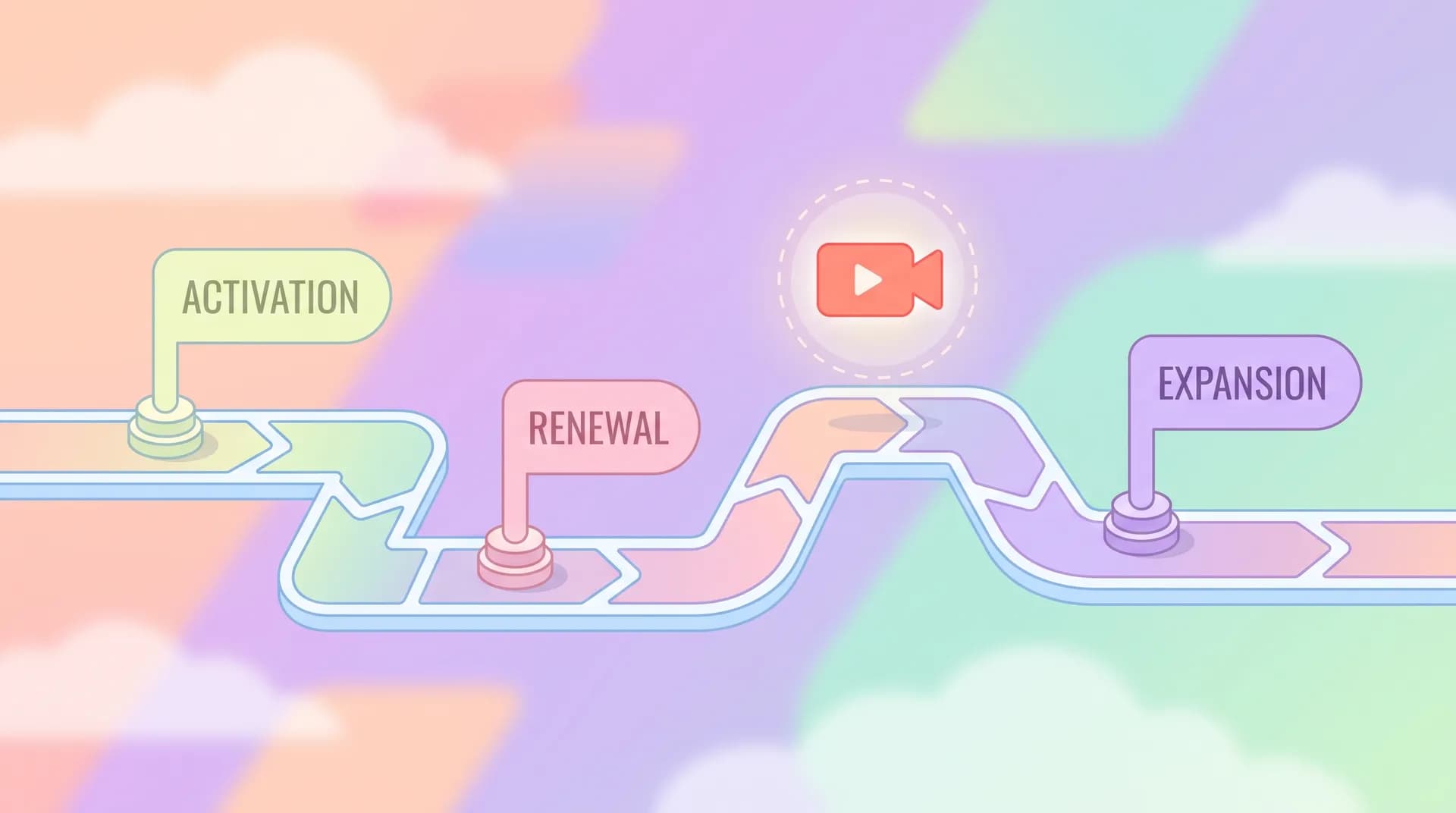
Here's the core idea. Every customer has three or four moments in their lifecycle where emotion peaks — where they feel genuine relief, excitement, or pride about a result your product helped them get. Ask outside those windows and you get lukewarm, generic footage. Ask inside them and you get testimonials that sound like a friend recommending something, not a hostage reading a script.
I think of it as four distinct windows:
- Activation — the first time they hit a real "aha" moment
- Early value — 2-4 weeks in, when a habit or routine has formed
- Renewal — the moment they choose to keep paying you
- Expansion — when they upgrade, add seats, or adopt a new feature because the first bet paid off
Each one produces a completely different kind of testimonial. Activation testimonials sound like discovery stories. Renewal testimonials sound like trust statements. Expansion testimonials sound like growth stories. You want all three types in your library because they answer different objections for different buyers.
If you haven't yet built the operational backbone for this — intake forms, incentive structure, a review/approval flow — go read how to build a customer video testimonial program for SaaS first. This post is about timing the ask within that program, not building the program itself.
Activation: Ask Within 24-48 Hours of the "Aha" Moment
Don't ask at signup. Ask the moment your product's usage data shows the customer hit their first real outcome — sent their first campaign, closed their first deal, automated their first workflow. That's when the dopamine is highest and the words come easy.
Practically, this means wiring your ask to a product event, not a calendar date. If you're using a PLG motion, that might be:
- First successful integration connected
- First report generated and shared
- First automated task completed without manual intervention
The copy for this ask should reference the specific thing they just did. "Hey, saw you just automated your first 50 invoices — mind sharing a 60-second video on what that felt like?" beats "We'd love your feedback!" every time. Specificity signals you're paying attention, and customers respond to that.
Trigger activation testimonial requests from product analytics events, not time-based drip campaigns. A customer who hits the aha moment on day 3 and one who hits it on day 19 should both get the ask immediately after — not on a fixed day-7 schedule.
Early Value: The Overlooked 2-4 Week Window
This is the stage almost everyone skips. The customer isn't a brand-new user anymore but they're also not a renewal yet — they're just quietly getting value. This window matters because it's when customers have enough reps with your product to describe how it fits into their routine, which is exactly the kind of detail that makes a testimonial feel real instead of promotional.
Ask something different here. Instead of "how do you like the product," ask "walk me through how you use [product] on a typical Tuesday." You'll get texture — screen-sharing habits, workarounds, the specific moment in their week your tool shows up. That's gold for a demo video too, by the way. If you're building out product walkthroughs, this is the same raw material you'd want for a SaaS demo video built around one workflow — the stories overlap more than people realize.

Renewal and Expansion: Where the Real Trust Signals Live
Activation testimonials are great top-of-funnel assets. But if you're selling anything with a sales cycle longer than a free trial, prospects care more about renewal and expansion proof than first-impression excitement. Anyone can be excited on day one. Staying for 12 months and then paying for more seats? That's proof.
Renewal: Ask in the 2-Week Window Before the Decision, Not After
The instinct is to ask for a testimonial right after someone renews, when you know they're happy enough to stay. I'd argue that's actually too late — you miss the tension and relief of the decision itself, which is the most persuasive part of the story.
Instead, ask in the two weeks before renewal, once you can see usage data suggesting they're likely to continue (login frequency holding steady, key features still active, no support escalations). At this point they're mentally rehearsing the "is this worth it" conversation internally, and that reasoning — "here's why we're sticking with it" — is exactly what a prospective buyer wants to hear.
Frame the ask around the decision itself: "You're coming up on renewal — would you be open to sharing what's made [product] worth keeping around?" This produces testimonials with actual reasoning in them, not just enthusiasm. Reasoning is what converts skeptical buyers; enthusiasm alone just entertains them.
Customer.io and HubSpot both report that advocacy requests tied to a specific behavioral trigger (renewal approaching, milestone hit) outperform generic NPS-based asks by a wide margin — context matters more than the incentive you offer. See Gainsight's customer success research for more on trigger-based advocacy timing.
Expansion: Ask Right After the Upgrade Decision, While the Logic Is Fresh
When a customer upgrades plans, adds seats, or buys a new module, they've just made an internal business case to someone — a manager, a finance team, themselves. That business case is fresh in their head for maybe a week. Ask for a testimonial in that window and you'll get the actual ROI argument they used internally, which is far more useful than "it's been great working with you guys."
This is also the best moment to ask about numbers. People are more willing to share specific metrics — hours saved, revenue impact, team size changes — right after they've justified a purchase than at any other point in the relationship. Don't waste that.
One pattern I've seen work well: tie the ask directly to the upgrade confirmation email or in-app moment. "You just added 10 seats — tell us what convinced your team to expand" gets dramatically better responses than a quarterly "share your success story" blast sent to the whole customer base.
Building the Trigger System (Without Hiring a Dev Team)
You don't need custom engineering to pull this off. Most of this can be built with tools you already have:
- Use your product analytics (Amplitude, Mixpanel, PostHog) to flag activation events and push them into your CRM or customer marketing tool
- Set renewal-window triggers in your billing system (Stripe, Chargebee) to fire 14-21 days before contract end
- Flag expansion events (seat additions, plan upgrades) as a Zapier or native webhook trigger into your outreach tool
The point is matching the ask to the moment, automatically, so you're not relying on a CSM remembering to check a spreadsheet. If you already have a system for picking which customers to approach, pair that with this timing framework — our guide on choosing the right customers for video testimonials covers the selection side in more depth.
Don't stack multiple asks on the same customer across lifecycle stages without spacing them out. Asking for an activation testimonial and then an expansion testimonial three months later is fine. Asking twice in the same quarter burns goodwill fast.
What This Looks Like in Practice
A mid-market project management tool I worked with restructured their ask timing around these four windows instead of a single post-onboarding survey. Response rate on video requests went from 4% to 19%. More importantly, the content mix changed — instead of 40 nearly identical "easy to use" clips, they had a spread: discovery stories for top-of-funnel ads, renewal reasoning for sales enablement decks, and expansion ROI stories for upmarket prospects evaluating a bigger commitment.
That diversity is the actual payoff of timing your asks correctly. One generic testimonial template gets you one flavor of proof. Four lifecycle-aligned windows get you four flavors, each aimed at a different buyer objection.
If your current process still hinges on sending one mass request after signup, it's worth rebuilding around triggers instead of dates. For the full operational playbook — intake forms, creator briefs, incentive structures — go back to the pillar guide on building a customer video testimonial program.