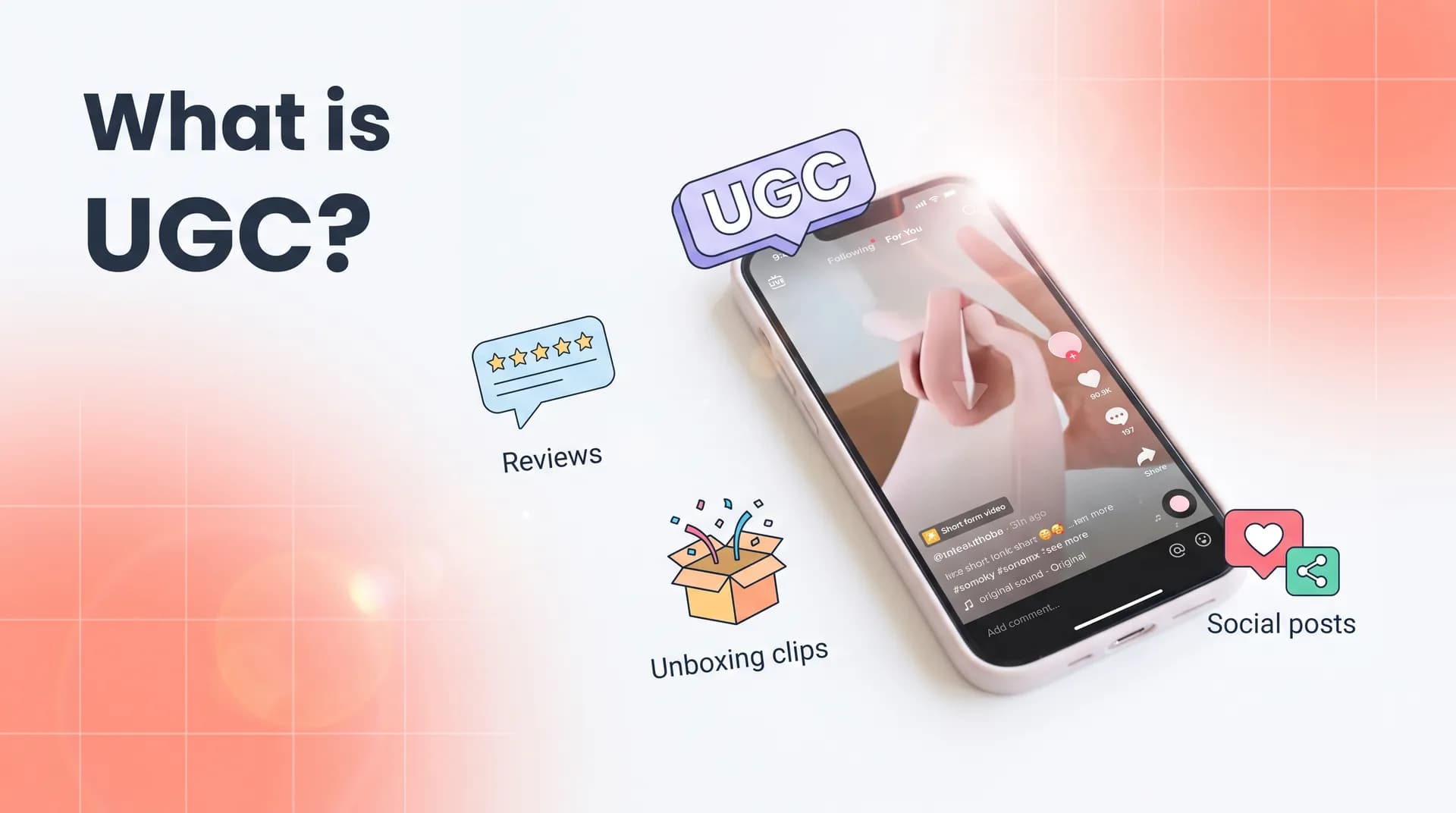
What is UGC? The plain-English definition brands use
UGC isn't just customer photos. Learn what user-generated content really means in 2025, the full spectrum from organic posts to paid creator ads.

A brand spent $50,000 on a polished TV-style ad. Their agency filmed it in a studio, hired a model, and perfected every lighting angle. It tanked. Then a regular person filmed a 30-second iPhone video of themselves using the product in their bathroom, and the brand ran it as a paid ad. It outperformed the studio spot by 3x.
That's what is UGC, in practice — and why every brand with a performance marketing budget is obsessed with it right now.
What is UGC, exactly?
UGC stands for user-generated content. At its most basic, it's any content created by a person rather than a brand's official marketing team. That covers a huge spectrum.
On one end, you have totally organic UGC: someone buys a product, loves it, films an unboxing, and posts it to their TikTok. No deal, no payment, no brief. The brand didn't ask for it. That's the OG definition — content born from genuine customer experience.
On the other end, you have what the industry now calls branded UGC or paid UGC. This is where a brand hires a creator specifically to make content that looks and feels like organic content. Same casual iPhone aesthetic, same "real person talking to camera" energy — but it was commissioned, paid for, and handed over to the brand to run as an ad.
Both count as UGC. The spectrum is wide.
Why the definition matters to you as a creator
If you're trying to break into the creator economy, understanding this distinction is half the battle. Most brands when they say "we need UGC" today mean the second type — they want you to produce authentic-looking video or photo content that they can use in their paid ads on Meta, TikTok, and YouTube. They're not waiting for someone to organically post about their protein powder.
This is also why UGC creation has become a legitimate freelance career. Brands need volume. They need fresh creatives constantly for A/B testing. One creator working from their apartment can deliver 10 videos a month worth more to a brand's ad account than one expensive studio shoot.
The full UGC content spectrum
Here's how I'd break it down, from purely organic to fully commercial:
1. Organic customer posts — Someone buys your product and posts about it unprompted. Think: the tweet that goes viral, the TikTok review that racks up a million views. Pure gold for brands, impossible to manufacture, and technically the origin of the term.
2. Organic creator content — A food blogger makes a recipe using your sauce and tags you. Not paid, but the creator has an audience and intent. Brands often "repost rights" these for a small fee.
3. Gifted/seeded UGC — Brand sends a free product to creators in exchange for content. No cash changes hands but there's an expectation of a post. Legally murky territory if disclosure isn't handled properly — the FTC requires disclosure even for gifted products.
4. Paid UGC (creator-style ads) — This is the main event for most people reading this. A brand pays a creator a flat fee ($150–$600+ per video is typical for beginners to mid-tier) to produce content assets the brand owns and runs as ads. No follower requirement. No posting to your personal channel required. You're essentially a freelance ad filmmaker.
5. Licensed UGC — Sometimes brands find organic content they love and pay the creator a licensing fee to use it in ads. Different deal structure, but the output is the same: brand gets authentic-feeling ad creative.
Most UGC creator careers are built on #4. That's the market that's exploded since 2020.

UGC vs. influencer marketing — they're not the same thing
This trips up a lot of newcomers. People assume UGC and influencer marketing are interchangeable. They're not.
Influencer marketing = you pay for the creator's audience. The value is their reach, their follower trust, their platform distribution. A nano influencer with 8,000 followers gets paid to post to those 8,000 people. The brand is renting access to an audience.
UGC = you pay for the creator's content. The brand doesn't care about your follower count. They want the asset — the video file — so they can run it through their own paid ad channels. A creator with 300 followers can get paid exactly as much as one with 300,000 if their content converts.
That's a genuinely different value proposition, and it's why the UGC model has opened up brand deals to people who would've been shut out of influencer marketing entirely. You don't need a big audience. You need to know how to make content that performs.
What makes someone a UGC creator specifically — the skills, the setup, the positioning — is worth reading separately. But the core idea is: you're a content producer, not a media channel.
Why brands actually want UGC (the performance data is hard to ignore)
Brands don't chase UGC because it's cheap — though it often is. They chase it because it works.
Meta's own research consistently shows that authentic, native-looking creative outperforms polished brand assets in click-through rates. Nielsen data found that 92% of consumers trust earned media (organic recommendations) over brand advertising. When a video looks like something a real person made, the brain doesn't immediately flip into "skip this ad" mode.
For DTC brands running performance campaigns on Meta or TikTok, creative fatigue is a real problem. An ad that kills it in week one can flatline by week three. Brands need a constant feed of fresh variants to test. UGC creators who can deliver consistently and quickly are genuinely valuable — not a nice-to-have.
That's the whole market mechanics reason why this career path exists and keeps growing.
What formats count as UGC?
UGC isn't only video, though video is where most of the money lives right now. The full list of formats includes:
- Short-form video (TikTok-style, Reels, Shorts) — the dominant format for paid UGC in 2025
- Unboxing and review videos — a perennial brand favorite, especially for e-commerce
- Testimonials — talking-head style "this product changed my X" videos
- Photo content — lifestyle photos, product-in-use shots for Instagram and static ads
- Reviews and written testimonials — for e-commerce sites, Amazon, app stores
- UGC-style Stories — casual, low-fi Stories content for brands to use in ad placements
If you want to go deep on how to actually make the video side of this, check out how to film UGC content that converts — that post covers everything from gear to angles to what brands look for in raw footage.
The one misconception worth clearing up
A lot of people think UGC has to be created by an existing customer. That was true in 2012. In 2025, the industry has evolved. Brands specifically recruit creators who've never used their product to make UGC-style content.
You don't need to be a customer. You need to be able to sound like one. Authentic tone, genuine delivery, natural-feeling visuals — that's the skill. The product knowledge comes from the brief.
This matters because it means you can work across multiple niches and categories as a UGC creator, even ones you're not deeply embedded in. Pet brands, skincare companies, SaaS tools, meal kits — you can create content for all of them as long as you can communicate authentically on camera or behind the lens.
If you want to put all of this into practice, how to become a UGC creator walks through every step from building your first portfolio to landing paid work.