Founder-Led Marketing: A Repeatable Program for SaaS Growth
Founder led marketing turned our stalled SaaS launch into a growth engine. Here's the repeatable system for apps and SaaS founders to run it well.

I've watched founders spend $40,000 on an agency retainer and get three LinkedIn posts that nobody engaged with. Meanwhile, a solo founder I know posted a 90-second screen recording of himself fixing a customer's problem live, and it pulled in 200 signups by Monday. That's the gap founder led marketing is built to close.
Founder led marketing isn't a hack. It's not a phase you do before you can "afford real marketing." It's the single highest-leverage channel most early-stage apps and SaaS companies have, and most founders either ignore it or do it once and quit. I've run this at Flare and watched it work (and fail) at a dozen other companies I've advised. This is the playbook I wish someone had handed me three years ago.
What Founder Led Marketing Actually Means
Founder led marketing is when the person who built the product becomes the primary voice selling it — publicly, consistently, and without hiding behind a brand account. Not a mascot. Not a ghostwritten thought-leadership post. You, on camera or in text, saying real things about a real problem you're solving.
It works because buyers are exhausted by brand marketing. Nobody trusts "we're thrilled to announce" anymore. They trust a person who built the thing explaining why it exists, who it's for, and who it's not for.
Here's the distinction that matters: founder led marketing is not the same as personal branding for its own sake. Personal branding says "look at me." Founder led marketing says "look at this problem, and here's what I learned solving it." The founder is the messenger, not the message.
This matters more for apps and SaaS than almost any other category. Your product is invisible until someone uses it. A founder's face and voice give it a front door.
Why It Beats Paid Ads at the Early Stage
Paid acquisition needs volume to work. You need enough spend to get out of the "learning phase," enough conversions to optimize against, enough margin to survive the testing period. Most pre-seed and seed-stage SaaS companies don't have that. I didn't.
Founder led content doesn't need volume. One good video, one sharp LinkedIn thread, one honest breakdown of a mistake you made — that can outperform a $5,000 ad budget because it has something ads can't buy: a real point of view from a real person.
Founder led marketing and UGC-style ads aren't competitors — they're the same instinct applied at different stages. Both bet on unpolished, first-person content beating polished brand messaging. If you want the ad-side version of this, our mobile app marketing with creator content guide breaks down how that plays out in paid campaigns.
The Core Channels Worth Your Time
You don't need to be everywhere. You need to pick two channels max and actually show up.
LinkedIn — Best for B2B SaaS. Text-first posts about decisions you made, numbers you're willing to share, mistakes you're correcting in real time. The algorithm still rewards founders who post like humans instead of press releases.
Twitter/X — Best for dev tools, technical products, and anything with a builder audience. Shorter feedback loops, faster distribution, more willingness to argue with you in the replies (which is good — arguments drive reach).
Short-form video (TikTok, Reels, YouTube Shorts) — Best for consumer apps and any SaaS with a visual product. This is where the UGC and creator economy playbooks overlap heavily with founder led marketing. The format conventions are the same ones creators use: hook in the first three seconds, talking-head delivery, quick cuts. If you're new to this format, our UGC creator terms glossary is a fast way to get fluent in the vocabulary your video editor or hired creator will use.
Email/newsletter — Underrated for SaaS. A founder's personal newsletter converts better than a brand newsletter because people signed up for your thinking, not your product updates.
Pick based on where your buyers already spend attention, not where you personally feel comfortable. Comfort comes later. I was terrible on camera for the first two months. Still am, honestly. Doesn't matter.
Building a Repeatable Content System
This is where most founders fail. Not because they lack ideas — because they don't have a system, so the well runs dry after three weeks and the whole thing quietly dies.
Here's the system that's worked for me and for founders I've coached through it:
- Keep a "friction log." Every time a customer asks a confused question, complains, or has an "aha" moment on a call, write it down. That's your content backlog. You're not inventing topics — you're mining conversations you're already having.
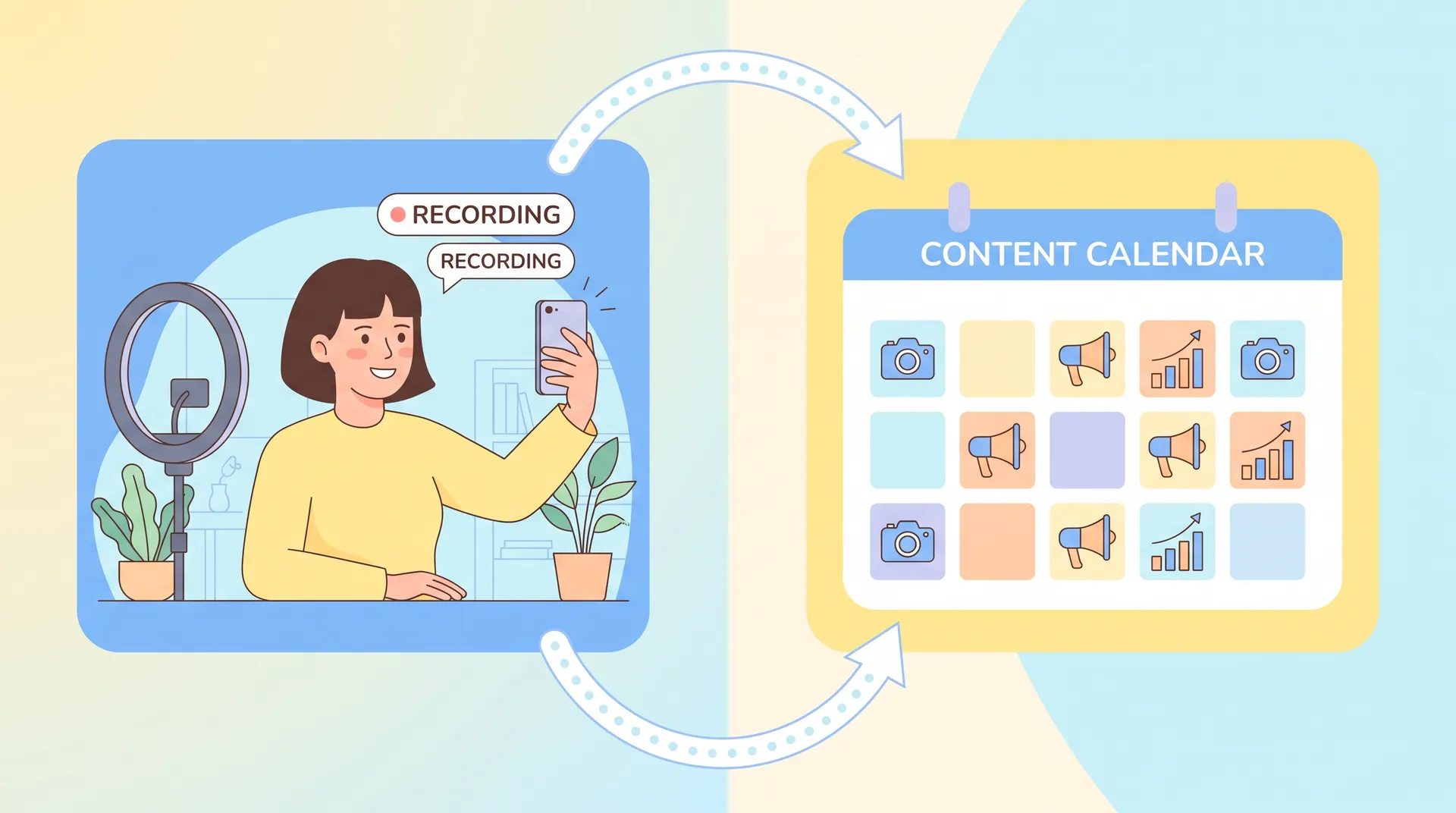
- Batch record once a week. Block 90 minutes. Record five to seven pieces of content in one sitting — some video, some just voice memos you'll turn into text posts. Editing can happen later; the raw material is the hard part.
- Repurpose aggressively. One customer story becomes a LinkedIn post, a tweet thread, a 60-second video, and a slide in your next sales deck. You're not writing four things — you're writing one thing four ways.
- Track only two numbers. Replies/comments and inbound demo requests. Vanity metrics like impressions will lie to you. If nobody's replying, the content isn't landing, no matter the view count.
- Ship weekly, review monthly. Once a month, look at what actually got engagement and do more of that specific thing. Most founders review never and wonder why growth is flat.
If you're producing video content as part of this, editing speed is the bottleneck nobody warns you about. A lot of founders burn three hours cutting a 90-second clip. Our CapCut editing tips for UGC creators post covers the exact shortcuts that took my own editing time down from an hour to about twelve minutes per video.
Turning Founder Content Into Pipeline
Content without a bridge to product is just a hobby. This is the part agencies never explain because it's not their job — it's yours.
Every piece of content needs a next step, but it shouldn't feel like a pitch. A demo link buried in your bio isn't enough. Reply to every comment with a real answer, then when it's natural, mention you built a tool for exactly that problem. Not every time. Maybe one in ten replies.
Build a simple attribution habit. Ask every new signup, "how'd you find us?" It's a low-tech CRM question but it tells you which platform and which type of post is actually converting, not just getting likes.
Don't outsource your voice, but do outsource distribution. I write every post myself. I don't schedule every post myself — that's a five-dollar-an-hour task, not a founder task.
Treat DMs as a sales channel. When a post gets traction, you'll get DMs asking questions. Answer them like a founder, not a support bot. Some percentage will convert to trials just from that conversation.
If you're running founder content alongside paid UGC ads, keep the two consistent in tone. Buyers who see your organic posts and then see a polished, corporate-sounding ad will notice the disconnect immediately — and it undercuts the trust you built organically.
Where Founder Led Marketing Fits With Paid and Creator Strategies
Founder led marketing isn't a replacement for paid acquisition or working with creators — it's the foundation those other channels perform better on top of.
Once your organic founder content starts working, you'll have proof points: real quotes, real reactions, real screen recordings of the product solving a problem. That's raw material for performance creative. A lot of the highest-converting app ads I've seen started as an unscripted founder video that a media buyer later repackaged into a paid UGC ad.
This is also the point where hiring creators makes sense. You've validated the message with your own voice; now you can hand that validated angle to creators who can produce more volume than you have hours in the week. The full breakdown of how apps run creator content at scale, including budgets and briefs, is in our mobile app marketing with creator content guide.
One thing that trips founders up here: paying creators or contractors internationally. If you start working with creators outside the US, you'll run into tax paperwork fast. Our W-8BEN guide for UGC creators explains the form your international creators will need to send you before you can pay them.
Common Mistakes That Kill the Channel
I've made most of these myself.
Posting inconsistently and blaming the platform. If you post twice then vanish for a month, the algorithm has no reason to trust you with reach. Consistency beats quality in the first ninety days — you can get better at writing, you can't get better at showing up if you've quit.
Sounding like a press release. "Excited to announce" is a dead giveaway that a person didn't actually write it, even when they did. Cut the corporate reflexes out of your voice entirely.
Ignoring comments. Engagement is a two-way signal to the algorithm and to real humans. A founder who replies to every comment for the first hour after posting gets noticeably more reach than one who posts and disappears — I've tested this on the same content types with and without active replying.
Chasing virality instead of resonance. A post with 50 comments from your exact ICP beats a post with 50,000 views from people who'll never buy. Optimize for "who" not "how many."
According to research from CoSchedule, consistency in publishing cadence correlates more strongly with long-term audience growth than any single piece of viral content — which matches what I've seen founder-side almost exactly.
Measuring What Actually Matters
Forget follower count. Here's what I check every week:
- Reply rate — comments and DMs per post, a proxy for whether your ICP is actually in the room
- Profile-to-site clicks — most platforms surface this in native analytics
- Signup attribution — the manual "how'd you find us" answers, cross-referenced against your posting calendar
- Sales cycle length for inbound leads — founder-sourced leads close faster because trust is already built before the first call
A HubSpot study on B2B buyer behavior found buyers now complete a majority of their research before ever talking to sales — which is exactly why the founder content they read weeks before a demo matters more than most founders assume.
Don't let a marketing hire "take over" your voice too early. I've seen founders hand off their LinkedIn to a junior marketer at month four, watch engagement drop by half, and not connect the two events. Your audience followed a person, not a company handle.
When to Scale Beyond Just the Founder
Founder led marketing has a ceiling — your calendar. At some point you'll need more volume than one person filming between customer calls can produce.
The move isn't to stop being the face of the brand. It's to build a system where your voice sets the template and others execute inside it. That might mean hiring a content manager to handle distribution while you keep creating raw material, or it might mean bringing in UGC creators who can mimic the tone you've established while you focus on the highest-leverage content yourself.
Research from Gartner on B2B marketing suggests buying committees now involve six to ten people on average — which means your founder content needs to reach influencers and champions inside the account, not just the one decision-maker. That's a volume problem paid creator content solves better than one founder alone ever will.
FAQ
Frequently Asked Questions
What is founder led marketing?
Does founder led marketing work for B2B SaaS specifically?
How much time does founder led marketing take per week?
Should I hire a ghostwriter for founder led content?
How is founder led marketing different from personal branding?
When should a startup move beyond founder led marketing alone?
Related reading
- Mobile app marketing with creator content: the full guide
- UGC marketing: the brand's complete guide (2025)
- CapCut editing tips for UGC creators that save real time
- UGC creator terms glossary: 30 words you need to know
- W-8BEN for UGC creators: non-US tax forms explained
Founder led marketing isn't something you graduate from once you raise a round or hit a revenue milestone. The companies that keep it running years in — the ones whose founders are still posting at Series C — are the ones who never let it become someone else's job entirely. Start this week. Pick one channel, write down three things a customer asked you this month, and post the first one before you talk yourself out of it.