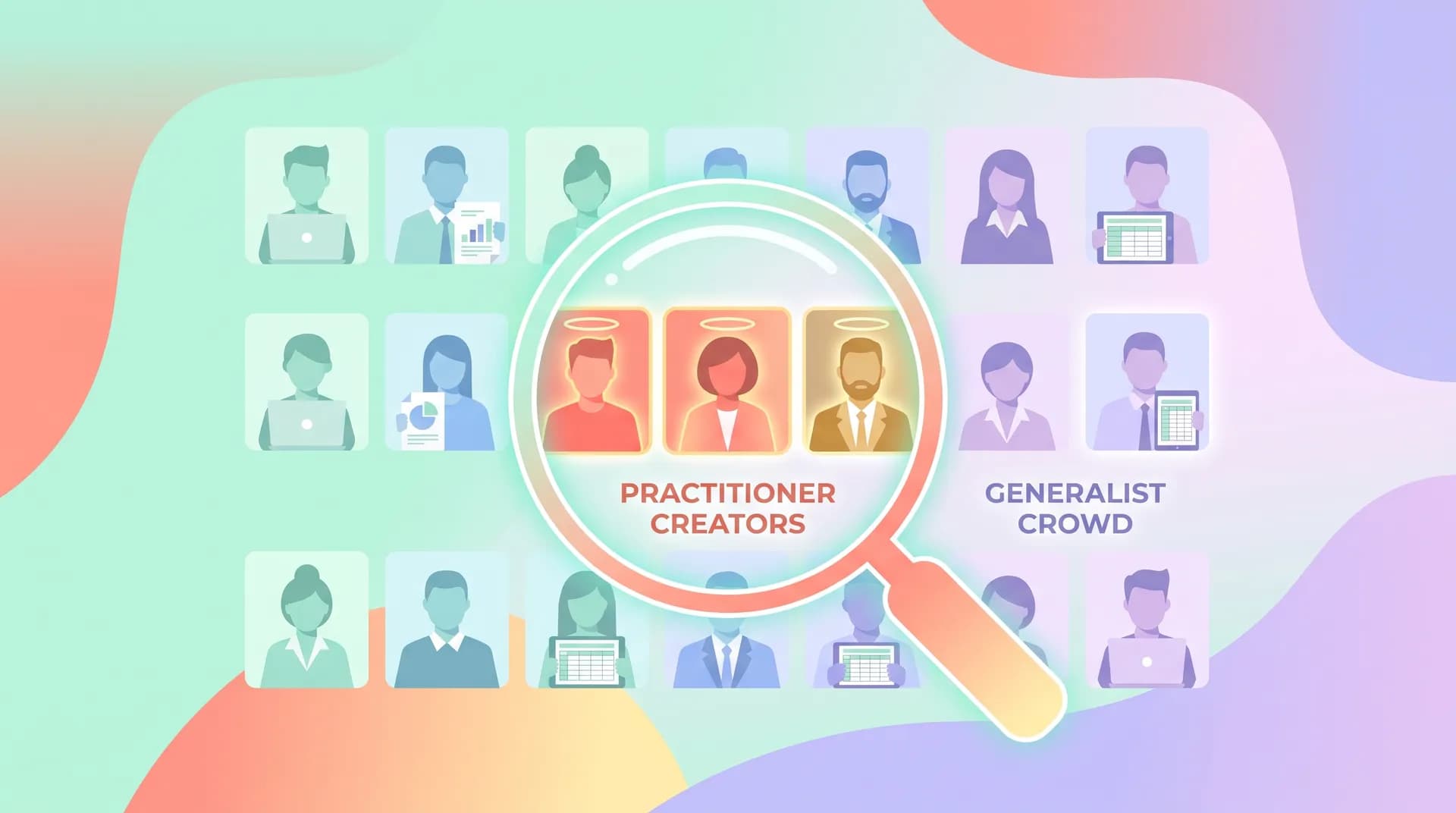
Finding Practitioner Creators for Your B2B Influencer Marketing Strategy
A practical b2b influencer marketing strategy for sourcing practitioner creators — former operators and analysts who actually know your software category.

I once watched a SaaS company pay a "B2B influencer" with 80,000 LinkedIn followers to post about our client's RevOps platform. The post got 4,000 impressions and two comments, both from the creator's own engagement pod. Meanwhile, a former Salesforce ops manager with 1,200 followers posted a single carousel about the same product and generated 40 qualified demo requests in a week. That's the gap nobody talks about when they build a b2b influencer marketing strategy: follower count means nothing if the person doesn't understand your category.
I've run Flare for years watching brands chase reach instead of relevance. In consumer products, that's forgivable — anyone can review a water bottle. But in B2B SaaS, your buyer is a VP of Ops who's been burned by three vendors already. They can smell someone who's never run a go-to-market motion from a mile away. You need creators who've actually sat in the seat.
Why generalist creators fail at b2b influencer marketing strategy
Most creator marketplaces were built for DTC brands. They're optimized for engagement rate, follower growth, and content aesthetics — none of which predict whether someone can credibly talk about your API rate limits or your attribution model.
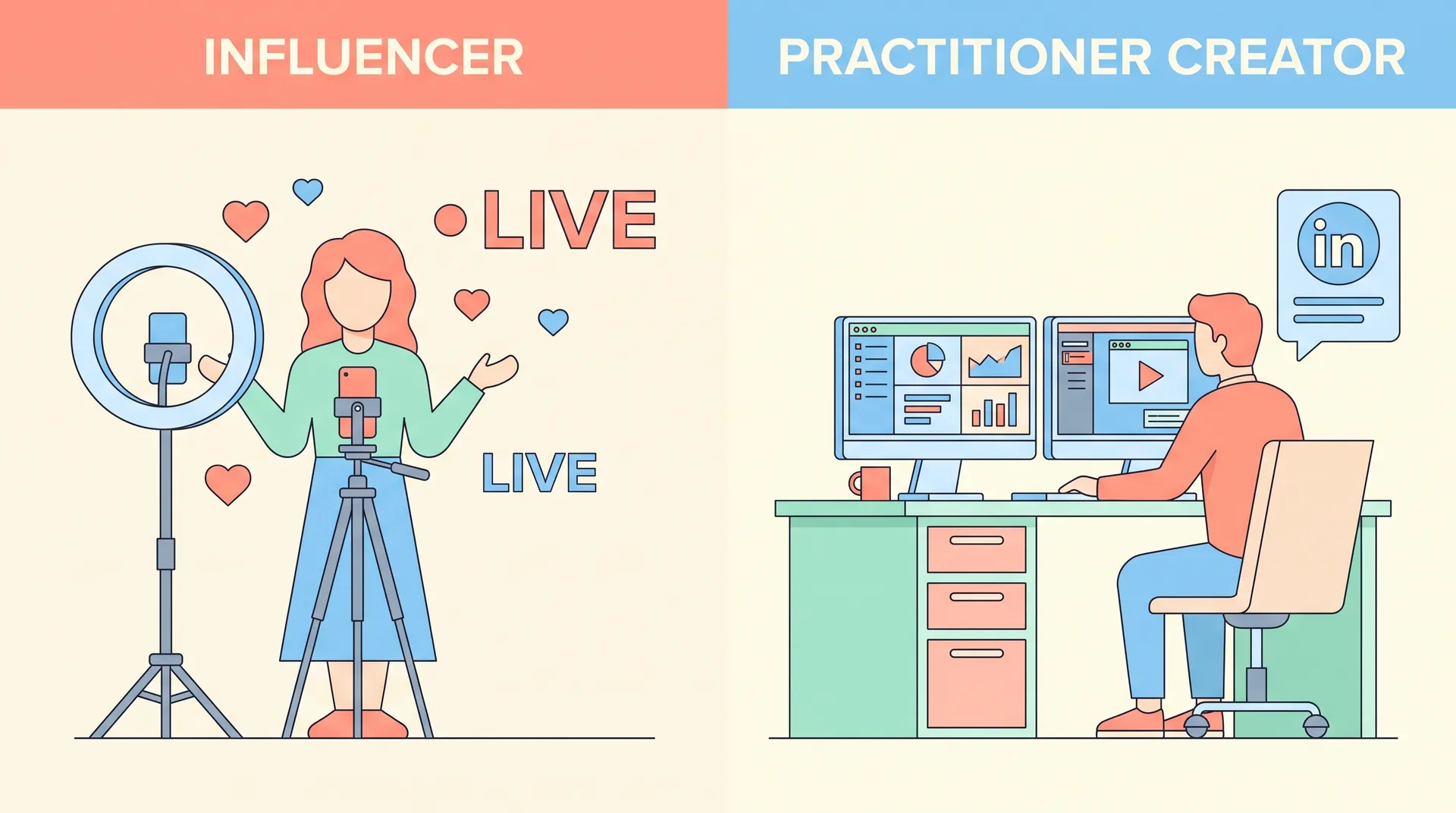
Generalist creators default to surface-level talking points because that's all they have. They'll say your product is "intuitive" and "saves time" because those are the only adjectives that work across every SaaS pitch they've ever been handed. A practitioner creator says something specific: "This cut our lead routing time from 48 hours to 20 minutes because it auto-assigns based on territory rules." One of those statements converts. The other gets scrolled past by anyone who's actually bought software before.
I've seen teams spend $15,000 on a campaign with five generalist creators and get less pipeline than $3,000 spent on two former practitioners who still had active networks in the exact function your product serves. The math isn't close.
This is the core argument I make in our pillar piece on B2B Influencer Marketing — buyer trust in B2B doesn't come from polish, it comes from perceived competence. Practitioner creators arrive with competence already baked in. You're not building their credibility from zero; you're borrowing credibility they spent a decade earning.
The three practitioner archetypes worth recruiting
Not all "practitioners" are equal. I sort them into three buckets when sourcing for a campaign.
Former operators. These are people who used tools like yours in an actual job — the ops manager, the demand gen lead, the customer success director. They know the pain points because they lived them, often within the last 12-24 months. Their content reads like a debrief, not a pitch.
Independent analysts. Think of the solo researchers who write deep-dive newsletters comparing vendors in a category — martech, devtools, fintech infrastructure. They already have an audience that trusts their judgment on category decisions, and they're usually underpaid relative to the influence they carry.
Boutique consultants. These folks implement software for a living. They've set up 50 instances of tools like yours and seen every edge case. Their take on your product isn't hypothetical — it's informed by pattern recognition across dozens of client deployments.
Each archetype earns trust differently, but all three beat a generalist with a nice camera setup and zero category context.
Where to actually source these people
Forget influencer marketplaces for this. You won't find a former RevOps director filed under "SaaS creator" tags on a general platform. You have to go where practitioners already congregate.
LinkedIn, searched the hard way. Use LinkedIn Sales Navigator filters — past job titles, current activity, specific functions — to find people who left operator roles in the last year and started posting independently. Former employees who've gone solo (consulting, fractional work, content) are gold because they still have skin in the category but more freedom to speak publicly.
Niche newsletters and Substacks. Every B2B category has two or three independent writers covering it obsessively. RevOps has several. DevTools has a handful. Search "[category] newsletter" plus "Substack" and you'll find people with 2,000-10,000 highly qualified subscribers who'd never show up on an influencer platform.
Community forums and Slack groups. Places like RevGenius, Pavilion, or category-specific Slack communities are full of practitioners who answer questions for free because they like being seen as experts. The ones answering thoughtfully, consistently, are your shortlist.
Conference speaker lists. Anyone who's spoken at a category conference in the last two years has already been vetted by someone else's program committee for expertise. That's a free credibility filter you didn't have to build yourself.
Your own customer base. This is the one teams skip. Your power users — the ones submitting feature requests and writing five-star reviews — already understand your product better than any outside creator ever will. Some of them want to build a personal brand and would jump at a paid partnership. I'd rather turn a vocal customer into a creator than train an outside creator to fake being a customer.
Vetting for real expertise, not just the right title
A job title on LinkedIn doesn't prove someone can create content that converts. Before you sign anyone, check three things.
First, read their actual posts — not their bio. Do they reference specific workflows, specific tools, specific numbers? Or do they write in vague platitudes about "driving efficiency"? Specificity is the tell.
Second, ask them a scenario question in the DM before any brief goes out. Something like: "How would you explain the tradeoff between X and Y to someone evaluating vendors?" A real practitioner answers in seconds with an opinion. A generalist stalls or gives you something they could've pulled from your own website.
Third, check how they talk about failure. Anyone who's actually operated in your category has a story about a tool that didn't work, a rollout that flopped, a vendor that overpromised. If every post is sunshine, they haven't done the job — they're performing having done the job.
If you're thinking about how creators should deliver this expertise on camera once you've found them, the same rules that make talking head UGC convincing apply here — specificity and directness beat polish every time.
What practitioner creators cost (and why it's worth it)
Expect to pay more per post than you would a generalist with similar follower counts. Practitioner creators know their worth, and they should — you're not paying for reach, you're paying for a credibility shortcut that would otherwise take months of content marketing to build.
Typical ranges I've seen: $500-$2,000 for a single LinkedIn post from a respected former operator with a modest but highly-targeted following, $2,000-$5,000 for a video testimonial or walkthrough from a recognized analyst, and retainer deals in the $3,000-$8,000/month range for ongoing advisor-style partnerships where the creator becomes a recurring voice in your content.
That's more than a generalist charges for the same content type. It's also the difference between content that gets ignored and content that gets forwarded internally to a buying committee. If you're tracking expenses on the creator side of these deals, our breakdown of creator business expenses is a useful reference for understanding what goes into a practitioner's rate — gear, tools, and the time it takes to stay credible in a fast-moving category.
One more practical note: if you're working with practitioner creators based outside the US, you'll need the right tax paperwork before you pay them. Our guide on W-8BEN forms for creators covers what to collect before the first invoice goes out.
Building a repeatable sourcing pipeline
One-off creator finds don't scale. The teams that win at this build a running list — a spreadsheet, a CRM, whatever — of practitioner creators tagged by function, category depth, and content style. Every time you spot someone sharp in a comment thread or a conference talk, add them. Six months later you have 40 names instead of scrambling to find three the week before a campaign launches.
Treat this like recruiting, because it is recruiting. You're not hiring them full-time, but you are building a bench. The best practitioner creators get approached constantly once they build any kind of following, so the brands that move fast and build relationships early — before the creator is fielding five DMs a day — end up with better access and better rates.
A quick gut check before you sign anyone
Ask yourself if this creator could do the job your software replaces, today, without training. If a former sales ops lead can't explain lead scoring without your brief in front of them, they weren't deep enough in the role to begin with. If a consultant hasn't implemented a tool like yours in the last year, their specifics have gone stale and their content will sound it.
This bar should feel high. It's supposed to. The entire value of a practitioner creator partnership rests on the fact that the audience can tell the difference between someone performing expertise and someone who has it.