How to Measure App Localization Pilot Results Properly
Learn how to measure app localization pilot results with market-specific activation and retention benchmarks before you scale a creator campaign.

Most teams kill a localization pilot for the wrong reason. They look at install numbers, see a spike, call it a win, and greenlight a six-market rollout. Three months later retention craters and nobody can explain why — because nobody set a bar for what "working" actually meant before the pilot started.
I've watched this happen with three different app teams now. The pattern is identical: a creator campaign in a new market drives a satisfying download number, the team celebrates, and then the actual signal — whether people stick around and use the product — gets ignored until it's too late to course-correct cheaply. If you want to measure app localization pilot results in a way that actually protects your budget, you need benchmarks set before launch, not a vibe check after.
Why Installs Are the Wrong Way to Measure App Localization Pilot Results
Installs tell you creators can get attention. They don't tell you whether the product, messaging, and onboarding actually land with that market. A Brazilian creator can post a hook that gets 40,000 views and 900 installs — and if your app's pricing page or core flow wasn't localized, you'll lose 70% of those users before day 3.
I made this mistake on an early pilot for a client in the LATAM market. We celebrated a 12% install-to-click rate from the creator content, patted ourselves on the back, and funded a second wave. Day-7 retention came in at 6%. Our US baseline was 19%. Nobody had written down what "good" looked like for that market ahead of time, so we had no idea if 6% was a localization failure, a creator mismatch, or just normal attrition for a new region.
That's the core problem with judging a pilot on vanity metrics: you have nothing to compare against. A number without a benchmark is just a number.
Set Market-Specific Benchmarks Before You Launch
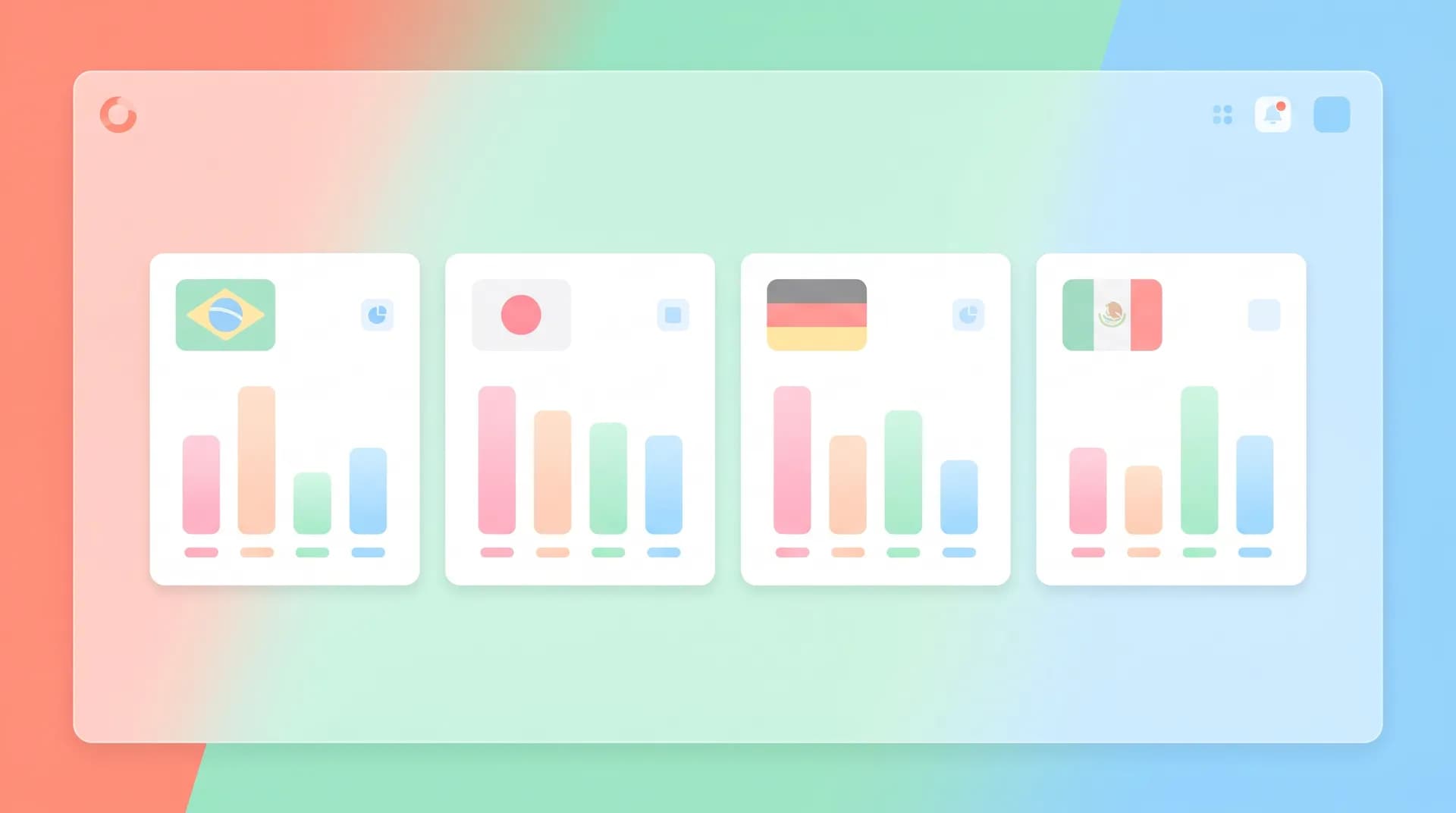
Here's the uncomfortable truth: your US or home-market activation rate is not the right baseline for a new locale. Different markets have different expectations around onboarding friction, payment methods, even scroll behavior on landing screens. Comparing a Japanese cohort's day-1 retention directly to your English-speaking cohort will mislead you almost every time.
Before you spend a dollar on creator content for a new market, write down three numbers:
- Target activation rate — the percentage of new installs that complete your core "aha" action within 24-48 hours, adjusted for known regional norms (e.g., markets with lower average device specs or slower networks often show 5-10 points lower activation even with a perfectly localized flow)
- Target day-7 retention — don't borrow your home-market number wholesale; discount it by 15-25% for a brand-new market with unproven messaging, then treat beating that discounted number as your real win condition
- Minimum sample size — I don't trust retention curves under 300 installed users per market. Smaller cohorts swing wildly on a handful of power users or bots
If you haven't picked which market to pilot yet, go back one step — our guide on app localization market selection walks through how to choose a first market where you can actually get a clean read, rather than one so small or fragmented that your sample size never gets reliable.
Set your benchmark as a range, not a single number. "Day-7 retention between 10-14%" gives you room to call a pilot a clear win, a clear loss, or a genuine toss-up that needs a second data point before you decide.
Build the Measurement Framework Before Creators Post Anything
This is where most teams skip a step. You need instrumentation and a plan in place before the first creator video goes live, not after.
Tag every creator's traffic separately
Use unique UTM parameters or platform-specific tracking links per creator, not just per campaign. If three creators post localized content in the same market, you need to know which one drove users who actually activate versus which one just drove curious clickers. I've seen campaigns where one creator accounted for 80% of installs but less than 20% of activated users — that's a creator-fit problem, not a localization problem, and you'd never catch it looking at blended numbers.
Separate "translation worked" from "campaign worked"
A localization pilot has two variables moving at once: the quality of the localized product experience and the quality of the localized creator content. If retention is bad, you need to isolate which one failed. Pull a small sample of churned users and look at session replays or support tickets — did they get stuck on a broken translated string, or did they simply not find the product useful? Our piece on localized ad hooks vs. translation digs into this exact failure mode — often what looks like a translation problem is actually a messaging-fit problem that no amount of better grammar would fix.
Define your activation event precisely
Don't let "activation" mean something vague like "opened the app twice." Pick one specific, meaningful action — completed a profile, sent a first message, finished a core workflow — and measure time-to-that-event by market. If the localized version takes users 3x longer to reach that event than your home market, that's a UX or translation friction problem worth fixing before you scale, not something to paper over with more creator spend.
Reading the Results: What Actually Counts as a Pass
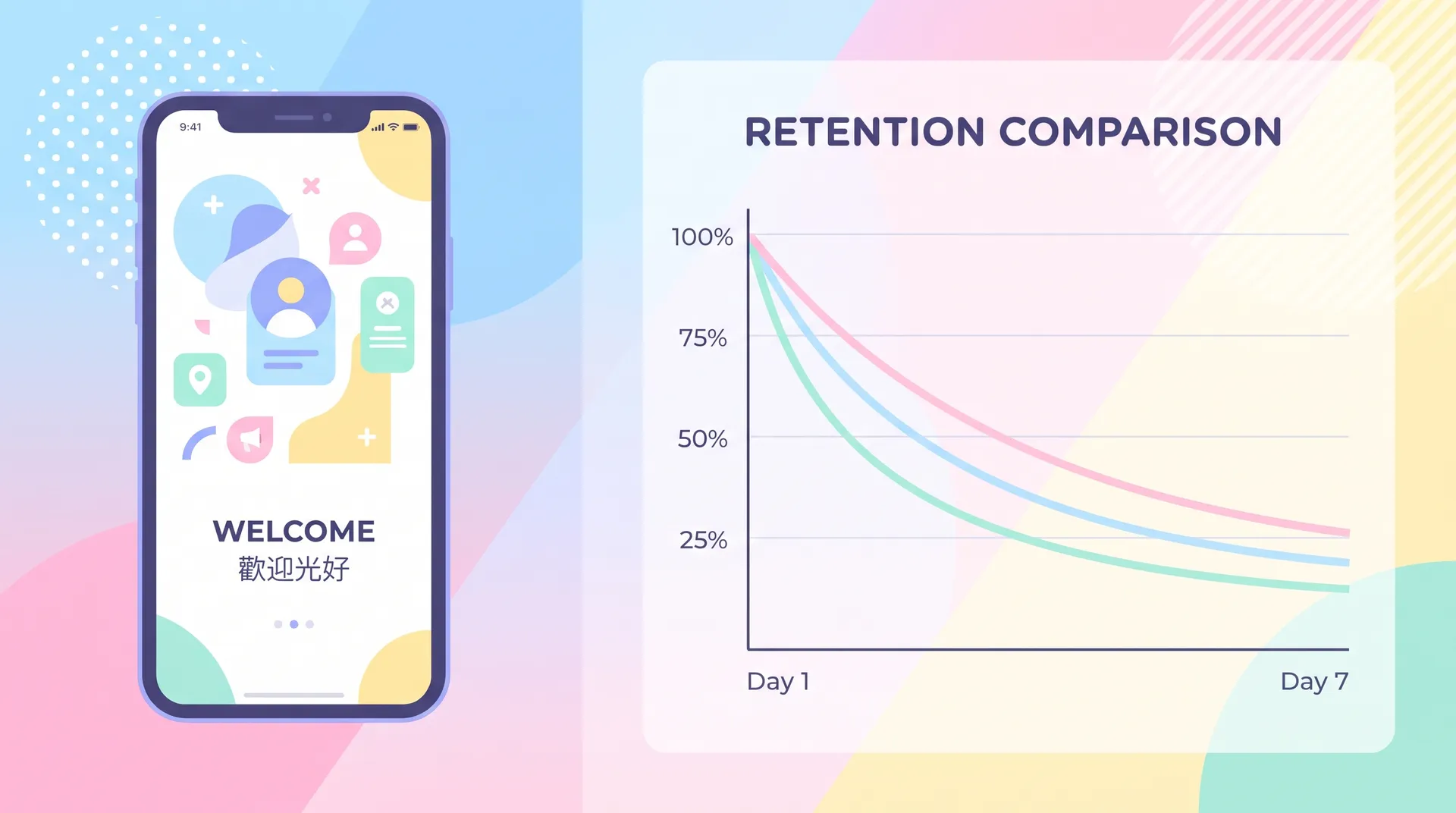
Once you've got a clean cohort of 300+ installs per market and at least 7-14 days of retention data, here's how I actually grade a pilot.
Green light to scale: Activation rate within 5 points of your target, and day-7 retention within the benchmark range. This means the localized product and the creator content are both working together. Scale creator spend and consider adding a second or third creator in that market.
Yellow — fix before scaling: Activation hits target but retention lags. This usually means your onboarding flow or core product experience has a localization gap even though the marketing hook worked. Go back through your app localization readiness checklist and check for things like date formats, currency, and cultural references that might be silently frustrating users past day one.
Red — pause and rework: Both activation and retention miss benchmark. Either the creator content isn't resonating (wrong hook, wrong platform, wrong creator persona for that culture) or the localization itself has deeper issues. Don't throw more budget at this; go back to your local creator recruitment process and verify the creators you picked actually have cultural fluency, not just language fluency.
Resist the urge to average results across markets in a multi-market pilot. A strong Mexico result can mask a weak Philippines result if you blend them into one dashboard number. Grade each market independently against its own benchmark.
Watch for the "novelty bump"
New-market installs often get an artificial boost in the first 48 hours from curiosity or algorithm favor on the creator's platform. Don't trust day-1 or day-3 numbers alone. I wait for at least a full week, ideally two, before making a go/no-go call. Pilots that look amazing on day 2 and collapse by day 10 are more common than people admit, especially when a single viral creator post skews the early cohort.
Don't Forget Revenue Signal, Not Just Engagement
Activation and retention tell you people are using the product. They don't tell you the localized market will actually pay. If your app monetizes through subscriptions or purchases, track a third metric: trial-to-paid conversion rate by market, measured against a benchmark discounted the same way as retention.
I've seen pilots with gorgeous retention curves that converted to paid at a third of the home-market rate because the pricing, currency display, or payment methods weren't actually localized — just the marketing copy was. If you're running this alongside a localized landing page, our post on localizing a SaaS landing page by market covers how pricing display and urgency framing shift by region in ways that directly affect this number.
This kind of measurement discipline is exactly what separates a real app localization strategy from a one-off translation project. If you're earlier in the process and still building out your overall plan, the pillar guide on app localization for international creator campaigns is the better starting point — it covers the full arc from market selection through creator recruitment to the measurement stage covered here.
My Honest Take After Running a Few of These
Every pilot teaches you something you didn't expect. The point of benchmarking isn't to be right about your predicted numbers — it's to have a fixed reference point so a "decent" result and a "great" result don't get treated the same way out of excitement or fatigue.
Set your three numbers — activation target, retention target, minimum sample size — write them down somewhere before launch, and hold yourself to them even when the early data looks exciting. That discipline is the difference between a localization program that compounds and one that burns budget chasing install spikes that never turn into retained users.
Frequently Asked Questions
What sample size do I need to measure app localization pilot results reliably?
Should I compare a new market's retention to my home market's retention?
How long should I wait before judging a localization pilot?
What's the difference between activation and retention when measuring a pilot?
Can I average results across multiple markets in one pilot?
What if activation is good but retention is bad?
Related reading
- App Localization for International Creator Campaigns
- App Localization Market Selection: Pick Your First Market
- App Localization Readiness Checklist Before You Launch
- Local Creator Recruitment App Marketing: Vet for Fluency
- Localized Ad Hooks vs Translation: Fix the Problem, Not Words
- Localize SaaS Landing Page by Market: Price, Urgency, Value