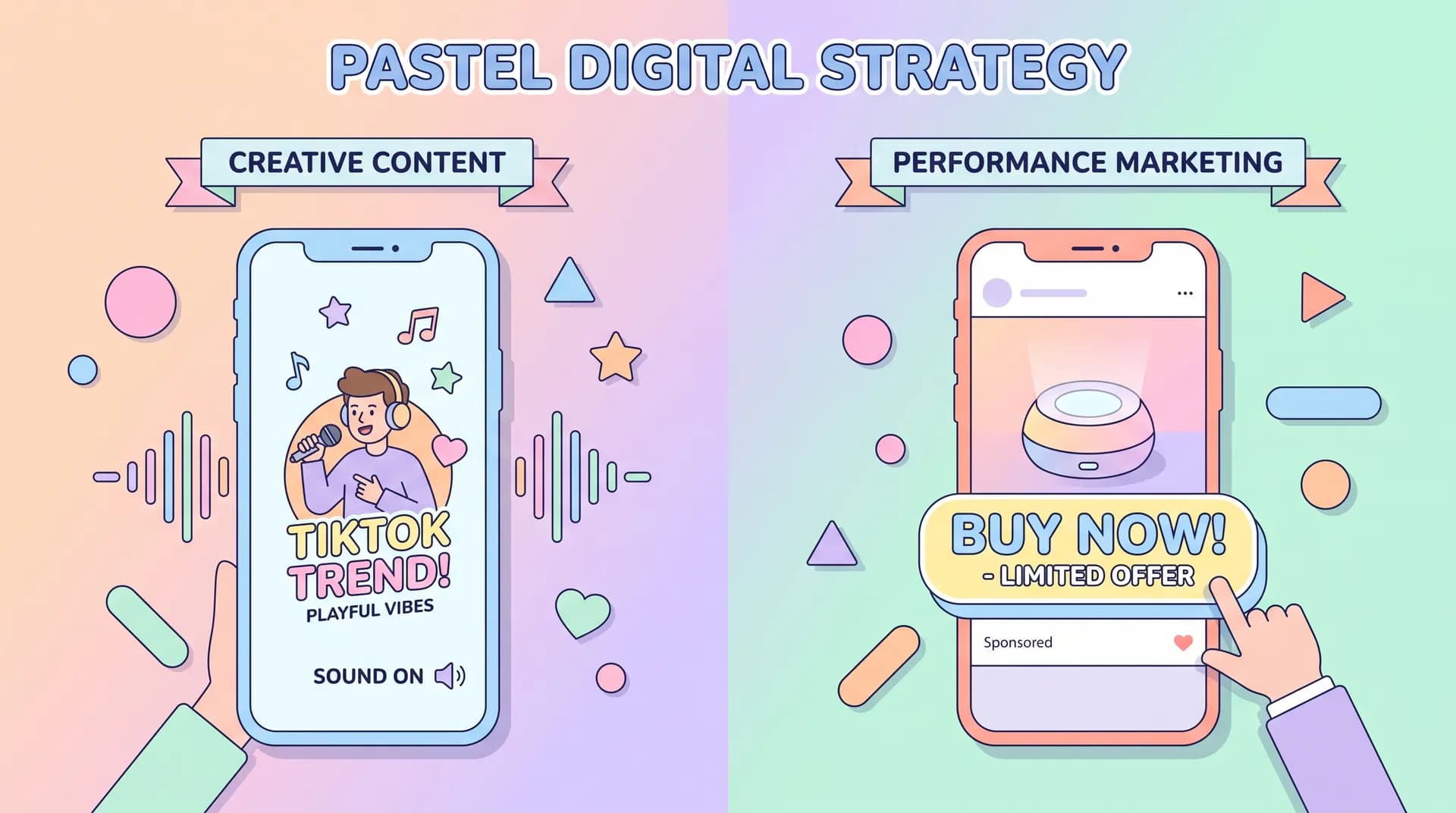
UGC Content Brief: Why TikTok and Meta Need Different Ones
A single ugc content brief rarely works for both platforms. Here's how to brief TikTok and Meta separately so creators deliver channel-ready assets.

I've watched brands burn $4,000 worth of creator content because they sent one brief to five creators and expected it to work everywhere. It didn't. The TikTok videos felt like ads. The Meta videos looked like someone filming in their bathroom with bad lighting and no hook. Same brief, same creators, two platforms — and neither one worked.
That's the mistake almost every brand makes with their ugc content brief: treating TikTok and Meta like the same audience watching the same feed. They're not. The platforms train users to expect completely different things in the first three seconds, and if your brief doesn't account for that, you're paying for reshoots you didn't need to pay for.
Why one ugc content brief doesn't work for both platforms
TikTok is sound-on, entertainment-first, and native by design. People open the app expecting to be entertained, not sold to. The algorithm rewards watch time and completion rate above almost everything else, which means a video has to earn attention through personality, pacing, or a genuinely surprising hook — not through a polished pitch.
Meta is different. Most Feed and Reels placements are still watched sound-off by a meaningful chunk of users, especially on Facebook. Ads Manager itself recommends designing for sound-off viewing because so many people scroll with captions on and audio muted. That single fact changes everything about how you brief a creator: text overlays and visual clarity aren't a nice-to-have on Meta, they're load-bearing.
I've said this before when I wrote about how to write a UGC campaign brief that works — a brief is a contract for expectations. If your brief doesn't specify platform, format, and sound behavior, you're leaving the most important creative decisions up to a creator who has no idea whether this video is landing in a TikTok feed or a Meta dark post.
The core difference in one sentence
TikTok briefs should ask creators to entertain first and sell second. Meta briefs should ask creators to stop the thumb and sell within the first two seconds, sound optional.
What a TikTok-specific UGC brief needs
TikTok creative works because it doesn't look like an ad. That's the whole point. If you're briefing for TikTok — whether it's organic UGC, a Spark Ad, or dark post — build the brief around these elements:
- Sound-on assumption. Tell the creator their voice, their room tone, the trending audio if relevant — all of it needs to carry the video. Don't ask for a version that "also works muted." That instinct fights the platform.
- Hook style, not hook script. Give creators 2-3 hook patterns (a bold claim, a relatable complaint, a "wait, what?" moment) rather than a word-for-word line. TikTok viewers can smell a script from a mile away.
- Native pacing. Quick cuts, jump cuts, text that pops in rhythm with speech — this is expected, not optional. If your brief reads like a commercial storyboard, you'll get a commercial, and it'll flop.
- Loose brand mentions. Ask for the product to show up in-scene rather than in a tidy product shot. A creator holding the product while talking beats a static beauty shot every time on this platform.
- Trending audio flexibility. If you want the creator to test trending sounds, say so explicitly and give a window for how current the trend needs to be — audio trends move fast, and last month's sound already feels dated.
I go deeper on this exact platform behavior in TikTok UGC: the complete platform playbook for creators if you want the creator-side view of what makes a video feel native versus branded.
Ask creators for a "phone in hand, talking to camera" take before anything scripted. It almost always outperforms the polished version on TikTok, and it costs you nothing extra to request both.
What a Meta-specific UGC brief needs
Meta is a performance channel first. People are scrolling Feed or Reels with intent to buy, compare, or research — not necessarily to be entertained. Your brief needs to prioritize clarity and speed over personality.
- Sound-off design. Require captions burned in, and require the benefit to be understandable with the sound completely off. Meta's own creative guidance backs this up — captioned, visually clear ads consistently retain attention longer in sound-off environments (source: Meta Business Help Center).
- Benefit-forward opening. The first frame should show the product or the outcome, not a slow build. You have less patience to work with here than on TikTok — Meta's own research has repeatedly shown attention drops within the first couple seconds on Feed placements.
- Thumb-stop visual. Ask for an unexpected visual moment in frame one: a before/after, a surprising texture, a number on screen. Something that breaks pattern in a static feed.
- Clean product visibility. Unlike TikTok, Meta audiences respond well to a clear product shot with packaging visible — this matters more for direct response and retargeting placements.
- Multiple aspect ratios. Ask for both 4:5 and 9:16 exports, since Meta serves across Feed, Stories, and Reels placements that each crop differently.
This is the same logic behind UGC video ads: how to run creator content as dark posts — a dark post lives or dies on the first frame doing real work, because there's no organic algorithm boosting it based on completion rate the way TikTok's does.
Building one brief document with two creative paths
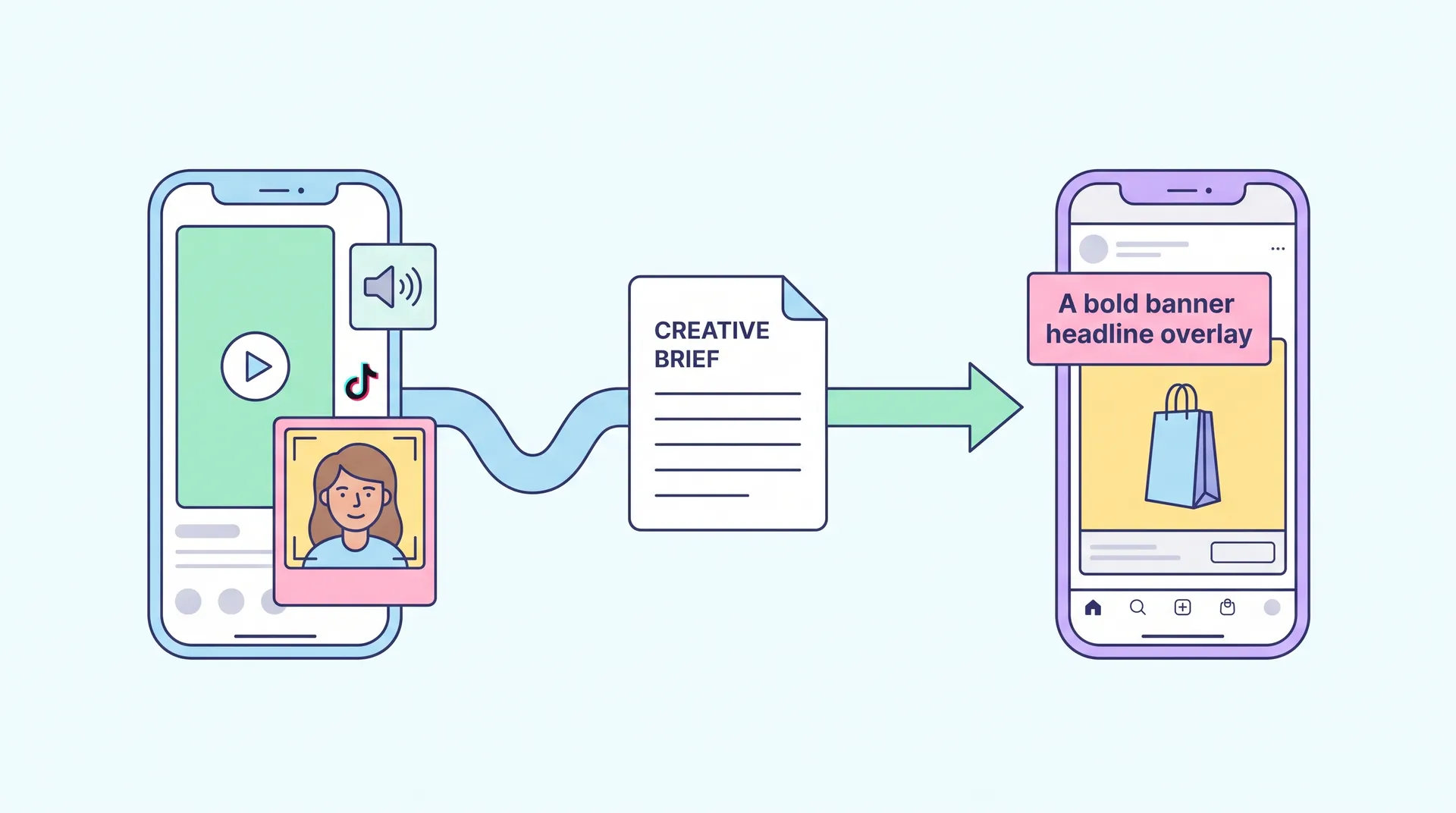
You don't need two separate documents. You need one brief with a platform fork built in. Here's the structure I recommend to brands running through Flare or any creator marketplace:
- Shared section — brand voice, product facts, claims to avoid, do-not-say list, usage rights terms.
- TikTok path — hook style examples, sound-on note, pacing reference videos, trending audio guidance.
- Meta path — caption requirement, benefit-first opening note, aspect ratio specs, product visibility requirement.
- Deliverables checklist — exact file counts, lengths, and formats per platform so nothing gets missed at handoff.
This structure also solves a problem I see constantly when brands scale creator volume: without a clear fork, whoever briefs creators for the week defaults to whatever platform they personally use most. If your ops person is a TikTok native, every Meta asset quietly turns into a TikTok video with a different aspect ratio slapped on it. That's how reshoot budgets balloon.
If you're building this at any real scale, it's worth reading the broader UGC marketing: the brand's complete guide (2025) — platform-specific briefing is one piece of a much bigger system that includes vetting, rights, and testing, and it's easier to get the brief right when you understand where it fits in that pipeline.
Length and format specs to include
Don't make creators guess. Spell out:
- TikTok organic/Spark Ads: 15-34 seconds performs best for most product categories, vertical 9:16, captions optional but recommended
- Meta Feed/Reels: 6-15 seconds for top-of-funnel, up to 30 seconds for retargeting, 4:5 and 9:16, captions required
- File naming convention so your media buyer isn't renaming forty files by hand
Don't ask one creator to shoot "one video that works everywhere." It's the single most common cause of reshoot requests I hear about from brands, and it's completely avoidable with a two-path brief.
Where this fits in your broader creator process
A platform-specific brief only pays off if the rest of your pipeline supports it — meaning you're vetting creators for brand safety who can actually deliver native-feeling content on both channels, not just one. Some creators are naturally strong TikTok talent but stiff on camera for benefit-forward Meta formats, and vice versa. Ask to see platform-specific samples before you brief, not after.
Once content comes back, don't just publish and hope. Run it through UGC ad creative testing to find winners fast so you're validating which brief variant actually converts on each platform before you scale spend behind it.
And if you're comparing this investment against paying for influencer posts instead, it's worth reading UGC vs. influencer marketing: which should your brand budget? — the brief discipline described here is one of the biggest reasons UGC outperforms influencer content on pure ad performance.
FAQ
Frequently Asked Questions
What should a UGC content brief include?
Can I use the same UGC brief for TikTok and Meta ads?
Why do my TikTok UGC videos feel too polished?
Why do Meta ads need captions if TikTok doesn't require them?
How long should UGC videos be for TikTok vs. Meta?
How do I avoid paying for creator reshoots?
Related reading
- How to write a UGC campaign brief that works
- UGC video ads: how to run creator content as dark posts
- UGC ad creative testing: how to find winners fast
- UGC vs. influencer marketing: which should your brand budget?
- UGC marketing: the brand's complete guide (2025)
- How to vet UGC creators for brand safety (checklist)