How to vet UGC creators for brand safety (checklist)
Before you pay a UGC creator, run this vetting checklist: past content audit, FTC history, audience fit, conflict checks, and quality bar. Protect your brand.

A brand I spoke to last year paid a UGC creator $1,200 for a three-video package. Two weeks after the content went live as paid social, someone in their comments dug up a two-year-old video of the creator making fun of the exact type of customer the brand was trying to reach. The campaign was paused. The creative was scrapped. The $1,200 was gone — and that wasn't even the expensive part. The expensive part was the brand manager's time and the reputational anxiety that followed.
Solid UGC creator vetting would have caught it in twenty minutes.
This is the part of UGC that most brand guides skip because it's unglamorous. But if you're spending real money on creator content — and if you're doing UGC properly, you should be — then skipping a vetting step is just deferred risk. Here's the checklist I'd run before signing off on any creator, whether they came through a platform or landed in your DMs.
The UGC creator vetting checklist: 6 checks before you pay
1. Run a 3-month content audit — not just their portfolio
Creators know you'll look at their portfolio. It's curated. What you actually want is their recent organic content — the stuff they posted when no brand was watching.
Go to their TikTok, Instagram, or YouTube and scroll back 90 days. You're looking for:
- Anything that contradicts your brand values (political takes, crude humour, divisive content)
- Consistency between their "brand deal" persona and their personal posting
- Whether they disclose sponsorships — or quietly skip it on some posts
That last one matters more than people think. A creator who hides paid relationships on their personal content will hide them with yours too. That's an FTC problem, and it lands on you as the brand.
One shortcut: search their username on Google alongside terms like "controversy", "drama", or the platform name. YouTube drama channels and Reddit threads surface things that a profile scroll won't.
2. Check their FTC disclosure history
The FTC's guidelines on endorsements are clear: paid partnerships must be disclosed, prominently, in a way that viewers can't miss. "Thanks [Brand]!" buried in a caption doesn't count.
Go through five or six of their past sponsored posts. Did they use #ad or #sponsored clearly? Did they disclose in the video itself — not just the caption? On TikTok, did they use the paid partnership label?
If you see consistent clean disclosure, that's a green flag. If you see sloppy or inconsistent disclosure, that's a creator who'll require hand-holding — and potentially expose you to FTC liability. The FTC has gone after brands for their creators' disclosure failures. Not worth it.
3. Verify audience alignment — not just follower count
A creator with 80,000 followers in the wrong demographic is worth less than a creator with 8,000 in the right one. Most brands know this in theory and then ignore it in practice because follower count is easy to see.
Ask for a screenshot of their audience analytics. Specifically:
- Age breakdown — does it match your target customer?
- Top countries — if you only ship to the US, a creator with 70% of their audience in Southeast Asia won't move product
- Gender split — relevant for many categories
- Engagement rate — anything under 2% on TikTok or 1% on Instagram for a mid-size account is worth questioning
If a creator refuses to share analytics, that's your answer. Reputable creators expect this question. We cover how to find and assess creators at scale in our guide to UGC creator platforms: best marketplaces for brands — some platforms surface this data automatically, which cuts your vetting time significantly.
4. Run a conflict-of-interest check
This one gets skipped constantly, and it bites brands hard.
Has this creator worked with your direct competitor in the last 90 days? Did they post glowing content about a rival product — content that might still be live and running as a paid ad? Check their feed and, if possible, search their name in the Meta Ad Library and TikTok Creative Center to see what's been running as sponsored content.
Some contracts from previous brands include exclusivity windows. Your new creator might be legally barred from working with you — or worse, still technically obligated to a competitor — without even realising it. Ask directly: "Have you worked with any brands in [your category] in the last six months, and are you under any exclusivity agreements?"
If they say no and you later find out otherwise, you have grounds to walk. Always put the question in writing.
5. Assess content quality beyond aesthetics
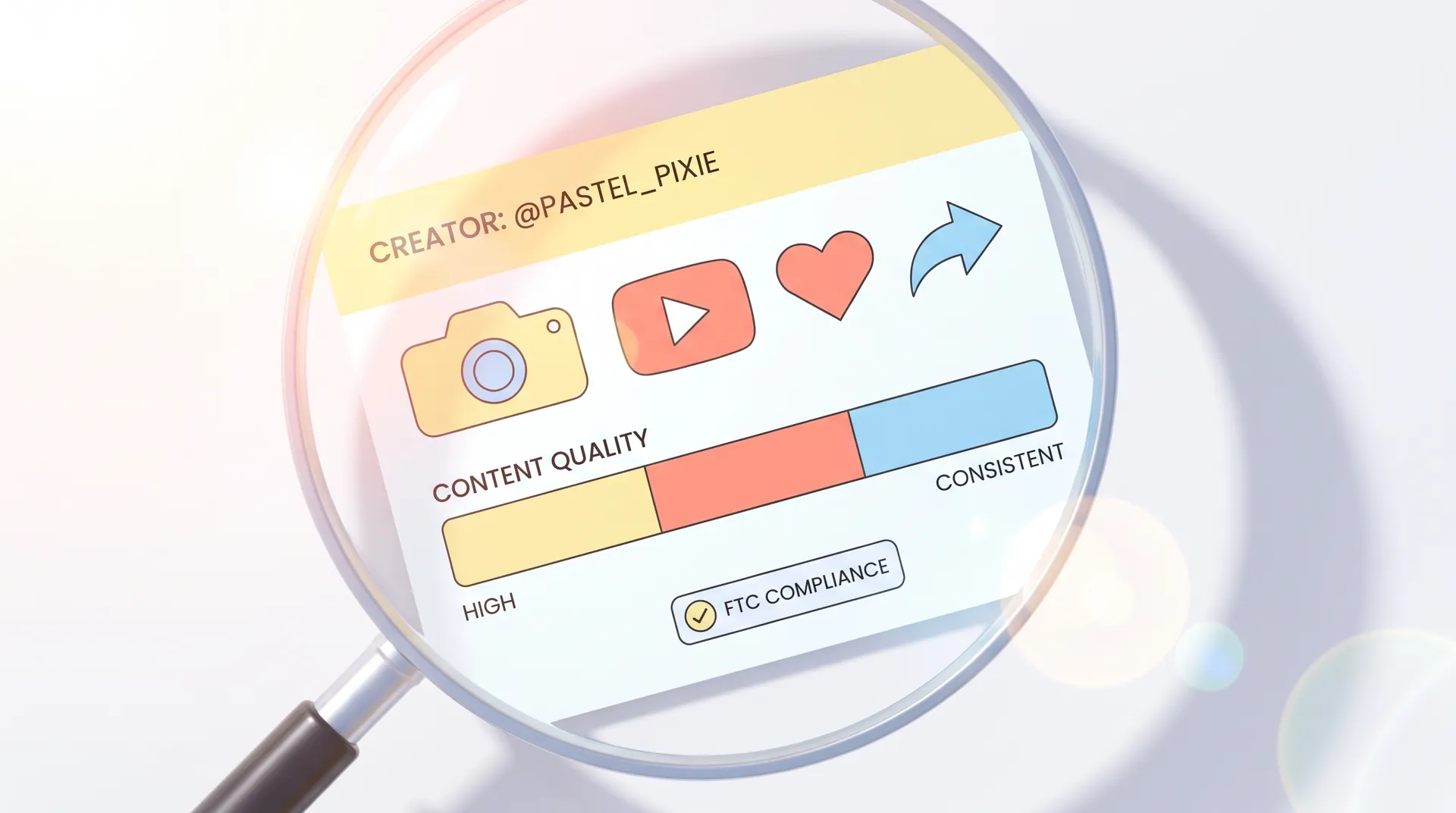
Pretty lighting and good audio matter, but they're not the full picture. What you're actually evaluating is whether this creator can deliver the kind of content that converts — not just content that looks nice.
Pull two or three of their best-performing organic videos. Ask yourself:
- Do they hold attention past the 3-second mark? A great hook is the difference between a dead ad and one that scales. If you want to understand what makes a hook work, TikTok UGC hook examples: nail the first 3 seconds gives you the framework.
- Can they communicate benefits clearly without sounding scripted?
- Is their delivery natural — or robotic?
- Do they understand pacing? Or do they ramble?
Also look at comment quality on their best videos. Commenters saying "where do I get this?" or "I need this" signal that the creator has real persuasion ability. That's the variable you're actually buying.
Don't just accept their submitted samples. Ask for a recent video they made for a different brand, or a piece of organic content in your category. Performance in your category matters more than general polished content.
6. Check for brand safety red flags at the account level
A few things that should make you pause regardless of content quality:
- Follower-to-engagement mismatch — 100,000 followers with 50 likes per post suggests bought followers. Run them through a free tool like HypeAuditor or Modash for a basic authenticity check.
- Mass commercial feel — if their entire feed is brand deals with zero personal content, you're getting a content factory, not an authentic voice. That might be fine for pure performance creative, but know what you're getting.
- Recent account changes — a username change in the last 30 days, a sudden follower spike, or a nearly empty "older" profile are all worth questioning.
- Hate speech or harassment patterns — a quick search of their name plus platform on Twitter/X often surfaces things that don't show up on their own profile.
This isn't about being paranoid. It's about spending 20 minutes now versus spending two weeks cleaning up a brand safety incident later.
Where vetting fits in your broader UGC workflow
Creator vetting doesn't happen in isolation. It's one step inside a larger process that runs from strategy through to measurement. If you haven't mapped that out yet, our UGC marketing: the brand's complete guide (2025) covers the end-to-end brand workflow — including how to brief creators once they've passed your vetting stage.
Once a creator clears your vetting checklist, your brief becomes far more productive. You're not hedging against unknown risks — you're giving direction to someone you've already verified. And a tight brief to a vetted creator is what produces content that actually performs. How to write a UGC campaign brief that works has the brief structure we recommend.
One more thing: vetting is not a one-time event. If you're running ongoing campaigns with the same roster, schedule a quarterly content review. Creators evolve. The person who was perfectly aligned with your brand in Q1 might have shifted their content and audience significantly by Q3. Build the check into your calendar.
If a creator pushes back on sharing audience analytics, a conflict-of-interest declaration, or past disclosure examples — that's your vetting result. Transparency before the contract is the preview for transparency during the campaign.
A note on platforms vs. direct sourcing
Platforms do some of this work for you. A good UGC marketplace will surface engagement rates, audience demographics, and sometimes past brand categories. That speeds up the surface-level check. But it doesn't replace manual review.
No platform is going to watch a creator's last 90 days of organic content on your behalf. No algorithm flags the subtle things — the off-brand humour, the inconsistent disclosure habits, the competitor collab from eight weeks ago. That part still requires a human eye, and it takes maybe 20-30 minutes per creator if you have a checklist and you stick to it.
The brands that skip this step aren't saving time. They're deferring a problem.