UGC Creator Pricing Packages: Tiers vs. Custom Quotes
Learn when UGC creator pricing packages beat custom quotes, how tiered offers speed up client decisions, and how to build packages that protect your income.

I lost a $2,400 deal once because a brand asked "so what would this cost?" and I said "let me put together a quote and get back to you." Three days later they'd already booked someone else. Someone who had a pricing page ready to go.
That was the moment I stopped treating every client like a custom-built house and started treating most of them like they were buying off a menu.
Here's the truth about ugc creator pricing packages: they're not about being less premium. They're about removing the thing that kills deals — friction. When a brand has to wait on you, negotiate with you, and guess what they're getting, you've already lost momentum. Packages fix that. But they're not right for everything, and creators who slap a flat tier on every job end up underpriced on the deals that matter most.
Why UGC creator pricing packages win most of the time
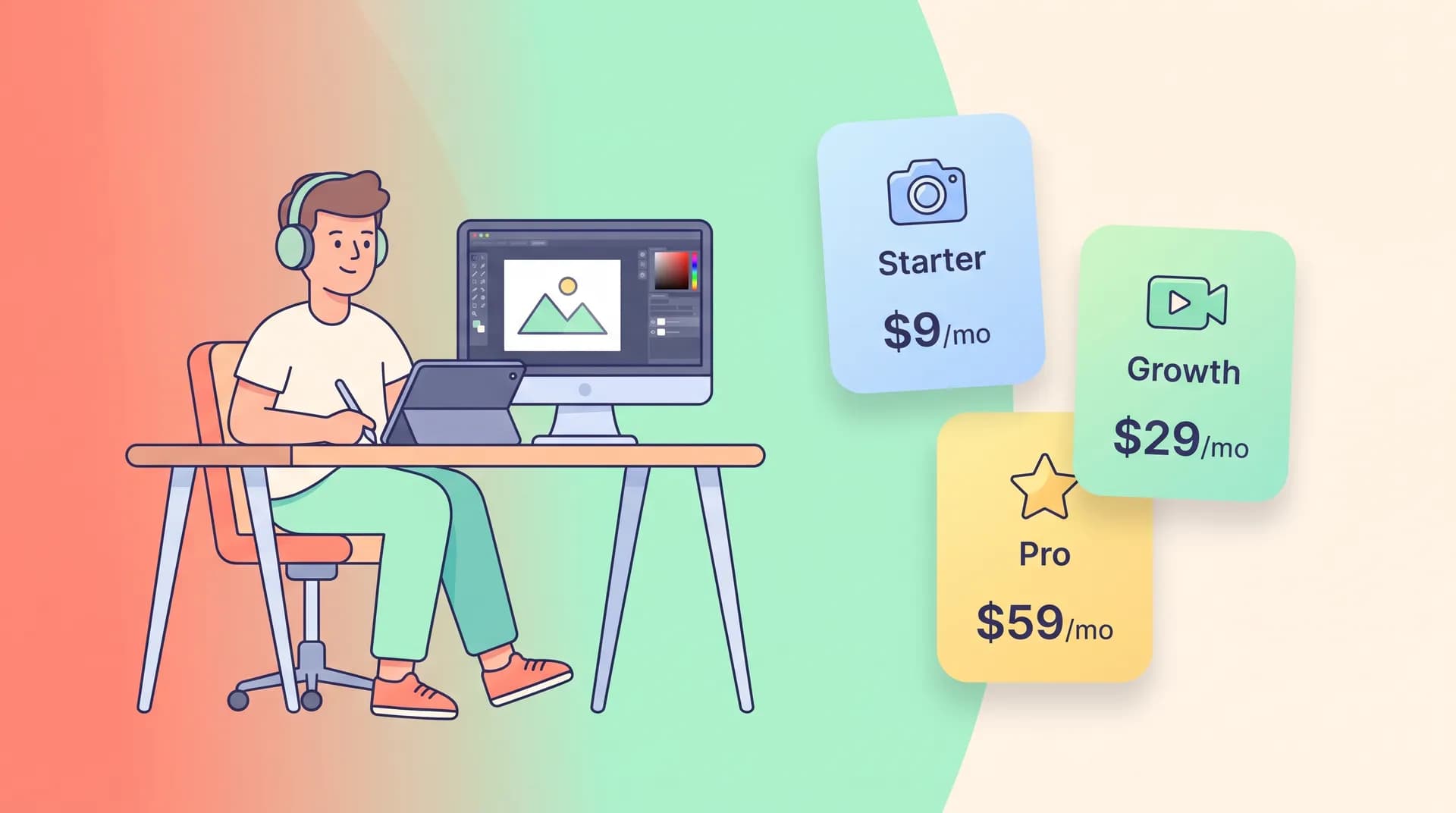
Packages work because they answer the client's real question before they ask it. Brands aren't just buying videos — they're buying certainty. A tiered structure with three clear options (say, a Starter tier with one video and basic usage rights, a Growth tier with three videos and paid usage, and a Pro tier with a full month of content and revisions built in) lets a marketing manager make a decision in the time it takes to read an email.
Speed matters more than most creators realize. Brand marketers are often juggling five vendor conversations at once. The creator who replies with a clean PDF or Notion page showing exact numbers wins the deal that the creator who says "depends, let's hop on a call" loses. I've watched this play out dozens of times in my own inbox.
Packages also protect your time. When you've priced a tier at $450 for one 30-second video plus 6 months of usage rights, you're not re-deriving your rate every single time a brand emails you. You just send the link. This is the same principle behind building a solid UGC creator client pipeline — the less decision-making you do per lead, the more leads you can actually process.
And there's a psychological win here too. Tiered pricing nudges brands toward the middle option — the classic "good, better, best" effect that SaaS companies have used for decades. If you've ever looked at Notion's pricing or Slack's plans, you've seen this in action. Most buyers avoid the cheapest tier because it feels limited, and avoid the top tier because it feels like overkill. They land in the middle — which, if you've built your packages right, is where your best margin lives.
What a solid three-tier structure actually looks like
I'd rather show you numbers than talk in the abstract.
- Starter — $250-400: One UGC video, 15-30 seconds, organic usage rights only, one round of revisions.
- Growth — $700-1,200: Three videos, mixed formats (hook variations included), 6-month paid usage rights, two rounds of revisions.
- Pro/Retainer — $1,800-3,500/month: Ongoing monthly content batch, usage rights for whitelisting/spark ads, priority turnaround, dedicated Slack or email channel.
Notice the jump between tiers isn't small. That's intentional. If your Growth tier is only $100 more than Starter, nobody upgrades. The tiers need real separation in value and price so the decision feels obvious.
Build your tiers around usage rights, not just video count. A brand paying for paid social usage should pay noticeably more than one only using content organically — that's often where 40-60% of your margin should live.
When custom quotes are the smarter move
Packages break down the second a brand's ask doesn't fit a box. A whitelisting deal with a 12-month exclusivity clause, a multi-platform campaign with deliverables across TikTok, Reels, and YouTube Shorts, a rush job needing 48-hour turnaround — none of these fit neatly into "Tier 2."
Custom quotes make sense when:
- The scope is genuinely unusual. Long exclusivity windows, unusual usage rights (national broadcast, paid ads across five platforms), or non-standard deliverables need their own math.
- The client is a repeat partner with evolving needs. If you're moving toward a long-term retainer relationship, custom pricing that reflects the full relationship often beats forcing them into a generic tier.
- You're negotiating with an agency or larger budget. Bigger budgets can absorb custom pricing, and packaged rates tend to leave money on the table with enterprise-level clients.
- The brand needs something built around their brief, not your standard offer — think complex product demos, multi-scene narratives, or campaigns requiring specific talent/casting.
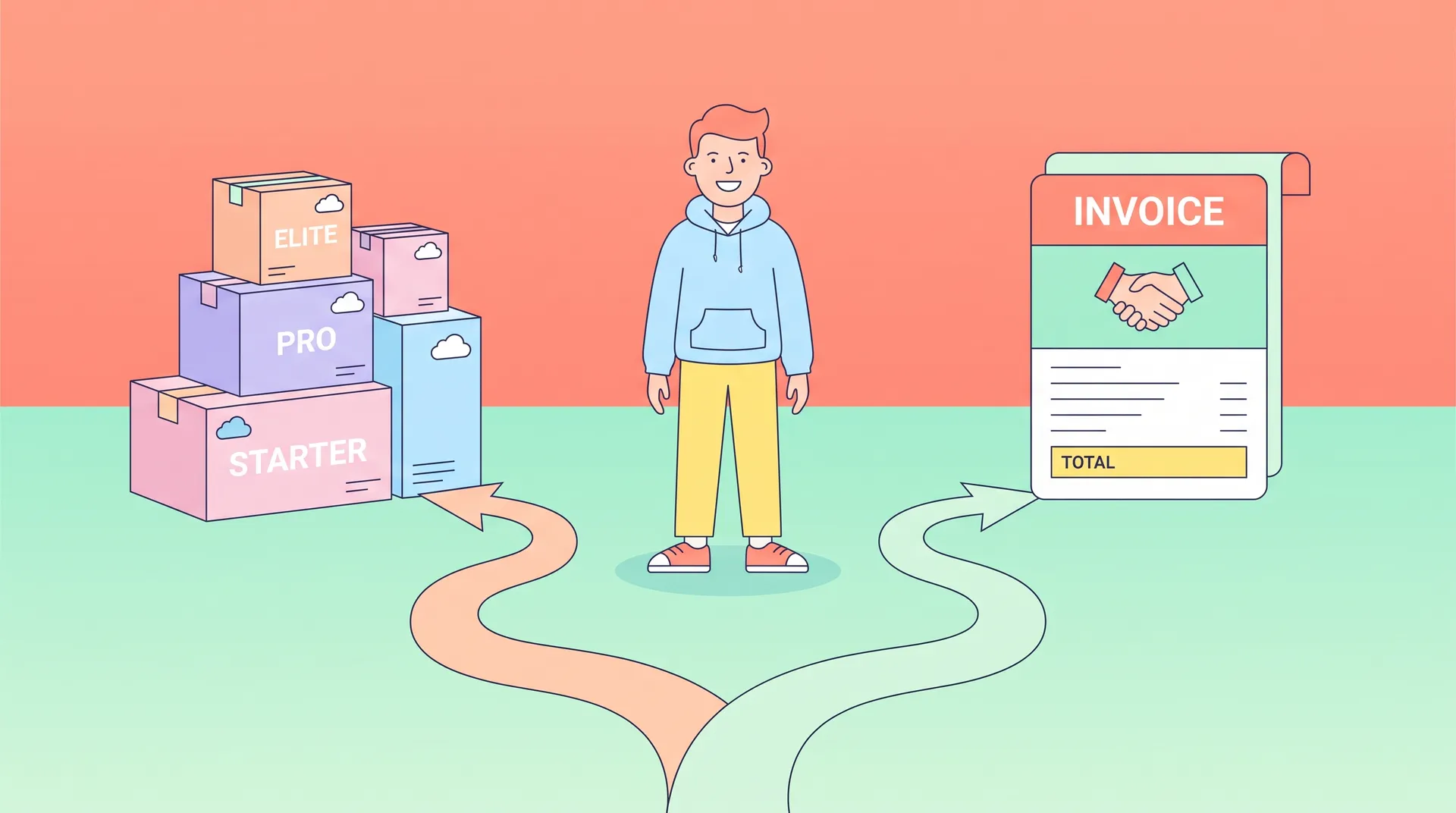
The mistake I see a lot of newer creators make is going custom on everything because it feels more "professional." It's actually the opposite. Custom quoting on straightforward jobs slows down decisions, invites negotiation on every line item, and makes you look less experienced — not more. If you're still building your portfolio and client pipeline, predictability from packages will get you paid faster than a custom-quote-everything approach ever will.
How packages support income predictability
This is the part that matters most if you're trying to go full-time. Custom quoting means your income depends on how well you negotiate every single deal, every single time. That's exhausting and unpredictable. Packages mean you know your floor and ceiling before the call even starts.
If you're mapping out your monthly numbers — figuring out how many Growth-tier packages you need to hit $6K a month, for example — that math is only possible when your pricing isn't a moving target. I go deeper into the income math in how much full-time UGC creators actually earn, but the short version: predictable pricing is what lets you forecast revenue instead of just hoping each month works out.
Packages also make it dramatically easier to survive slower months. When you know exactly what a Starter tier nets you, you can calculate how many deals you need to close to hit a target, instead of guessing. That kind of clarity is part of why I wrote about surviving income gaps as a UGC creator — creators with rigid custom-quote workflows tend to feel slow seasons much harder because every deal takes longer to close.
The hybrid approach most full-time creators actually use
Almost nobody I know runs 100% packages or 100% custom. The smart move is a hybrid: publish 3 clear tiers as your default, and quote custom only when a brand's request genuinely breaks the mold.
This gives you the speed benefit of packages for 80% of inbound leads, while keeping the flexibility to charge properly for the unusual 20%. If you're deciding between running your own client relationships this way versus outsourcing that decision-making to an agency, it's worth reading UGC creator agency vs. independent — pricing structure is one of the biggest differences between the two paths.
A good rule of thumb: if you can price a request in under 5 minutes using your existing tiers, use the tiers. If it takes you longer than that to figure out fair pricing, it's a custom quote.
Building the packages so brands actually trust them
A pricing page or one-pager needs three things to convert: clarity, specificity, and proof. Vague packages ("content creation services — inquire for pricing") do nothing. Brands want numbers, deliverables, and turnaround times spelled out plainly.
Tools like HoneyBook or even a well-formatted Notion page work fine for this — you don't need custom software. What matters is consistency: the same tier names, the same deliverables, the same usage terms every time you send it out. That consistency is also what makes it easy to raise rates later without confusing existing clients, something I cover in how to raise rates vs. take more clients.
If you're still early in building out your full-time business, this ties directly back into the broader roadmap I laid out in how to go full-time as a UGC creator in 2025 — pricing structure is one of the five or six operational decisions that determines whether your business scales or stalls.