
How to hire UGC creators: a brand marketer's checklist
Learn how to source, screen, and contract UGC creators who deliver on-brief content — covering niche fit, quality signals, authenticity checks, and red flags.

Last quarter I watched a DTC skincare brand spend $4,200 on a UGC batch that was almost entirely unusable. Shaky footage, off-brand messaging, one creator who'd posted a competitor's product the week before. The brand manager told me she'd picked creators based on "vibes and follower count." That's not a hiring process — that's a coin flip.
Knowing how to hire UGC creators properly is one of the highest-leverage skills a brand-side marketer can develop right now. Done well, you'll have a roster of reliable creators who deliver ad-ready content on brief, on time, every time. Done poorly, you're paying for content you can't use and starting over.
This checklist covers the full sourcing-to-contract process. No fluff.
Step 1: Define what you actually need before you hire a UGC creator
Most bad hires happen before the search even starts.
Before you open a single creator marketplace or post a casting call, lock in your answers to these four questions:
What format? A 30-second testimonial hook for Meta ads is a fundamentally different ask from a 60-second unboxing for TikTok organic. The creator skill set, shooting style, and delivery required are different too.
What niche? "Fitness" is not a niche. "Women 30+ who train at home and care about low-impact workouts" is a niche. The more specific you are, the easier it becomes to filter out misfits fast.
How many deliverables? Scope creep kills UGC relationships. Decide whether you want three hero videos and two b-roll clips, or one full-length demo plus a cut-down — and put that in writing before outreach.
What usage rights do you need? If you're planning to run paid ads using the creator's face and likeness, you need whitelisting or a paid ads usage clause. That changes the rate, so figure it out upfront. (More on rights in UGC whitelisting rights: what they are & what to charge.)
Nail these four things and the rest of the process gets dramatically simpler.
Step 2: Where to find UGC creators worth hiring
You've got three main sourcing channels, each with real trade-offs.
Creator marketplaces. Platforms like Billo, Insense, and Cohley let you post a brief and receive applications from their creator pools. Speed is the advantage — you can have five applicants in 48 hours. Quality control is the catch. These pools range from polished professionals to people who've filmed exactly one video. Filter hard.
Organic discovery. Search relevant hashtags on TikTok and Instagram. If someone is already making great content in your niche organically, they understand what works. This takes more time but tends to surface creators with genuine product enthusiasm, which shows on camera.
Flare's campaign marketplace. Creators on Flare apply directly to brand briefs, so you're seeing motivated applicants who've read your requirements and self-selected in. That beats casting a wide net and sifting through noise.
Your own customers. Wildly underused. If someone's already bought from you and loves the product, their content will read as authentic because it is authentic. A simple post-purchase email asking happy customers if they'd like to create a paid video can surface your best UGC performers. Our guide on how to get UGC for your brand (without a big following) covers this channel in depth.
Step 3: How to screen UGC creator applications
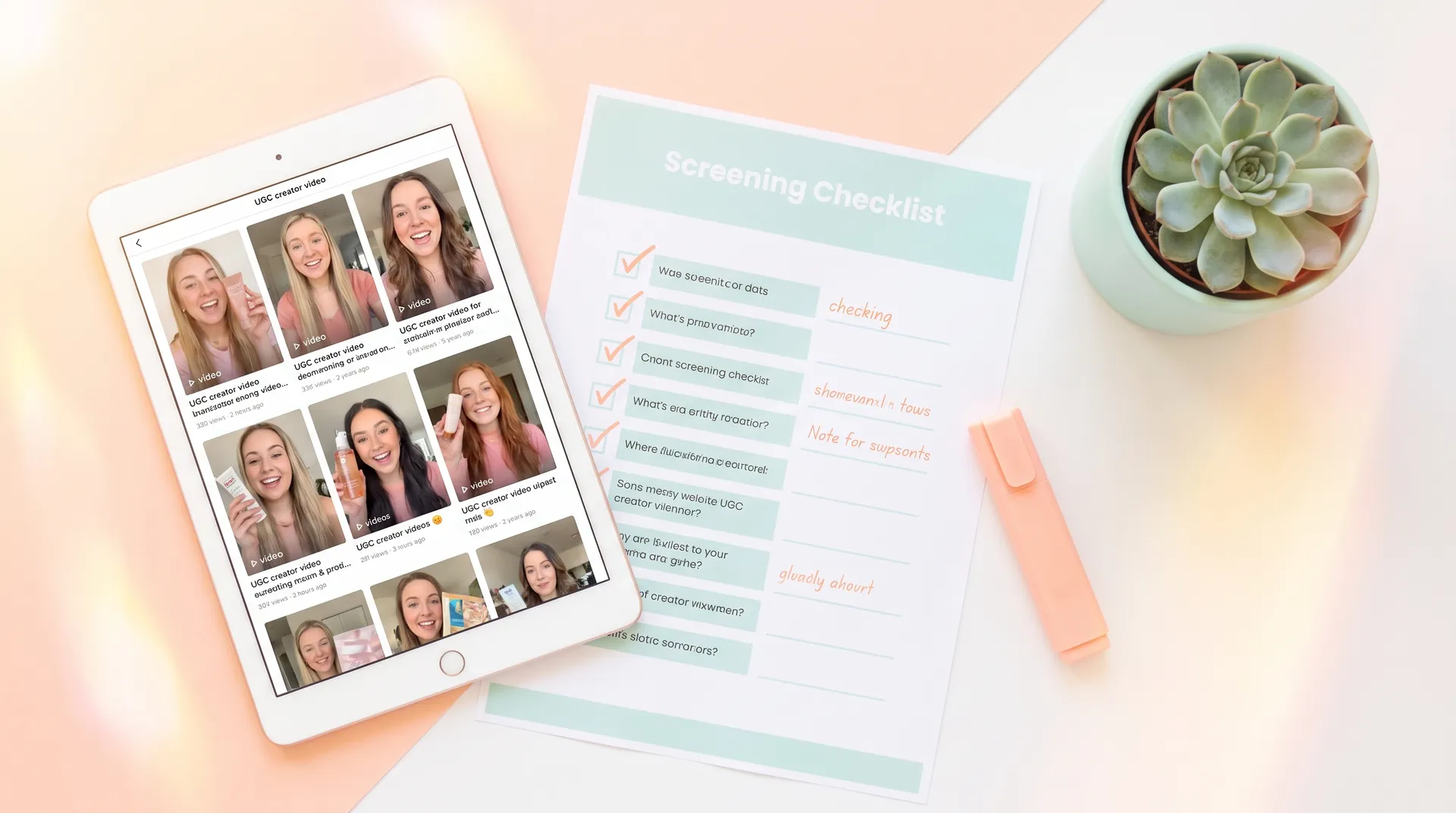
This is where most brands are too lenient. A weak screening process is how you end up with unusable content.
Here's what I look at, in order:
Portfolio quality signals
Watch at least three to five pieces of their previous work. You're not looking for cinematic production — UGC is supposed to feel native and real. You're looking for:
- Clear audio. Muffled or echo-heavy sound is a deal-breaker. Brands consistently underestimate how much bad audio kills ad performance. Good audio is non-negotiable.
- Stable framing. The camera doesn't have to be locked on a tripod, but unwatchable wobble is a problem.
- Natural delivery. Do they sound like they're reading off a teleprompter? Stilted delivery that feels scripted tanks viewer trust.
- Hook execution. Do their videos open with something that stops a scroll, or do they lead with "hey guys, today I want to talk about..."? That second opening is an instant skip.
Niche authenticity
This one is harder to fake-proof but worth the effort. A creator who genuinely uses products in your category will have an entire feed that reflects it. Someone who rotates randomly between crypto, makeup, pet food, and weight loss supplements every two weeks is a mercenary — and audiences can feel that.
Check the last 30 days of their content. Does it match the niche they're pitching you on?
Engagement authenticity
Follower count is irrelevant for UGC. Repeat that to yourself. UGC content runs as an ad with your brand's paid budget behind it — their reach doesn't matter. What you're evaluating is content quality and on-camera presence.
That said, if a creator has a public account and claims to be an "influencer" as part of their pitch, do a basic sanity check. Tools like HypeAuditor or Modash will flag engagement rates that are suspiciously low or follower counts built on bots. A 200K-follower account averaging 40 likes per post is a red flag worth noting.
Communication speed and professionalism
Send a brief and pay attention to response time, clarity of questions, and whether they actually read it. A creator who responds in 24 hours with sharp clarifying questions is going to be dramatically easier to work with than one who ghosts for a week and then sends a confused reply.
This sounds soft. It isn't. Production delays and revision spirals cost real money.
Step 4: Red flags that should kill a deal
Walk away from any creator who:
- Asks you to skip a contract. No exceptions. Ever.
- Can't provide a sample that matches your brief style. If their entire portfolio is lifestyle b-roll and you need a direct-response talking-head testimonial, they may not be the right fit — regardless of how good their content looks.
- Has posted a direct competitor's paid content in the last 60 days. Some creators and contracts allow for competitor work — you need to decide your policy and check before hiring.
- Quotes suspiciously low rates. $25 for a full UGC video with usage rights is not a deal. It's a signal that the creator doesn't understand their deliverable or won't prioritize your project.
- Gets defensive about revision requests. One round of revisions should be standard. If a creator argues that their first take is always perfect, that's not confidence — that's a future dispute waiting to happen.
Checklist before you hire: ✓ Portfolio reviewed (3+ videos) ✓ Niche fit confirmed ✓ Audio quality passes ✓ No direct competitor content in last 60 days ✓ Contract ready to send ✓ Revision round included in brief ✓ Usage rights defined
Step 5: Contracting — get this right
A handshake deal or DM thread is not a contract. I've seen brands lose thousands of dollars in content because they had no written agreement covering what happens if the creator ghosts, delivers off-brief, or posts the content themselves before the brand runs it as an ad.
Your UGC contract needs to cover at minimum:
- Deliverables — exact number, format, length, and specs
- Revisions — how many rounds are included and the turnaround time
- Exclusivity — which competitors they can't work with and for how long
- Usage rights — platforms, duration, and whether paid ad use is included
- Payment terms — deposit amount, final payment trigger, method
- Content ownership — when does the brand own the raw files?
For a full breakdown of the clauses that matter most, see how to read a UGC contract before you sign. Yes, that's written for creators — but reading it from the other side of the table is genuinely useful for understanding what you're asking creators to agree to.
Step 6: Brief them like a professional
Bad briefs produce bad content. Full stop.
A good UGC brief includes: product overview, target audience, key message (one, not five), the emotional hook you want viewers to feel, visual do's and don'ts, a script framework or talking points (not a word-for-word script unless you want robotic delivery), and examples of content you love.
The Problem-Agitate-Solve framework is a reliable structure to point creators toward if you want a testimonial-style video that actually converts. Share it with them as a reference, not a mandate.
If you want to understand the full strategic picture of why UGC outperforms polished ads and how it fits your funnel, UGC marketing: the brand's complete guide (2025) is the right starting point.
Building a creator roster, not just filling a single brief
The brands getting the most out of UGC aren't treating it as a one-off transaction. They're building a roster of three to eight vetted creators they return to consistently. Each creator learns the brand's voice and standards over time, briefs get shorter, revision rounds decrease, and content quality compounds.
That's the goal. Not just hiring a UGC creator — building a creative supply chain you can rely on.
Frequently Asked Questions
How much does it cost to hire a UGC creator?
Where is the best place to find UGC creators?
What should I look for when screening a UGC creator?
Do I need a contract to hire a UGC creator?
How do I know if a UGC creator's engagement is real?
Can I hire UGC creators without a big marketing budget?
Related reading
- UGC marketing: the brand's complete guide (2025)
- How to get UGC for your brand (without a big following)
- UGC vs. influencer marketing: which should your brand budget?
- What is UGC marketing and why it beats polished ads
- UGC whitelisting rights: what they are & what to charge
- How to read a UGC contract before you sign