App Trial Conversion Rate: Tracking Creator Campaign ROI
App trial conversion rate is the metric that separates good creator campaigns from vanity installs. Here's how to track it and attribute it correctly.

I watched a founder celebrate a 40% spike in installs from a creator campaign, pop champagne in the team Slack, then quietly go silent three weeks later when the subscription revenue numbers came in flat. Nobody asked the only question that mattered: how many of those installs actually finished the trial and converted to paid? That's app trial conversion rate, and if you're not measuring it by creator and by content format, you're flying a plane with the altimeter covered up.
I've run paid creator programs for Flare.app and talked to dozens of consumer app founders who make the exact same mistake. They treat install volume as the finish line. It's not even the starting line. It's just the on-ramp.
Why app trial conversion rate matters more than install volume
Installs are cheap to inflate. Throw money at broad-reach creators, use a controversial hook, run a giveaway tie-in — you'll get installs. None of that tells you whether the person who downloaded your app actually cares about the problem it solves.
Trial starts tell you something. They mean a person opened the app, got past your onboarding screens, and said "yes, I want to try this." Paid conversion tells you even more — it means the trial delivered enough value that someone pulled out a credit card.
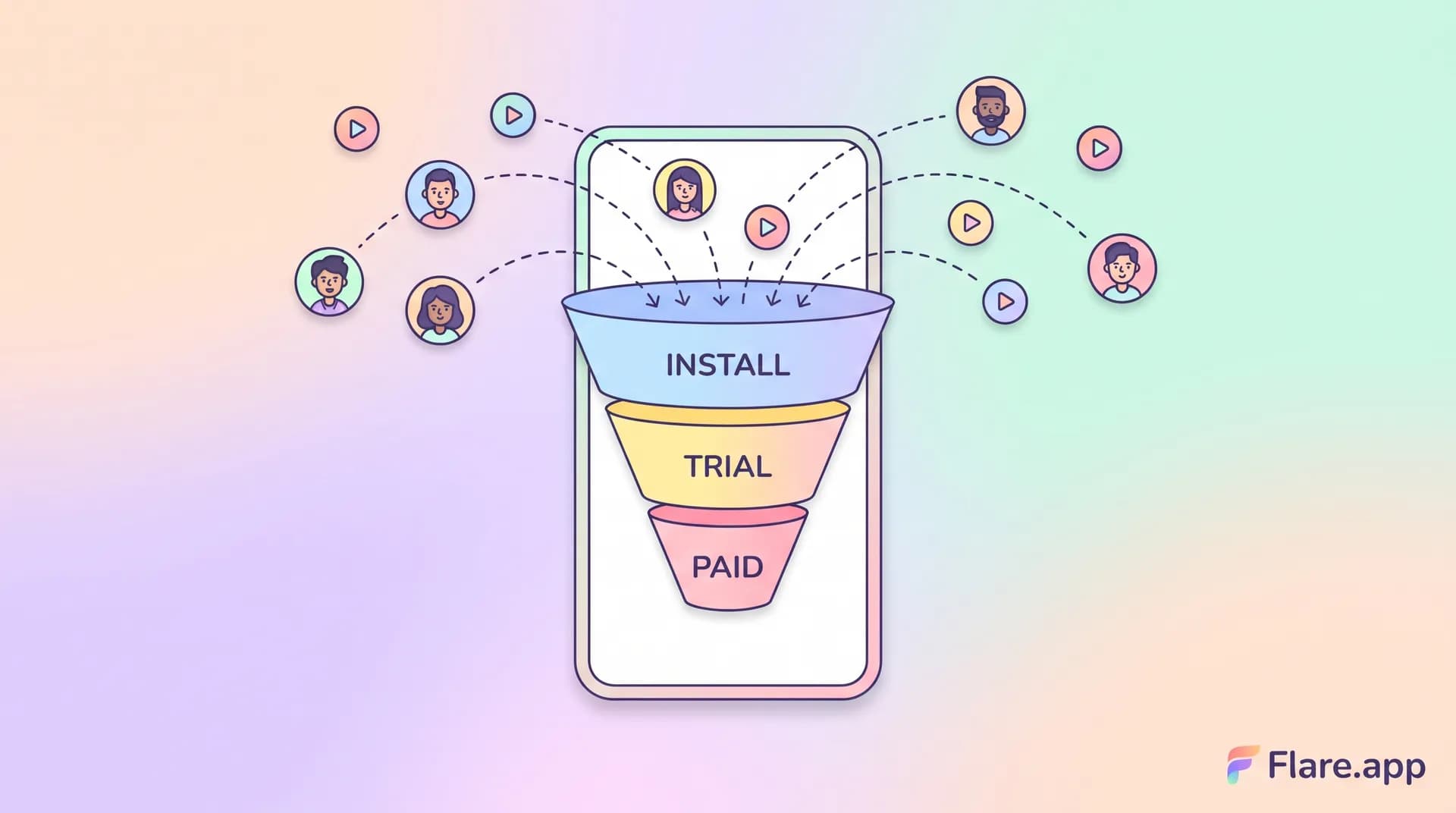
The gap between those three numbers (install → trial start → paid conversion) is where creator campaign quality actually reveals itself. I've seen two creators deliver nearly identical install counts with a 3x difference in trial-to-paid conversion. The install cost per creator looked similar on a spreadsheet. The actual business outcome was nowhere close.
If you're only reporting install cost to your board or investors, you're reporting the least useful number you have.
The three numbers you actually need
Here's the minimum tracking stack for any creator campaign:
- Install rate — clicks from creator content to app store installs
- Trial start rate — installs that result in a trial activation (free trial, freemium unlock, whatever your model uses)
- Paid conversion rate — trials that convert to a paying subscription or purchase
Most teams track the first number obsessively and the other two loosely, if at all. Flip that. Install rate is a proxy metric. Trial start rate and paid conversion are the real signal.
How to attribute trial starts back to specific creators
This is the part that trips people up. Attribution for app installs is relatively solved — every mobile measurement partner (Adjust, AppsFlyer, Branch) handles install-level attribution fine. Attribution for in-app events downstream of install is where things get sloppy.
You need three things working together:
- Unique links or promo codes per creator. Don't reuse the same link across five creators and hope you can untangle it later. You can't. Give every creator a distinct tracking link or, even better, a unique promo code they say on camera — codes survive screenshotting and word-of-mouth sharing in ways links don't.
- Deep linking into your MMP that passes through to in-app events. Your mobile measurement partner needs to fire postbacks for trial_start and subscription_start events, not just install. If you're only configured for install-level attribution, go fix that today — it's usually a 30-minute config change, not a rebuild.
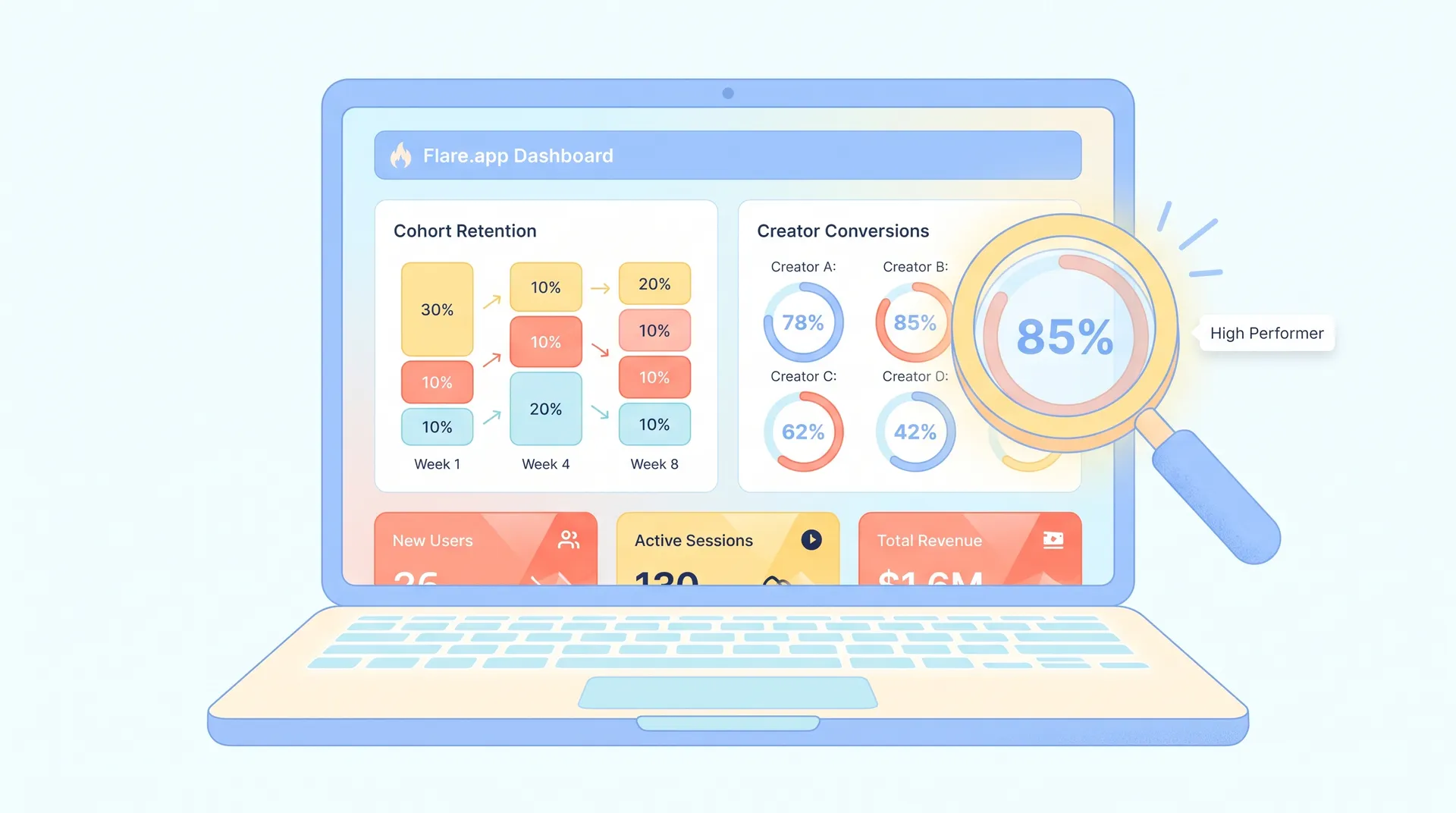
- A dashboard that groups by creator, not just by campaign. Campaign-level reporting hides creator-level variance. I want to see Creator A's install-to-trial rate sitting at 22% while Creator B sits at 9%, same campaign, same offer. That's actionable. Blended campaign averages aren't.
If you're still manually matching UTM parameters in a spreadsheet, stop. Set up server-to-server postbacks between your MMP and whatever analytics tool you use for in-app events (Amplitude, Mixpanel, your own warehouse). It takes an afternoon and saves you weeks of guesswork later.
This is also where creator vetting pays off before you even launch. I wrote about how to recruit creators who actually use your app — creators who understand the product tend to produce content that pulls in trial starters who stick, not just tap-happy installers chasing a hook.
Reading the funnel: what good conversion rates actually look like
There's no universal benchmark here, and anyone who gives you one number without context is guessing. But directionally, here's what I've seen across consumer subscription apps running creator-sourced traffic:
- Install-to-trial-start rates for well-matched creator content typically land somewhere between 15-35%, depending on category and onboarding friction.
- Trial-to-paid conversion for freemium or free-trial subscription apps usually sits in the 3-8% range for organic, but creator-sourced trials can run higher — sometimes 10-15% — when the creator's framing primes the right expectation before the user even opens the app.
That last point matters a lot. A creator who sets accurate expectations ("this costs $7.99/month after the trial, here's exactly what you get") produces trial starters who convert better than one who oversells with a vague "this app changed my life" hook. The install numbers might favor the vague hook. The paid conversion numbers won't.
Fixing the gap between trial starts and paid conversion
If your trial start rate looks healthy but paid conversion is weak, the problem usually isn't the creator content — it's what happens after someone opens the app. I'd check, in order:
Onboarding friction. If your trial users aren't reaching an "aha moment" fast, they churn before they ever see value worth paying for. This is downstream of the creator relationship, but creators can help here too — a creator video that previews what the first-run experience looks like reduces drop-off because users know what to expect. I covered this in detail in App Onboarding Video Brief: Script the First Useful Moment.
Mismatched expectations from the creative itself. If a creator's video promises a feature that's buried three screens deep, or demos a use case that's not what most new users actually do, you'll get trial starts that evaporate. Compare your top-converting creators' scripts against your lowest-converting ones — I'd bet the winners are describing outcomes, not just features. More on that approach in App Benefits Video Script: Sell Outcomes, Not Features.
Audience mismatch, not creative mismatch. Sometimes the content is fine but the audience isn't primed for your category at all. That's a targeting and creator-fit problem, not a script problem. We dig into separating those two causes in App Marketing Audience Testing: Test Problems, Not Ads.
Trial length and paywall timing. If your trial is 7 days but your product's value takes 3 weeks to show up (fitness apps, language learning, habit trackers), you're converting on hope, not proof. Test extending trial length specifically for creator-sourced cohorts and compare.
Don't average trial conversion across all traffic sources and call it a day. Creator-sourced trial users often behave differently than paid social or organic search users — different expectations, different context going in. Segment your conversion reporting by source, always.
Building a reporting cadence that actually drives decisions
Weekly is too slow for the first month of a new creator relationship, and daily is noise. I check creator-level trial start and paid conversion data at the 3-day, 7-day, and 30-day marks after a video goes live. The 3-day check tells me if the content resonated at all. The 7-day check tells me if trial starts are materializing. The 30-day check is the real verdict — did people actually convert and stick past the first billing cycle.
Cut creators who consistently deliver installs but weak trial starts — their audience isn't matching your ICP, no matter how good the view counts look. Double down on creators who deliver lower install volume but outsized trial-to-paid rates. That's the trade I'd make every time, and most founders get it backwards because install volume feels more impressive in a recap deck.
If you haven't built this attribution stack yet, you can read our broader framework in Mobile app marketing with creator content: the full guide — it covers how trial conversion tracking fits into the bigger creator acquisition picture, from sourcing to measurement to scaling spend. And if you're still deciding whether your current creator-to-install pipeline is even healthy, start with Installs vs Activation: Reading Your App Acquisition Funnel before layering on trial and paid conversion tracking.
For the attribution mechanics themselves, both AppsFlyer's documentation on in-app event postbacks and Adjust's guide to subscription analytics are solid references if you're setting up your MMP config for the first time. RevenueCat's benchmark reports are also worth checking for category-specific trial conversion data if you run a subscription app — their State of Subscription Apps report breaks down conversion by vertical.
Don't let install volume be the only number in the recap
Every creator campaign recap I write now leads with trial start and paid conversion, not install count. Install count goes in a footnote. That single change in reporting order has shifted which creators we renew and which we cut — and it's shifted budget toward creators whose audiences actually stick around to pay.
If you're still reporting install volume as your headline creator metric, change that this week. Set up the postbacks, segment the dashboard by creator, and give yourself 30 days of data before you renew anyone.
Frequently Asked Questions
What is a good app trial conversion rate?
How do you track trial starts back to a specific creator?
Why do some creators drive more installs but fewer paid conversions?
Should I measure trial conversion the same way for all traffic sources?
How soon after a creator video goes live should I check conversion data?
Related reading
- Mobile app marketing with creator content: the full guide
- Installs vs Activation: Reading Your App Acquisition Funnel
- How to Recruit Creators Who Actually Use Your App
- App Onboarding Video Brief: Script the First Useful Moment
- App Benefits Video Script: Sell Outcomes, Not Features
- App Marketing Audience Testing: Test Problems, Not Ads