
Assisted Pipeline Attribution B2B: Why Single-Touch Fails
Assisted pipeline attribution b2b creator campaigns resist single-touch models. Here's how I actually measure creator influence on deals without lying to my CFO.

A rep on my team closed a $42K deal last quarter. When I asked her what moved it, she said, "Honestly? That LinkedIn post from the creator we work with came up three separate times on calls." Try putting that in a UTM parameter.
That's the problem with assisted pipeline attribution b2b teams keep running into when they try to measure creator marketing. The deal closed through a rep, in Salesforce, with a clean "Outbound" source field. The creator content that got the prospect to actually take the call? Invisible to the CRM. I've been running creator partnerships at Flare for years now, and I can tell you: if you're waiting for a single-touch attribution report to justify your creator budget, you'll be waiting forever. It doesn't exist, and chasing it wastes time you could spend on better measurement.
Why Assisted Pipeline Attribution B2B Models Break Down
Single-touch attribution was built for a world where buyers clicked one ad and converted. That world barely exists in B2C anymore, and it's basically fiction in B2B.
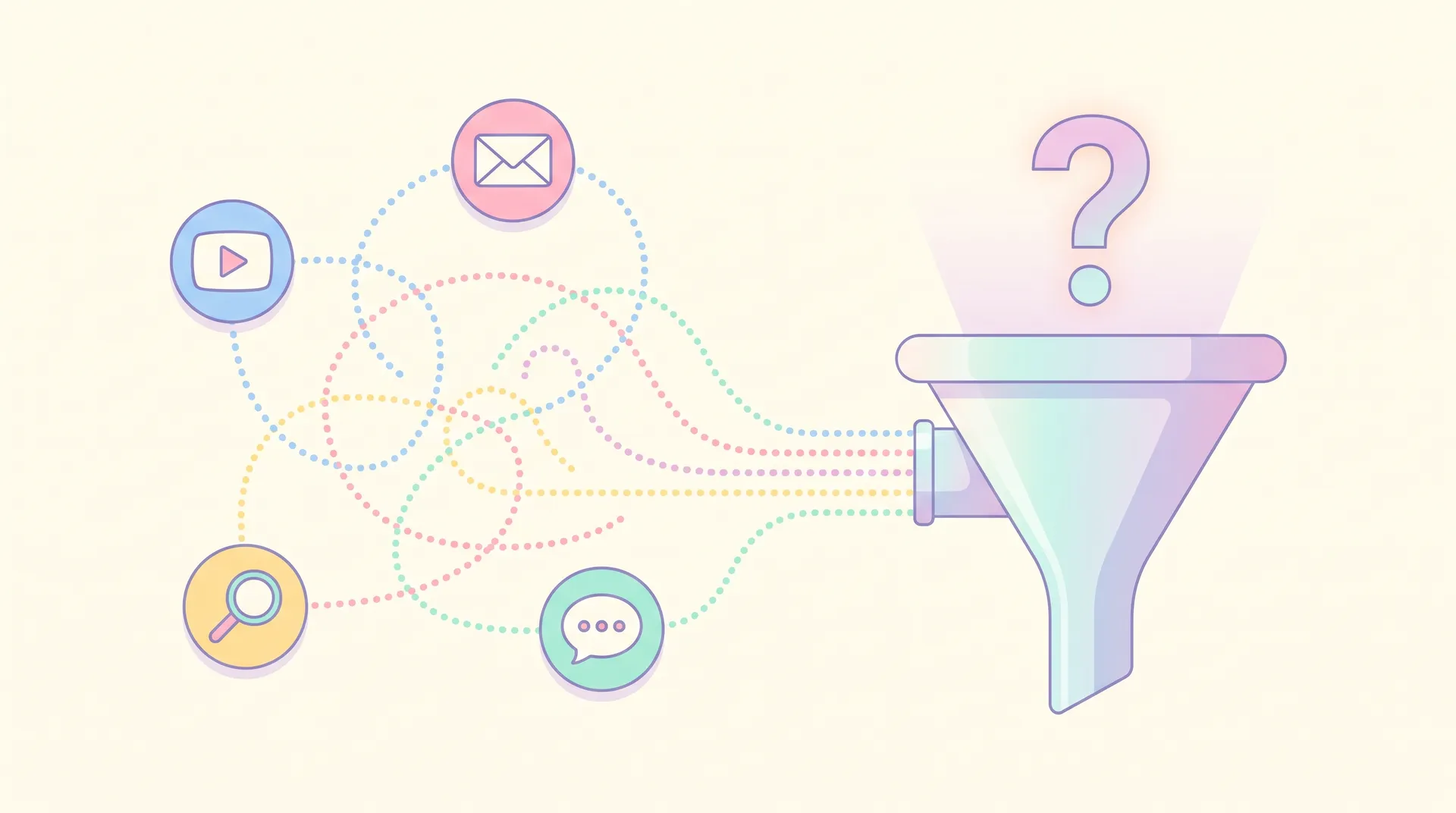
Think about how a real buyer actually ends up in a demo. They see a creator's teardown video on LinkedIn in March. They forget about it. In May, a colleague mentions your product in Slack. In June, they Google your category and your creator's content shows up again, this time in a different format — maybe a comparison post. In July, they finally book a call, and when asked "how did you hear about us," they type whatever they remember last, which is usually the thing closest in time, not the thing that actually built trust.
First-touch attribution gives all the credit to the March video. Last-touch gives it to the Google search. Both are wrong, and both would tell you to cut the creator budget — because neither model can see what actually happened in between.
I wrote about this exact gap when I covered measuring qualified demo requests from creator campaigns — the honest version of that post is that most demo requests from creator content look unattributed until you go digging. The same logic applies at the pipeline stage, just with higher stakes and bigger dollar amounts.
The B2B Buying Committee Makes It Worse
B2C attribution is hard because of multi-device, multi-session behavior. B2B attribution is harder because you've got multiple people involved in one decision.
Your champion might see the creator content. The economic buyer never does — they just hear about it secondhand in an internal Slack thread or a forwarded link. The technical evaluator finds a completely different piece of content while doing due diligence. Three different touchpoints, three different people, one deal. Your CRM has a field for "lead source." It does not have a field for "the three humans who each saw something different before agreeing to buy."
Gartner's research on B2B buying groups backs this up — the average B2B purchase decision now involves six to ten stakeholders, each independently gathering information. (Source: Gartner B2B Buying Journey). If your attribution model assumes one person, one path, one touch, it was never built for how B2B deals actually get made.
What Actually Works: Measuring Influence, Not Causation
I stopped trying to prove creator content caused specific deals. Instead, I measure whether it's present in the deals that close, and at what rate, compared to deals where it's absent.
Here's the practical version of what that looks like:
Track content exposure, not just clicks. If a prospect visited a landing page a creator linked to, watched more than 50% of a sponsored video, or engaged with a creator's post before becoming an opportunity, log it, even if it's not the "source" field. Most marketing automation tools (HubSpot, Marketo, even a simple UTM-to-CRM join) can capture this as a secondary touchpoint without overwriting the primary source.
Run a flagged-cohort comparison. Tag every opportunity that had any creator touchpoint, anywhere in the funnel, regardless of source field. Then compare that cohort against opportunities with zero creator exposure on: win rate, average deal size, and sales cycle length. This is "assisted" in the truest sense. You're not claiming causation, you're measuring correlation with enough rigor to be useful.
Ask sales reps directly. This sounds unscientific. It isn't. A five-question post-close survey, "Did the prospect mention any content, creator, or third-party voice during the sales process?", captures signal that no tracking pixel ever will. I'd rather have a rep's honest "yeah, they brought up that demo video twice" than a UTM-clean but incomplete dashboard.
Use account-level attribution, not lead-level. Since B2B deals involve multiple people, attribute at the account level. If anyone at the target account touched creator content before the deal progressed, count it. This matches how buying committees actually work instead of forcing a single-person attribution model onto a multi-person decision.
This is the same account-level thinking I used when building out our practitioner creator vetting process — you're optimizing for whether the right people at the account trust the voice, not whether one specific click converted.
Set Expectations With Leadership Before You Report Numbers
The biggest attribution mistake I see isn't measurement, it's communication. Marketers get a flagged-cohort report showing creator-touched deals close 20% faster, then present it to the CFO as if it proves causation. The CFO, rightly, pushes back. Correlation isn't causation, and everyone in the room with a finance background knows it.
Instead, frame it honestly: "Deals with creator touchpoints anywhere in the journey show a 20% faster close rate and 15% larger average deal size. We can't isolate creator content as the sole cause, but the pattern is consistent across three quarters and holds even when we control for deal source." That sentence survives scrutiny. The "creator marketing generated $400K in attributed pipeline" sentence does not, because someone will ask you to show your attribution model, and single-touch models fall apart under two follow-up questions.
If your attribution report can't survive a CFO asking "how exactly did you calculate that," don't present it as causation. Present it as correlation with context. It's more defensible and, honestly, more accurate.
This is also where creator selection matters more than people think. A generic influencer post gets ignored by a buying committee doing technical due diligence. A credible practitioner voice, someone who's actually used the product in a similar role, gets forwarded internally and shows up in those multi-touch patterns you're trying to measure. I've written before about finding practitioner creators for exactly this reason: the measurement problem gets easier when the content itself is the kind that gets shared inside a deal, not just viewed once and forgotten.
Tie It Back to the Broader Strategy
None of this works as a one-off campaign measured in isolation. Assisted pipeline attribution only becomes useful when you're running creator partnerships as an ongoing program with consistent creators, consistent cadence, and enough volume to see patterns across quarters rather than guessing from three data points. I go deeper on building that foundation in the pillar piece on B2B influencer marketing and creator partnerships. Attribution is a lot less painful when the underlying program is built to produce comparable cohorts quarter over quarter.
If you're earlier in the process and still deciding which creators to work with or how to structure the ask, that program-level thinking matters more than any attribution model you'll build on top of it. Get the roster and cadence right first. The measurement gets easier once there's enough signal to measure.
HubSpot's own research on marketing attribution models points to the same conclusion for complex B2B sales cycles. They recommend multi-touch or algorithmic models over first or last-touch specifically because single-touch models undercount channels that build trust early in long cycles. (Source: HubSpot Marketing Statistics). Forrester has made similar arguments about "dark funnel" influence, the activity that shapes a buying decision but never shows up cleanly in a CRM. (Source: Forrester Research).
Run the flagged-cohort comparison for at least two full quarters before drawing conclusions. B2B sales cycles are long enough that one quarter of data is mostly noise.
FAQ
Frequently Asked Questions
What is assisted pipeline attribution in B2B marketing?
Why doesn't single-touch attribution work for B2B creator campaigns?
How do you measure ROI on B2B influencer marketing without clean attribution?
What tools can track multi-touch attribution for creator campaigns?
How long should you measure before trusting assisted pipeline data?
Related reading
- B2B Influencer Marketing: Building Creator Partnerships
- Measuring Qualified Demo Requests From Creator Campaigns
- Finding Practitioner Creators for Your B2B Influencer Marketing Strategy
- B2B Creator Vetting Process: Test Product Knowledge First
- Building an Ongoing B2B Expert Creator Roster That Scales