Customer, Employee, or Creator: Picking Your B2B Voice
Weighing b2b creator partnership roles? Compare the credibility tradeoffs of customers, employees, and independent creators before you pick who talks.

I once watched a B2B software company spend three weeks debating whether to have their own sales engineer or a paying customer demo a new integration in a video. They picked the sales engineer because he was "more available." The video got 400 views and a handful of polite comments. A customer testimonial they shot almost as an afterthought, using someone who'd actually struggled to get the integration working at 2am, got ten times the engagement and became their top-performing sales enablement asset for the next two quarters.
That's the whole problem with b2b creator partnership roles in one story. Companies default to whoever's easiest to book instead of whoever carries the most credibility for the specific claim they're trying to make. And in B2B, where buying cycles are long and trust is earned in inches, that choice matters more than almost any other decision in your content plan.
B2B Creator Partnership Roles: Who Should Actually Be Talking
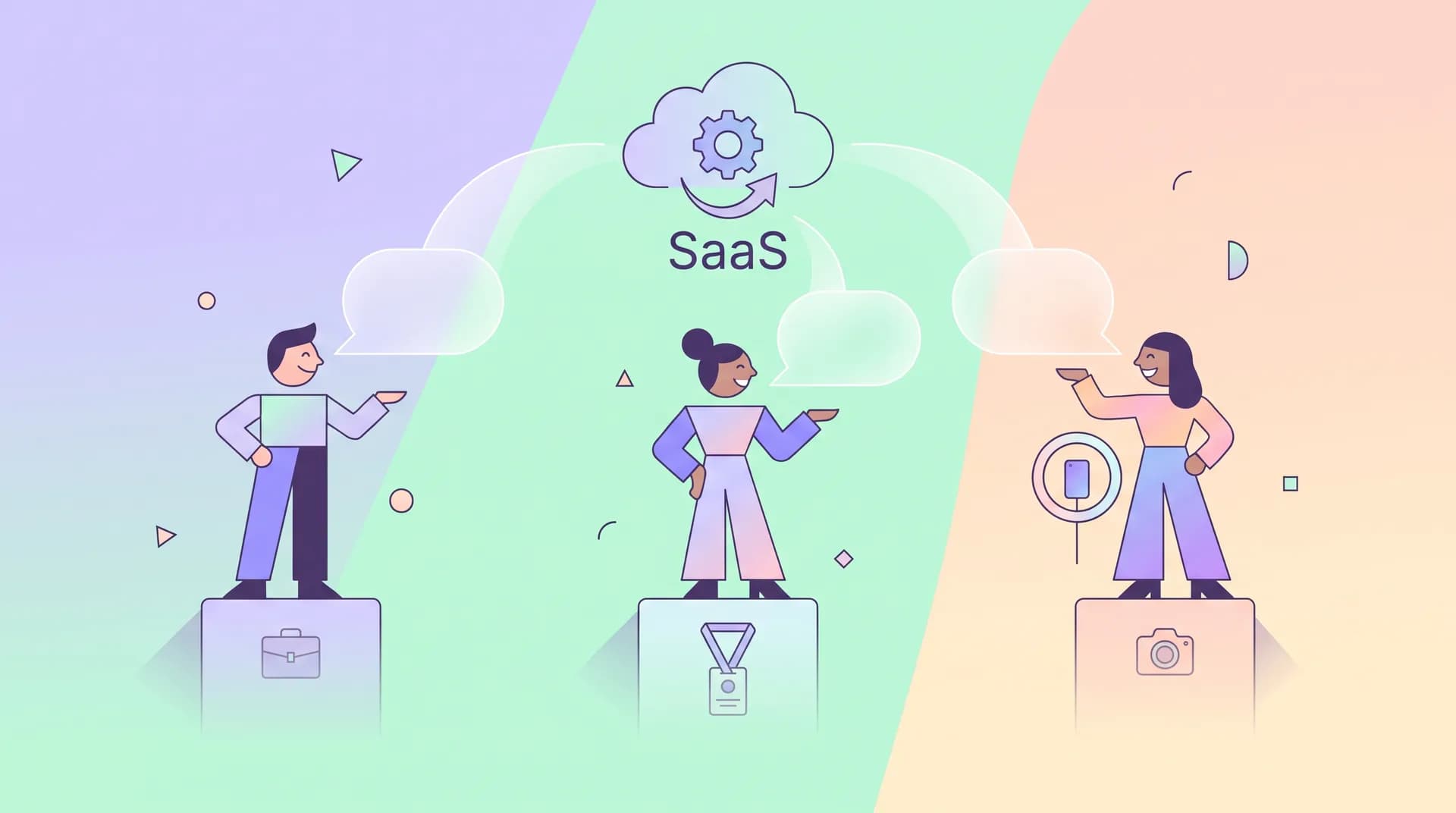
There are three types of people who can speak about your product, and each one brings a different kind of trust and a different kind of skepticism. Picking the wrong one for the job doesn't just waste a video budget — it can actively undermine the message.
Customers. They have zero financial incentive to lie, which makes them the gold standard for credibility. But they're also busy, hard to schedule, and usually have no idea how to talk on camera without sounding like they're reading a hostage note.
Employees. They know the product cold and are always available, but viewers know they're paid to be there. Nobody doubts your sales engineer believes the product works — they doubt whether that belief means anything.
Independent creators/practitioners. People with real domain expertise who don't work for you and aren't (yet) your customer. They carry the credibility of an outside opinion with the production polish of someone who does this for a living.
None of these is universally "best." I've seen founders obsess over finding the perfect customer testimonial when an employee walkthrough would've done the job in half the time and with more technical accuracy. I've also seen companies lean too hard on their own team and wonder why conversion rates stayed flat — because prospects can smell an internal pitch from a mile away.
The credibility math behind each role
Here's how I think about it when a client asks "who should be in this video?"
Credibility is a function of two things: perceived incentive and perceived expertise. A customer has low incentive to shill (they're not getting paid much, if at all) but variable expertise — some customers are power users, others barely scratch the surface. An employee has high expertise but also high perceived incentive, since their paycheck depends on the product succeeding. An independent creator sits in the middle: moderate incentive (they are being paid, but their reputation depends on being right more than being nice) and generally high expertise if you've vetted them properly.
That middle position is exactly why practitioner creators have become such a big part of serious B2B programs. I wrote a whole piece on finding practitioner creators for your B2B influencer marketing strategy because this role gets overlooked constantly — marketers think "influencer" and picture a consumer-space creator with a ring light, not a former revenue ops lead who has 15,000 LinkedIn followers and opinions about your CRM.
Think of it as a triangle, not a ladder. Customers, employees, and independent creators each anchor a different corner of trust. The right content mix usually uses all three, deployed for different jobs.
When to Use Each Role (With Real Examples)
Use a customer when you need proof, not explanation. Testimonials, case studies, "here's how we solved X" stories. The whole point is that a stranger vouches for your product with nothing to gain. If your buyer's biggest objection is "does this actually work in a company like mine," a customer is the only one who can answer that convincingly. Don't ask them to explain your architecture — ask them to describe the problem they had and what changed.
Use an employee when you need depth or speed. Product walkthroughs, technical deep dives, release explainers, sales enablement content for your own reps. Nobody will ever know the product better than the person who built it or sells it every day. The tradeoff is obvious and unavoidable — they're on payroll — so don't try to disguise it. Lean into it. "Here's our founder explaining why we built this feature" reads as authentic. "Here's our founder pretending to be a neutral reviewer" reads as deceptive, and buyers notice.
Use an independent creator when you need reach plus authority. This is the role most B2B teams are still bad at using. A practitioner creator — someone with a real audience built on genuine expertise in your category — can say things your own team can't say credibly, like comparing you honestly to a competitor or admitting where your product has limits. That admission of limits is often what makes the content work. I covered how to pressure-test this kind of creator before you pay them in our B2B creator vetting process post — skipping that vetting step is the single biggest reason B2B creator partnerships flop.
A mistake I see constantly: brands hire an independent creator and then hand them a script written like an employee would talk. That kills the entire reason you hired them. If you want employee-level message control, use an employee. If you're paying for a creator's outside credibility, let them keep their own voice, even when it's less polished than your brand deck.

Blending Roles Without Diluting Trust
The best B2B creator programs I've worked on don't pick one role and stick with it forever. They map roles to funnel stage.
Top of funnel, where you're building awareness and SEO-driven discovery, independent creators tend to win. They have existing audiences and their content performs in places your brand page never will — YouTube reviews, LinkedIn threads, niche newsletters. Mid-funnel, when a prospect is evaluating, customer testimonials and case studies do the heavy lifting because the buyer is actively looking for proof it'll work for someone like them. Bottom of funnel, once a deal is in motion, employee-led content — demos, onboarding previews, technical FAQs — answers the specific, detailed questions that close deals.
This is basically the structure I lay out in our pillar piece on B2B influencer marketing and building creator partnerships, which goes deeper into how to structure a full program rather than just picking individual pieces of content. If you're building this from scratch, that's the place to start before you get into the weeds of role selection.
One thing that trips teams up: mixing signals within a single piece of content. Don't have an employee pretend to be a customer. Don't have a paid creator present numbers as if they're an independent analyst's findings without disclosure. The FTC has gotten more aggressive about creator disclosure requirements, and buyers have gotten sharper at spotting undisclosed sponsorship — the FTC's endorsement guides are worth reading even if you think your use case is "too B2B" to matter. It isn't. B2B buyers research vendors on YouTube and LinkedIn exactly like consumers research sneakers.
Undisclosed sponsorship in B2B content is riskier than people think — your buyers are often procurement professionals trained to scrutinize vendor claims. One whiff of hidden incentive and you lose the room.
How to decide fast, without a committee meeting
If you're short on time, here's the filter I actually use with clients:
- Need proof the product works for a company like the buyer's? Customer.
- Need to explain a feature, workflow, or technical detail accurately? Employee.
- Need reach, outside credibility, or an honest comparison to competitors? Independent creator.
- Need all three? Build a content calendar that rotates roles by funnel stage, not a single hero video that tries to do everything.
That last point is where most B2B teams go wrong. A single five-minute video with a customer, an employee, and a creator, each delivering one scripted line, doesn't read as balanced — it reads as a committee wrote it. Which it probably did. For more on how to brief the actual content these roles deliver, Software Workflow Demo Brief: Brief Workflows, Not Scripts has a good framework for giving employees and creators direction without turning their segment into a corporate script read.
It's also worth noting how this compares to consumer UGC, where role distinctions blur more easily because the stakes per purchase are lower. B2B buyers are spending budget they have to justify to a boss, sometimes a board. That's part of why brands have been shifting budgets from influencers to UGC creators in consumer categories but B2B hasn't followed the exact same path — the credibility math is different when the purchase decision involves five stakeholders instead of one impulsive click.
One more external resource worth your time: Gartner's research on B2B buying behavior consistently shows that buyers do the majority of their research before ever talking to sales, relying heavily on peer input and independent content — which is a strong argument for weighting your creator mix toward customers and independent practitioners earlier than you might think. You can find their B2B buying journey research summarized on Gartner's website. And Edelman's Trust Barometer has shown for years that "a person like yourself" consistently outranks CEOs and company spokespeople on trust — which is basically the entire argument for not leaning exclusively on employees, no matter how good they are on camera. That data lives in the Edelman Trust Barometer reports.
Don't Treat This as a One-Time Decision
Role selection isn't something you set once in a brand guideline doc and forget. As your company matures, the right mix shifts. Early-stage startups often lean on founders and employees because they don't have enough customers yet to source good testimonials, and independent creators won't touch an unproven product. Once you've got traction, customer stories become easier to source and far more persuasive than anything your own team can say. And once you've got budget and a recognizable category position, independent creators become worth the investment because their audience now actually overlaps with your buyer.
Audit your current content mix this quarter. Count how many pieces came from employees versus customers versus independent creators. If it's lopsided — and for most B2B companies I talk to, it's heavily employee-skewed — that's your sign to go find the practitioner or customer voice you've been avoiding because it's harder to book.
Frequently Asked Questions
What's the difference between a B2B customer creator and an employee creator?
Are independent creators worth it for B2B SaaS companies?
Should employees disclose they work for the company in B2B content?
How do I choose which role to use for a specific piece of content?
Can one video use a customer, employee, and independent creator together?
Does B2B creator marketing require FTC disclosure like consumer influencer marketing?
Related reading
- B2B Influencer Marketing: Building Creator Partnerships
- Finding Practitioner Creators for Your B2B Influencer Marketing Strategy
- B2B Creator Vetting Process: Test Product Knowledge First
- Job Roles Over Follower Counts: SaaS Influencer Marketing
- Software Workflow Demo Brief: Brief Workflows, Not Scripts
- Why Brands Are Shifting Budgets From Influencers to UGC Creators