Dark posts and UGC: how brands run ads invisibly
Dark post UGC ads explained — how brands boost creator content as unpublished paid posts, what usage rights you need, and what creators should know first.

A creator shoots a 30-second product demo. The brand loves it. Two weeks later, that same video is generating $40k in ROAS — and it never appeared on the brand's Instagram page, the creator's profile, or anywhere a regular follower would stumble across it. It just... runs. Quietly. Everywhere.
That's a dark post. And if you're making UGC-style ads, or buying them, you need to understand exactly how this works — because the stakes are different from a standard organic post.
What a dark post actually is (and why "dark" is a bit dramatic)
The term sounds shady. It's not.
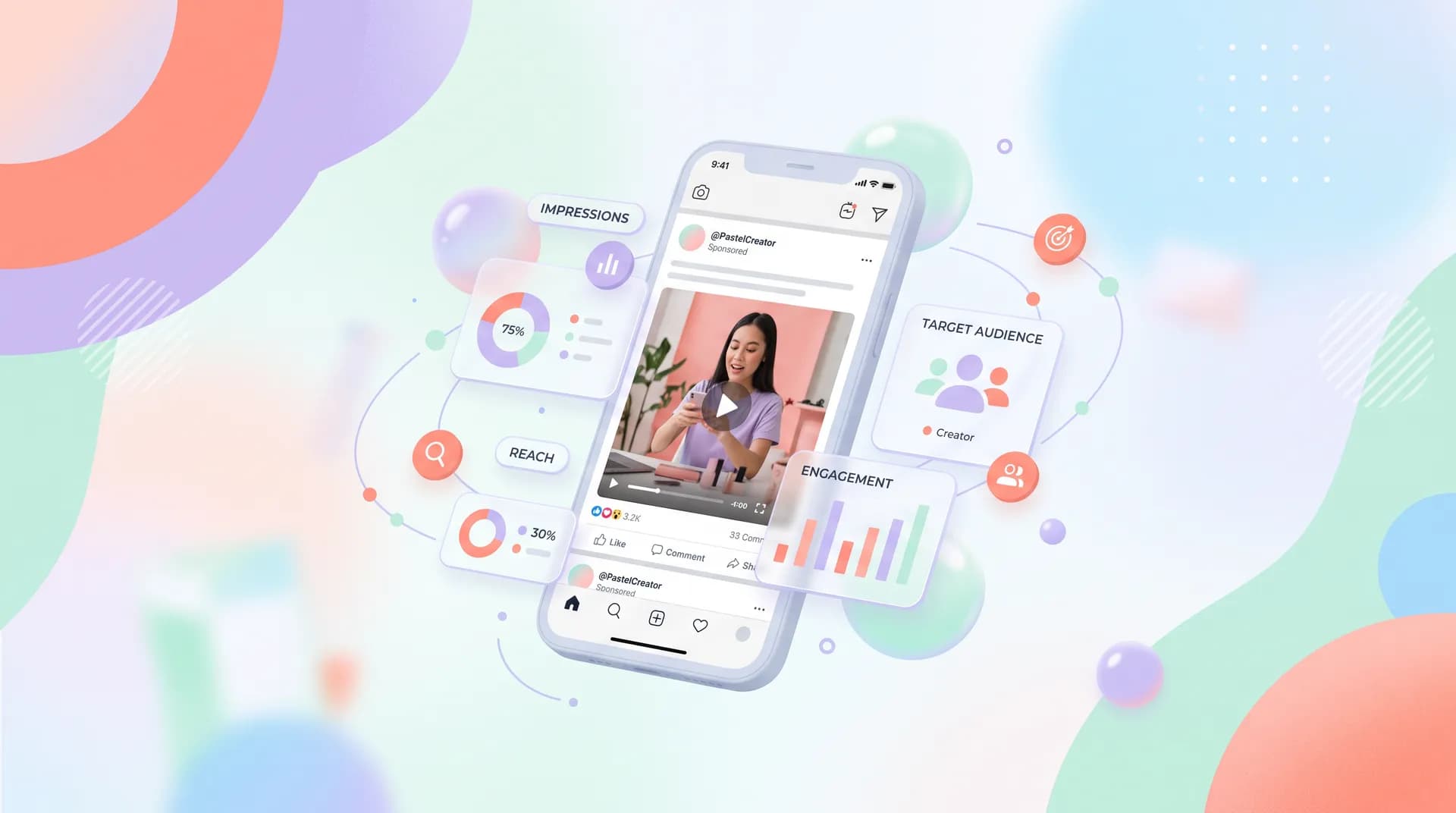
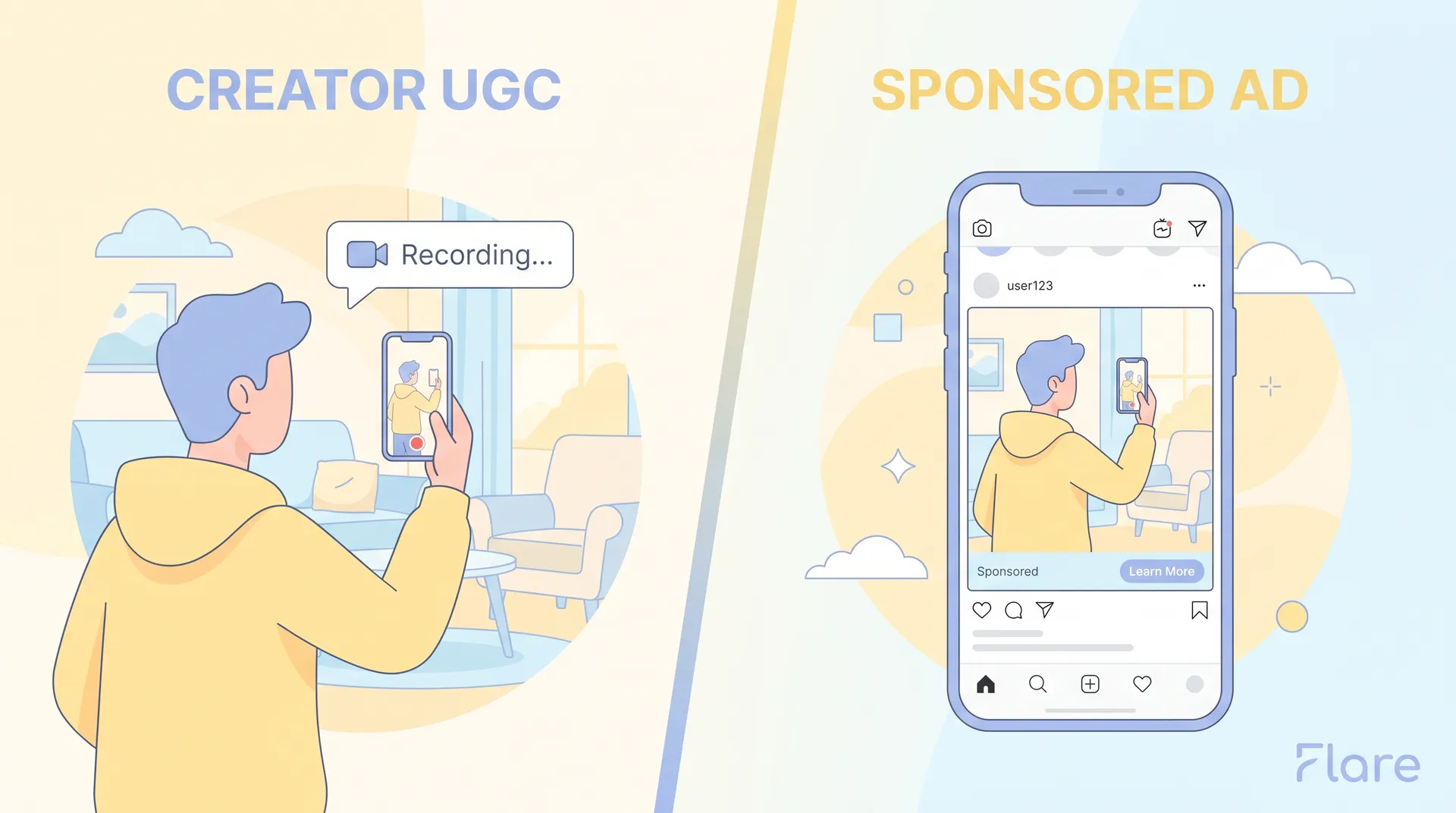
A dark post — Meta's official term is "unpublished post" — is a paid ad that runs in people's feeds without ever being published to a brand's timeline or a creator's profile. Nobody can go to the page and find it. It doesn't show up in anyone's organic feed unless the algorithm serves it to them as a paid placement. It exists purely as a paid unit.
Brands use them because they want to test multiple creative variations simultaneously without their own audience seeing 12 different versions of the same ad and getting confused. They also want to target cold audiences — people who've never heard of them — with messaging that might feel weird or off-brand if it lived on their public page.
For UGC specifically, dark posts are the default playbook. A brand hires five creators, gets five different angles on the same product, loads them all into Meta Ads Manager, and lets the algorithm pick winners. None of those videos ever appear anywhere publicly. They just run as paid social media ads until one of them breaks out, at which point the brand scales the winner.
This is different from whitelisting or Spark Ads, which we cover separately. In those setups, the ad actually is associated with a creator's account or handle. Dark posts have no creator attribution at all — they run from the brand's ad account, typically with the brand's page as the identity.
The dark-posting workflow, step by step
Here's how this actually goes from contract to live ad:
Step 1: The brand briefs creators for "paid ad usage." This should be explicit in the brief. If it just says "UGC content," that's vague enough to cause disputes later. A proper performance creative brief specifies that content will be used as paid media, on which platforms, for how long. If you want to understand what these briefs look like from a creator's side, how to read a performance creative brief as a UGC creator is worth reading before you sign anything.
Step 2: Creator delivers raw or edited files. For dark posts, brands usually want files they can edit themselves — add captions, swap out CTAs, test different end cards. Some ask for raw footage. Some want your final edit. This is all negotiable, but know that if you hand over raw files, you're handing over way more creative control than you might realize.
Step 3: Brand uploads content to their ad account. They set targeting, budgets, placements. You're not involved at this stage. The content runs from their infrastructure, not yours.
Step 4: The ad runs. You'll never see it unless you happen to be in the target audience or the brand sends you the ad preview link. Most don't bother.
Step 5: The brand tests and scales. Winners stay live. Losers get paused. This is where UGC ad creative fatigue becomes the brand's problem — they'll eventually need to refresh creative, which means coming back to creators.
What creators absolutely need to know before agreeing
This is the part that catches people off guard.
When a brand runs your content as a dark post, they're using your face, your voice, and your likeness in paid advertising. That's a meaningfully different thing from posting a UGC video to their organic social. Paid placement has reach that organic posts rarely touch — we're talking potentially millions of impressions on a single winning creative.
Usage rights aren't optional — they're the price of that exposure.
Most standard UGC rates cover content creation only. Paid ad usage is a separate license, and it should be priced accordingly. A 30-day paid ad license is one thing. A perpetual license with no platform cap is something else entirely. I've seen brands slip "in perpetuity across all channels" into contracts as if it's a standard term. It's not. That clause means they can run your face in ads forever, on any platform, for any purpose.
A few things to nail down before you agree to a dark-post setup:
- Platform scope. Is this Meta only? TikTok? CTV? "All platforms" is a real ask and should cost significantly more.
- Duration. 30, 60, 90 days? Rolling monthly? Perpetual? Each has a different price.
- Exclusivity. Are you being asked not to work with competitors during the ad run? That has a separate value entirely.
- Raw footage rights. If they want your raw files, that's an additional ask. Raw footage can be repurposed in ways you'll never anticipate.
The complete guide to UGC ads and performance creative has a full breakdown of how these deals are structured from the brand side — useful to read so you understand the business logic behind what you're being asked to sign.
Quick rule of thumb on pricing: If a brand wants paid ad usage rights for 90 days across Meta and TikTok, a reasonable starting point is 1.5–2x your base content creation fee on top of the creation fee itself. Some creators charge a flat monthly licensing rate. Either approach works — just make sure you're charging something, because free usage rights for paid ads is leaving real money on the table.
Why brands prefer dark posts over organic boosting
Boosting an organic post and running a dark post are technically both paid ads — but the mechanics are completely different, and brands that care about performance strongly prefer dark posts.
When you boost an organic post, you're locked into whatever that post looks like. The caption, the creative, the thumbnail. You can't meaningfully A/B test it. The engagement and comments are public, which means if a post gets ugly comments early in a test, that social proof (or lack of it) affects the paid performance downstream.
Dark posts have none of those constraints. A brand can create 20 variations of the same UGC video — different hooks, different captions, different CTAs — and run them as separate dark posts against the same audience. Clean data. No public blowback. No audience confusion. This is exactly the kind of creative testing that creative brief examples for UGC hook A/B testing are designed to support.
The other reason: dark posts don't pollute a brand's public page aesthetic. A DTC skincare brand with a carefully curated Instagram grid doesn't want six different UGC videos cluttering their feed. Dark posts keep the paid performance engine running without touching the brand's public presence.
The "does the creator know it's running?" problem
More common than you'd think: creators find out months later that their content is still running as a paid ad, long after any agreed license period ended. Sometimes the brand forgot to track the end date. Sometimes they just assumed a flat fee meant forever.
This is why license duration needs to be in writing — in the contract, not just in an email. And if you want to know your content is actually live (for portfolio purposes, for verifying usage, for anything), you should ask for an ad preview link at launch.
You also have the right to know which platforms your content is running on. Some brands test UGC on Facebook, find it works, and quietly extend it to YouTube pre-roll or connected TV without telling anyone. That's a separate license, and it's worth auditing periodically if you're doing volume UGC work.
The broader principle here: once your content leaves your hands in a dark-post deal, you have very little visibility by default. The contract is the only thing that gives you leverage. Build that protection in upfront — before you film a single frame.
Watch for this clause: "Brand may use content in any format, on any platform, in any medium, in perpetuity, without additional compensation." If you see this in a UGC contract for paid ad usage, push back. Either cap the duration, cap the platforms, or charge a licensing fee that actually reflects the open-ended value you're granting.
Dark posts vs. Spark Ads vs. whitelisting: what's the difference?
Three different mechanisms, often confused:
Dark post: Content runs from the brand's ad account, with the brand's page identity. No creator attribution. Creator isn't involved in the ad setup at all.
Spark Ad (TikTok): The ad runs from the creator's TikTok account, with the creator's handle shown. Requires the creator to authorize it inside TikTok — there's a whole TikTok Spark Ads creator authorization guide that walks through this. The creator's existing organic post can be boosted this way, or a new post can be created specifically for it.
Whitelisting (Meta): The creator grants the brand access to run ads from the creator's Facebook or Instagram account. Creator's handle and profile appear on the ad. Creator whitelisting for Meta ads covers this in full detail.
Dark posts are the simplest to execute (brand does everything, creator just delivers files) but offer creators the least visibility and protection. Spark Ads and whitelisting at least surface the creator's identity, which has value for discovery.
Neither is inherently better — they solve different problems. But if you're a creator being asked to do a "simple content delivery" job where you hand over files, understand that simple delivery can turn into a dark-post campaign at scale. Agree on the terms before it does.
Frequently Asked Questions
What is a dark post in advertising?
Can brands use my UGC as a dark post without telling me?
How is a dark post different from a boosted post?
Do I get paid extra if a brand runs my UGC as a dark post?
How do I know if my UGC is currently running as a paid ad?
What should I include in my contract for dark-post UGC deals?
Related reading
- UGC ads: the complete performance creative guide
- Creator whitelisting for Meta ads: what you need to know
- TikTok Spark Ads: creator authorization setup guide
- How to read a performance creative brief as a UGC creator
- UGC ad creative fatigue: spot it and fix it fast
- Creative brief examples for UGC hook A/B testing
- UGC videos: ad-ready vs. organic content explained