UGC content rights: what brands must know before reposting
UGC content rights explained for brands: organic vs. paid usage, platform scope, exclusivity windows, and whitelisting — before you run a creator's video as an ad.

Last year a DTC skincare brand I know ran a creator's video as a Meta dark post for eight months. Great creative, killer ROAS. Then the creator's lawyer sent a letter demanding $30,000 in back licensing fees — because the agreement covered "social media use" and nothing else. No paid amplification. No timeline. No ad platforms named.
They paid. They had no choice.
That's what sloppy UGC content rights deals look like from the brand side. Not a scary legal abstraction — a five-figure invoice that shows up two quarters after the campaign "ended." I've seen it happen repeatedly, and almost every time, the fix would've cost nothing on day one.
Here's what I've learned running UGC campaigns at scale: the rights conversation isn't a legal checkbox. It's a pricing decision, a performance decision, and a relationship decision all at once. Get it right and you unlock content you can use everywhere. Get it wrong and you're renting creative with a hidden fuse on it.
Why UGC content rights trip up smart brands
The default assumption most marketers make: "I paid for the video, so it's mine."
No. That's not how it works. Under US copyright law, the person who films a video owns it the moment it's created — payment for production doesn't transfer ownership. What you're buying is a license, and that license is only as broad as the words in your agreement. The US Copyright Office is blunt about this: copyright belongs to the creator unless it's explicitly transferred in writing.
"Brand may use the content on social media." That's it. That's the whole rights clause in half the briefs I see. It doesn't say which platforms. It doesn't say organic vs. paid. It doesn't say how long. When a dispute happens, every one of those blanks gets filled by a lawyer — the creator's lawyer.
The other trap is assuming your UGC campaign brief counts as the contract. It doesn't. A brief describes the work. The rights agreement describes what happens to the work after delivery. Two documents. Brands that merge them into one messy Notion page are the ones who end up in disputes.
If you're new to the whole space, our UGC marketing guide for brands covers the fundamentals — this piece zooms in on the rights piece specifically, because it's where the money actually leaks out.
Organic vs. paid amplification: the rights gap that costs real money
This is the single biggest misunderstanding in UGC deals, so let's kill it properly.
There are two fundamentally different things you can do with a creator's video:
Organic usage means posting it on your brand's own channels — your TikTok, your Instagram, your website, maybe your email. Cheapest tier. Most creators include some organic rights by default in their base rate, usually for 30–90 days.
Paid amplification means running it as an ad — Meta dark posts, TikTok Spark Ads, YouTube pre-roll, programmatic. This is where the video works hardest for you, and creators know it. Paid usage rights typically cost 30–100% more than organic rights, sometimes far more for high-performing creators.
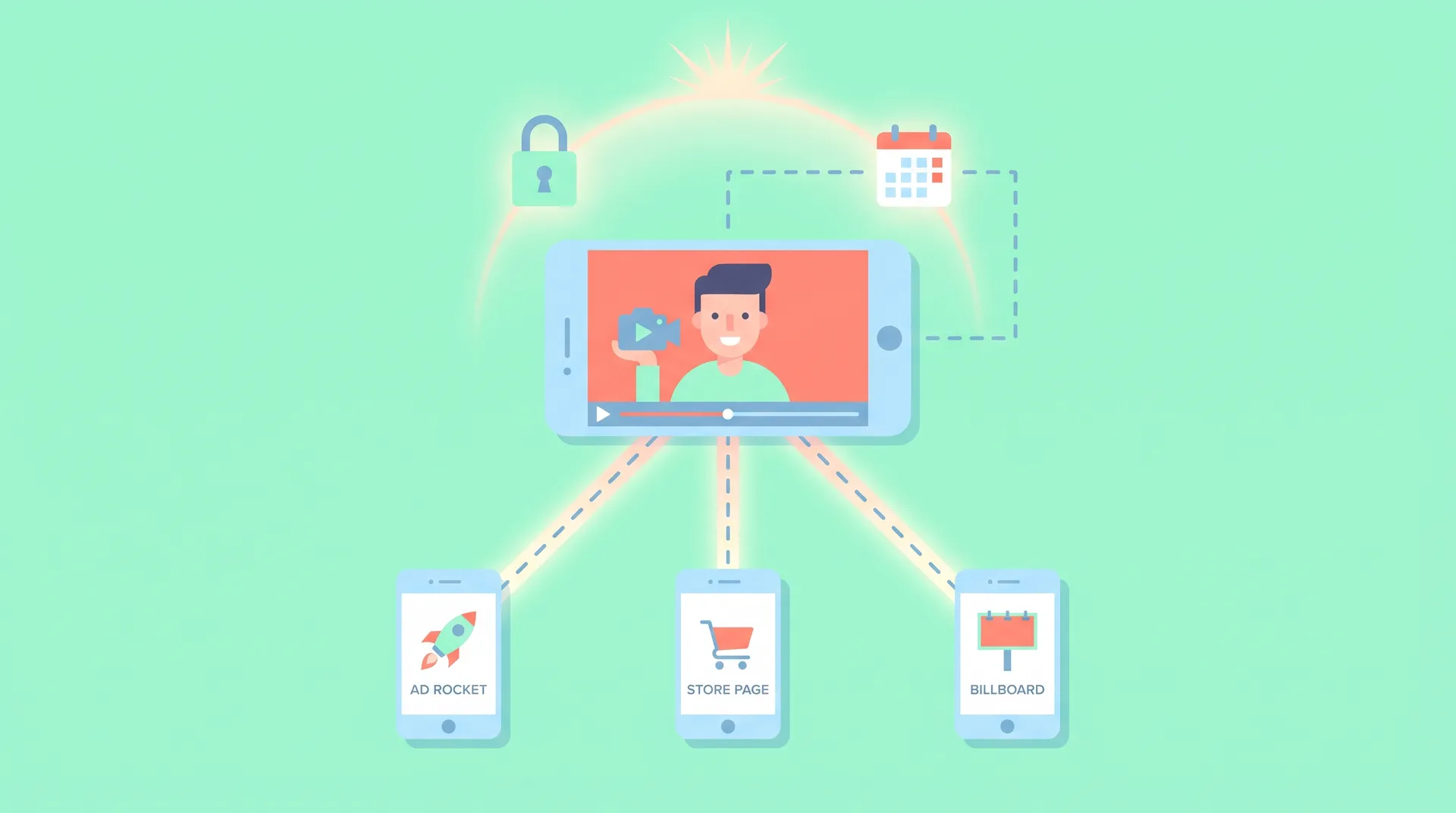
Here's the part brands miss: performance creative lives or dies on paid amplification. A video that gets $50,000 of incremental revenue almost never does it organically. It does it as an ad with budget behind it. So if you sign a deal that only covers organic, you've paid for a car without an engine.
My rule: never commission UGC for ad purposes without paid usage rights in the contract. If budget's tight, buy fewer videos with proper rights instead of more videos you can't amplify. One usable ad beats five pretty organic posts.
And when you're ready to actually run that content as paid, our guide to running creator content as dark posts walks through the mechanics — but the rights have to be locked first. Platform ad accounts will sometimes ask you to confirm you hold usage rights before you boost a creator's handle or upload their creative. Lying there isn't just a contract problem; it can get your ad account flagged.
Platform scope: name every channel or lose half your money
"Social media" is not a platform scope. Neither is "digital use." These phrases are legally squishy and practically useless, because your channels in eighteen months won't look like your channels today.
I structure platform scope in explicit tiers:
- Tier 1 — core social: TikTok, Instagram, YouTube (organic + your brand accounts)
- Tier 2 — paid social: Meta Ads, TikTok Ads Manager, YouTube ads, including dark posts and Spark Ads
- Tier 3 — owned channels: website, product pages, email, SMS
- Tier 4 — everything else: out-of-home, retail displays, TV/CTV, print, Amazon listings
Most deals should cover tiers 1–3. Tier 4 is where you negotiate separately, because it's genuinely more valuable — a creator's face on a billboard in Times Square is not the same deal as a boosted Reel.
Why does this matter so much? Because repurposing is the whole economic argument for UGC. The same 30-second clip should end up as a Spark Ad, an email header, and a PDP video — one production, ten placements. If your agreement only covers tier 1, you've destroyed the economics of the deal.
Add one line to every agreement: "Brand may use content on any channels, platforms, or media currently operated by Brand or its successors, including channels launched during the license term." It costs nothing today and saves a renegotiation when you launch on whatever platform exists in 2027.
One more scope item nobody thinks about: cutdowns and edits. Can you trim the video? Re-caption it? Test three different hooks against the same footage? For ad creative you absolutely need editing rights — creative testing is how you find winners. If you're scaling paid, make sure your contract grants derivative-work rights for paid purposes, or your ad creative testing operation dies before it starts.
Exclusivity windows: don't pay for a year when you need six weeks
Exclusivity runs the other direction too. Creators will often ask that you not resell their content to competitors — fine — and brands ask that the creator not make similar content for competing products. Both are legitimate. Both get overbought.
Here's my honest take after watching a lot of these deals: brands routinely pay for exclusivity they don't need. A 12-month category exclusivity window on a $400 video is money on fire, because the creative is likely to fatigue in 8–12 weeks anyway. Meanwhile creators get burned by the mirror image — vague exclusivity clauses that quietly block them from working with anyone in "wellness," which, depending on interpretation, could be half their pipeline.
What actually works:
- 30–60 day exclusivity on the content itself (creator won't reshoot the same script for a competitor) — almost always worth it, often free
- 90-day category exclusivity as a paid add-on for competitive niches like supplements or skincare
- Perpetual exclusivity — never. Just like creators should fight perpetuity clauses that never expire, brands shouldn't demand them either. You're not buying the creator's career.
Exclusivity should expire. Set the window, pay fairly for it, and move on.
Whitelisting permissions: the biggest rights mistake brands make
Whitelisting (sometimes called allowlisting) means running ads through the creator's own account — their handle, their profile pic, their organic social proof attached to your paid spend. Spark Ads on TikTok and partnership ads on Meta both work this way.
It converts dramatically better than running the same creative from your brand handle. And it's the permission brands most often forget to secure.
Whitelisting is a separate permission from usage rights. Even if you own broad paid usage, you cannot run an ad from the creator's handle without their explicit authorization. On TikTok, the creator has to generate a Spark Ads code in their own app and grant it to you. On Meta, they have to grant partner access through their professional dashboard. You can't do it for them, and you can't fake it.
So when you structure the deal, whitelisting needs its own line item:
- Is whitelisting included at all?
- For which platforms and how long — typically 30, 60, or 90 days?
- Does the creator get a whitelisting fee on top of the content fee? (Usually yes — 15–30% of the content price for a short window is typical.)
- Who handles the authorization setup, and by what date?
That last one matters more than people expect. I've seen paid campaigns sit idle for two weeks because nobody asked the creator to click two buttons in their TikTok app. Put the authorization deadline in the contract, right next to the deliverable deadline.
Whitelisting also touches disclosure rules. Paid ads run through creator accounts must follow the FTC's endorsement guides — the paid partnership label stays on, no exceptions. Platforms enforce this too; Meta's branded content policies and TikTok's content rules both require it. Getting this wrong doesn't just risk fines — it torches the creator's account, which torches the relationship.
A rights clause you can actually use
I'm not a lawyer and you should run your final contract past one who's seen UGC deals before. But here's the skeleton I'd want in any brief or agreement, in plain English:
Scope: "Creator grants Brand a worldwide, non-exclusive license to use, edit, and repurpose the delivered content across Brand's owned and paid channels, including TikTok, Instagram, YouTube, Meta Ads, TikTok Ads, website, email, and retail media, for a period of 12 months from delivery."
Whitelisting: "Creator will grant Spark/partnership ad authorization for TikTok and Instagram within 5 business days of final delivery, active for 90 days, in exchange for the whitelisting fee stated in the payment schedule."
Exclusivity: "Creator will not produce substantially similar content for competing [category] products for 60 days from delivery."
Renewal: "License may be extended for additional 12-month terms at 50% of original licensing fee, exercisable by Brand with 30 days' written notice."
That's it. Four paragraphs. Clear enough that neither side needs a lawyer to know who can do what.
One thing I'll say from the brand side of the table: pay fairly for what you take. Fair licensing makes creators cheap to work with again; cheap licensing makes every renewal a negotiation. When you're budgeting UGC spend, treat rights as 30–50% on top of production cost, not a rounding error. Creators who feel paid for their rights renew, re-authorize whitelisting, and send you their best ideas. That pipeline is worth more than the few hundred dollars you shaved off.
If you're sourcing creators through marketplaces, note that rights terms vary wildly between platforms — some bundle paid usage, most don't. Our breakdown of UGC creator platforms covers which ones handle rights paperwork for you and which ones leave you exposed.