LinkedIn Influencer Marketing: What Makes Posts Credible
Learn what LinkedIn influencer marketing research says makes B2B creator posts credible—expertise, format fit, and clear brand ties that don't feel like ads.

I once watched a SaaS company spend $40,000 on a LinkedIn creator campaign that generated almost nothing. Not because the creator was wrong. Not because the product was bad. Because the post read like an ad wearing a creator's face as a costume. Nobody believed it, and the comments section proved it within an hour.
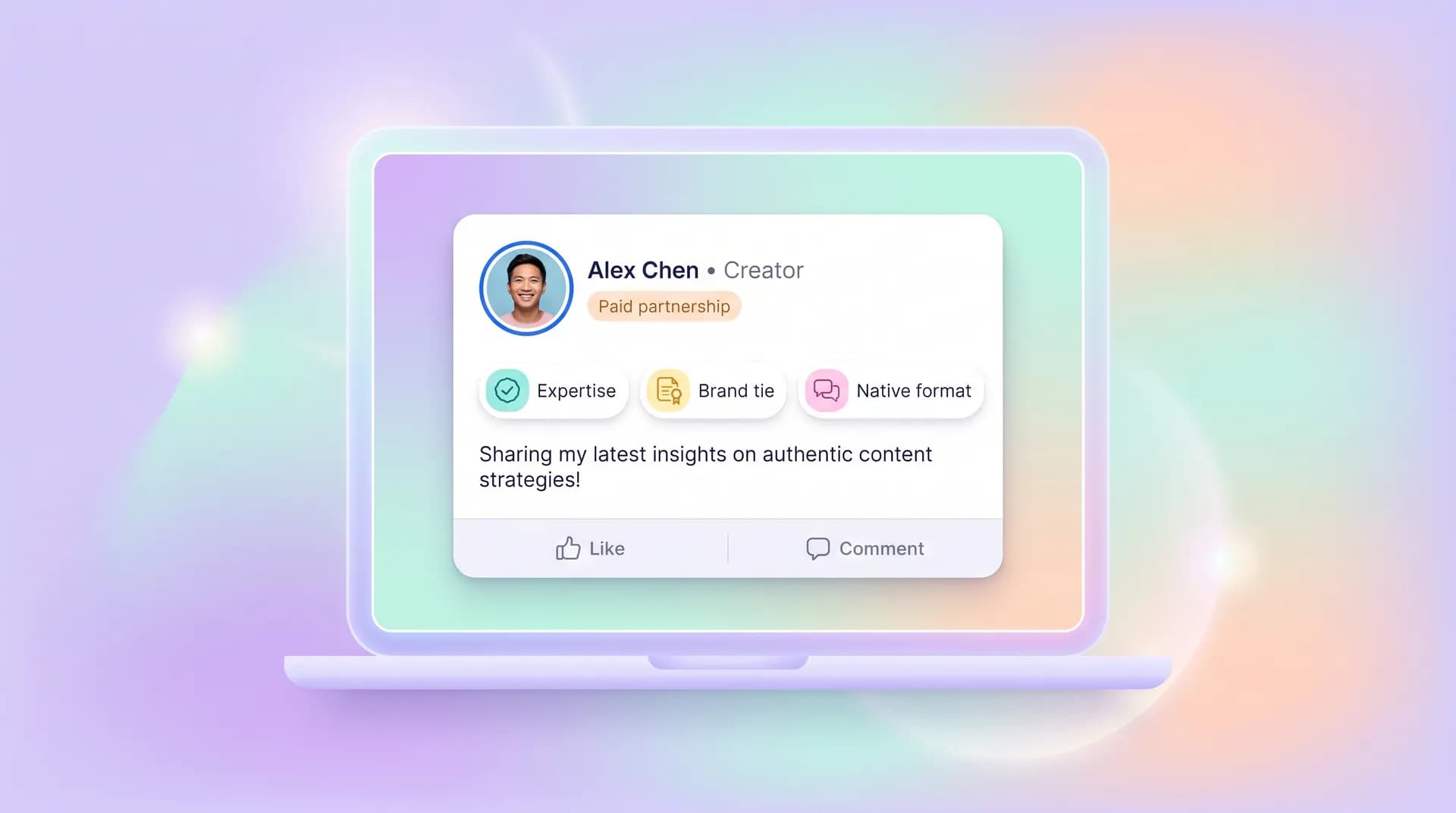
LinkedIn influencer marketing works differently than Instagram or TikTok. The platform is full of professionals who've been trained by years of corporate messaging to smell promotion from a mile away. LinkedIn and Ipsos actually studied this — what makes sponsored content on the platform land versus flop — and the findings line up almost exactly with what I've seen running creator campaigns for B2B and SaaS brands. Three things drive credibility: the creator's actual expertise, whether the post fits the native format of the platform, and whether the brand connection is stated clearly instead of buried or faked.
Get those three right and a LinkedIn post from a practitioner creator can outperform a six-figure paid campaign. Get them wrong and you've just paid someone to damage your brand in public, on a platform where screenshots live forever.
Why LinkedIn Influencer Marketing Runs on Trust, Not Reach
Reach is cheap on LinkedIn. A post from someone with 50,000 followers and zero credibility in your category will still get impressions. It just won't move anyone. The LinkedIn/Ipsos research found that audiences rate sponsored content as more trustworthy when it comes from someone who's demonstrably knowledgeable in the subject — not someone who's simply popular.
This matches what I've seen over and over in B2B. A VP of Sales talking about pipeline forecasting tools gets taken seriously because people assume she's used fifteen of them and has opinions. A generic "LinkedIn influencer" with a huge following and a vague "marketing and sales" bio posting the same content gets scrolled past, or worse, gets called out in the comments for sounding scripted.
If you're building out a B2B creator roster, this is the exact argument for picking creators based on their actual job function and hands-on experience rather than follower count. I wrote about this in detail in Job Roles Over Follower Counts: SaaS Influencer Marketing — the short version is that a mid-tier practitioner with 8,000 followers who's genuinely used your product category will outperform a 100,000-follower generalist nine times out of ten.
This is also why vetting matters more on LinkedIn than almost any other platform. A practitioner who can't actually speak to your product's use case will get exposed fast in a comments thread full of their peers. We cover how to test for this before you ever brief a post in B2B Creator Vetting Process: Test Product Knowledge First.
LinkedIn's own research with Ipsos found that credibility signals — not follower count — were the strongest predictor of whether users trusted sponsored content. Expertise beat reach every time.
What "Expertise" Actually Looks Like in a Post
It's not a credential dropped in a bio. It's specificity. A credible LinkedIn post about an ABM platform mentions a specific workflow, a specific result, a specific frustration the creator had before switching tools. A non-credible one talks in platitudes — "this tool changed how I work" with no detail attached.
If you're briefing a creator, push them toward specifics even if it makes the post less polished. Rough and real beats smooth and generic on this platform.
Format Fit: Why LinkedIn Posts That Look Like Ads Get Punished
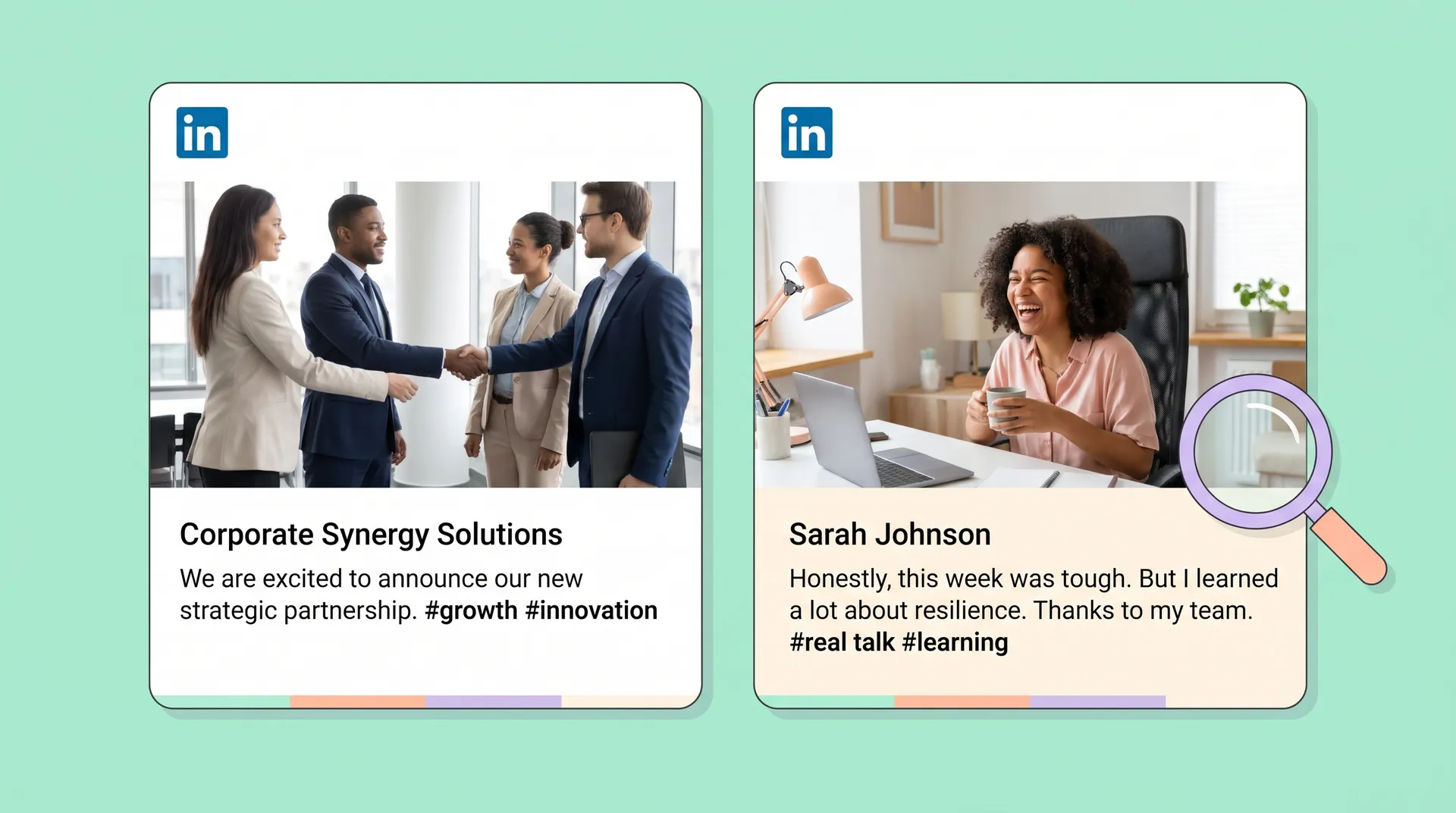
The second credibility driver from the Ipsos research is format fit — whether sponsored content matches the native style of organic LinkedIn posts. This is the part most brands get wrong, because they import their Instagram or TikTok ad instincts into a feed that works completely differently.
LinkedIn's algorithm and its audience both reward posts that look like they were written by a human sharing a thought, not a brand running a campaign. That means:
Text-first posts with a personal hook outperform polished video ads. A carousel breaking down a workflow outperforms a glossy product reel. A screenshot with commentary outperforms a produced testimonial video, more often than not.
I'm not saying video doesn't work on LinkedIn — it can, especially for demo-style content. But the video has to look like something a practitioner filmed on their laptop explaining a point, not something that came out of a studio shoot with lower thirds and a jingle. If you're producing demo-style creator content for this exact context, the brief needs to prioritize the workflow being shown clearly over production polish — something we go deep on in Software Workflow Demo Brief: Brief Workflows, Not Scripts.
Format mismatch is the single fastest way to kill credibility on LinkedIn. Audiences aren't dumb — they clock the mismatch between "casual creator voice" and "clearly agency-produced asset" within the first two seconds of a scroll, and that mismatch reads as inauthentic even if the content itself is accurate.
Native Formats That Actually Hold Up
A few formats consistently read as credible on LinkedIn, based on what I've seen work across dozens of B2B creator posts:
Document-style carousels that teach something, with the product mentioned as part of the solution rather than the headline. First-person "here's what changed when I started using X" posts, written in the creator's actual voice, typos and all. Short talking-to-camera clips that look unscripted, filmed in a real office or home setup, not a studio.
What doesn't hold up: stock-photo-style graphics, scripted dialogue that sounds like it was written by legal, and anything with a thumbnail that screams "this is an ad" before the reader even clicks to expand.
Clear Brand Ties: Why Hiding the Partnership Backfires
Here's the part that surprises a lot of marketers: the Ipsos research found that clearly disclosed partnerships didn't hurt credibility — they helped it, compared to vague or hidden ones. Audiences don't punish brands for sponsoring content. They punish brands for pretending they didn't.
This tracks with basic human psychology and, frankly, with FTC disclosure rules that most B2B marketers treat as an afterthought. A post that says "Partnering with [Company] because their reporting dashboard solved a problem I had for two years" reads as more trustworthy than a post that mentions the product five times without ever acknowledging it's sponsored. The audience fills in the gap with suspicion, and suspicion kills conversion.
I'd add a layer to this that the research doesn't fully capture: the type of voice matters as much as the disclosure itself. A customer-turned-advocate talking about your product carries different weight than an employee talking about it, which carries different weight than an independent creator who's never used it before you paid them. We break down how to choose the right voice for the moment in Customer, Employee, or Creator: Picking Your B2B Voice — it's one of the more overlooked decisions in B2B creator marketing and it directly affects how credible the disclosed partnership feels.
Don't ask creators to disguise sponsorship with vague phrasing like "loving this tool lately" and no tag. It's a compliance risk and it actively lowers trust compared to a clear, confident disclosure.
To be clear about scope here: this is about structuring organic creator posts and sponsored content disclosures on LinkedIn — not about running or managing LinkedIn's paid ad units. Flare doesn't manage LinkedIn ad campaigns. What we help with is finding and vetting the right practitioner creators and getting the content brief right so the post itself holds up once it's live, whether it's boosted afterward or not.
Putting It Together: A Credibility Checklist Before You Post
Before any B2B creator post goes live on LinkedIn, I run it against three questions. Does the creator actually have standing to talk about this topic — have they used something like it, done the job it relates to, solved the problem it addresses? Does the format match how real people post on LinkedIn, or does it look like an ad that wandered into the wrong app? Is the brand relationship stated plainly, in the creator's own words, instead of hidden behind vague enthusiasm?
If any answer is no, fix it before publishing. A missed post costs you nothing. A credibility-damaging post costs you the audience's trust in every future post from that creator — and sometimes from your brand generally.
This whole approach is part of a bigger shift happening in B2B marketing, where practitioner-led content is quietly outperforming traditional demand gen in channels like LinkedIn. If you want the fuller picture of how to build this into a program instead of a one-off campaign, I'd start with our pillar piece, B2B Influencer Marketing: Building Creator Partnerships, which walks through sourcing, vetting, and structuring partnerships at a program level.
One more thing worth saying plainly: none of this works if you treat LinkedIn creator content as a repurposed version of your ad copy. The platform's entire value is that it still feels like a network of actual people, even at scale. Posts that respect that — expertise first, native format, honest disclosure — are the ones that get shared in DMs and quoted in sales calls six months later. Posts that don't get forgotten in a scroll, if they're lucky, or mocked in the comments if they're not.
Frequently Asked Questions
What is LinkedIn influencer marketing?
Does LinkedIn require disclosure for sponsored creator posts?
What makes a LinkedIn sponsored post feel credible?
Should B2B brands use video or text posts for LinkedIn influencer marketing?
How do I find credible creators for LinkedIn influencer marketing?
Does Flare manage LinkedIn ad campaigns?
Related reading
- B2B Influencer Marketing: Building Creator Partnerships
- Job Roles Over Follower Counts: SaaS Influencer Marketing
- B2B Creator Vetting Process: Test Product Knowledge First
- Customer, Employee, or Creator: Picking Your B2B Voice
- Software Workflow Demo Brief: Brief Workflows, Not Scripts
- Finding Practitioner Creators for Your B2B Influencer Marketing Strategy
External sources referenced: LinkedIn Marketing Solutions Blog, Ipsos research on trust and advertising, FTC Endorsement Guides.