What Do Brands Look for in a UGC Creator?
What do brands look for in a UGC creator? The 5 things hiring teams actually check — authenticity, niche fit, video quality, turnaround, and brief skills.

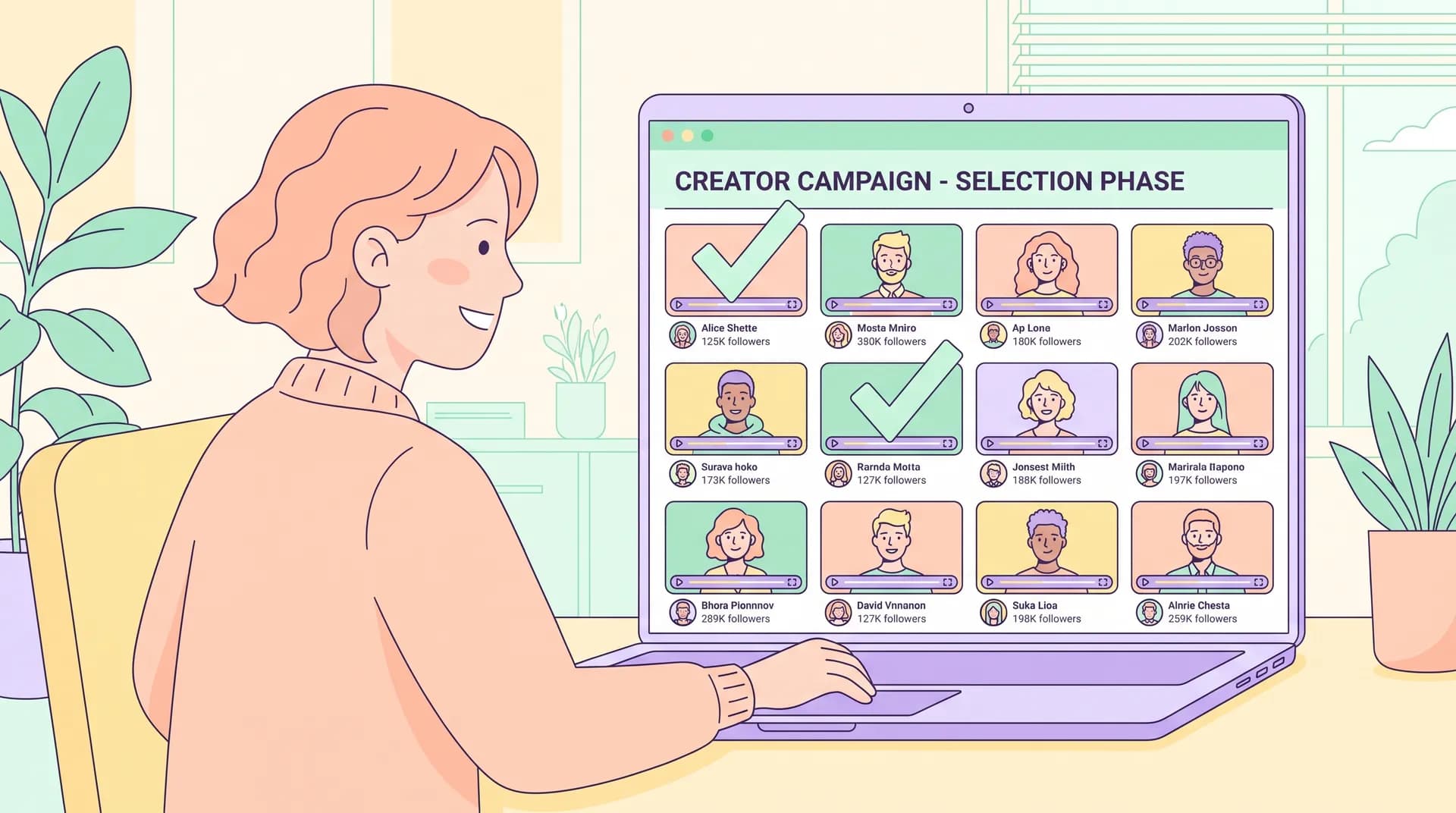
Last year I sat in on a client's creator review call. They had 240 applications for six UGC spots. You know how long the average application survived?
Eleven seconds.
That's how long a brand manager spends on your portfolio before deciding if you're worth another look. I timed it. After that, your name goes into a "maybe" pile or gets deleted, and the brand moves on to the next thumbnail.
So what do brands look for in a UGC creator? Not what most YouTube gurus tell you. Not your follower count — UGC creators get hired with zero followers. Not your expensive camera — I've seen creators book deals filming on a cracked iPhone 12. What brands are scanning for, in those eleven seconds, is a short list of five things. And once you know that list, you can build every part of your setup around it.
I've been on both sides of this — pitching brands as a creator, and now running Flare and talking to the marketing teams who hire. Here's the actual decision criteria, straight from the brand's side of the table.
What Brands Look For in a UGC Creator (The Real Checklist)
Before we get into each one, understand the context. Brands aren't hiring artists. They're hiring content that can run as ads and make money. The person reviewing your application is usually a performance marketer or a UGC program manager with a launch date breathing down their neck.
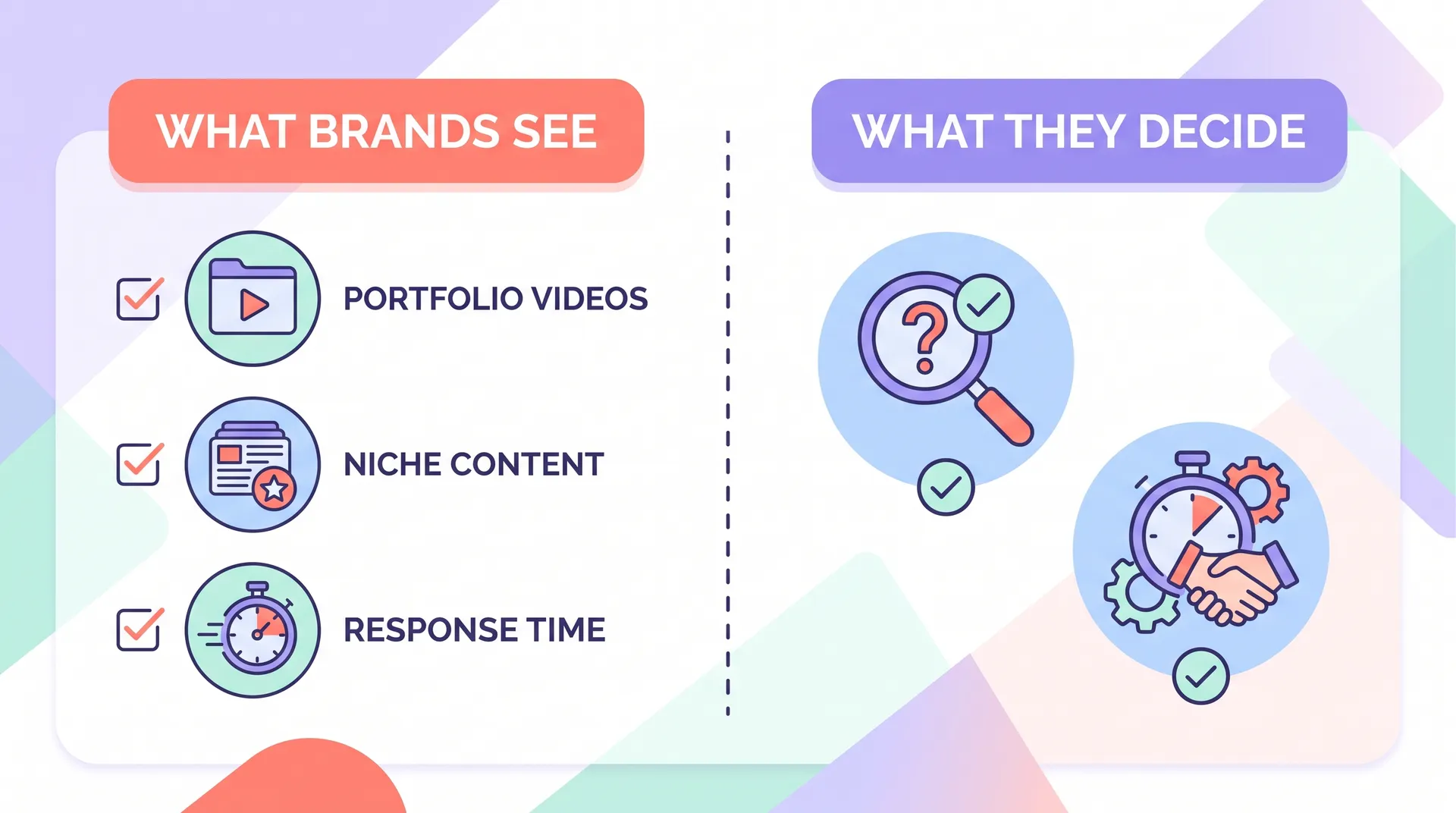
That changes everything about how they evaluate you. Here's the list, roughly in order of how fast each one gets checked:
- Authenticity — does your content feel like a real person, or like an ad?
- Niche alignment — do you already make content in their category?
- Video quality — is it clean enough to run as an ad, but not too polished?
- Turnaround and reliability — will you actually deliver on time?
- Brief comprehension — can you follow instructions without hand-holding?
Notice what's missing. Followers. Viral videos. A fancy studio. If you're building your creator setup around the wrong criteria, you're wasting months. (If you're at the very beginning, start with our complete guide on how to become a UGC creator — then come back here and build toward what brands want.)
Let's break each one down.
Authenticity Is the First Filter — and the Hardest to Fake
Here's the uncomfortable truth: most beginner UGC content looks like ads. Bad ones. Stiff delivery, scripted-sounding voiceover, obvious product placement.
Brands can spot it instantly, because their audiences spot it instantly.
The whole reason brands shifted budget from polished influencer posts to UGC is that UGC converts better on paid social. Meta's own creative best practices have pushed "lo-fi, authentic-feeling" content for years now because it stops the scroll. A brand hiring you is buying your ability to look like a real customer — because that's what gets people to watch past three seconds.
What does "authentic" actually look like in practice?
- Natural pauses and imperfect delivery (not robotic line reading)
- Real reactions — a genuine "oh, that's actually good" beats a rehearsed testimonial
- Your actual home, your actual hands, your actual life in the background
- Talking like you talk, filler words included
The fastest way to test this: film yourself explaining the product to a friend, out loud, without a script. Then film the "real" version. Compare them. The friend version is almost always the better UGC — that's the gap you're closing with practice.
If your content makes people feel sold to, you'll lose the deal before the brand even reads your rates. And if you're not sure whether you're an authentic UGC voice or drifting into influencer territory, read up on the difference between UGC creators and influencers — brands evaluate the two very differently.
Niche Alignment: Why "Generalist" Creators Lose Deals
This is the one beginners underestimate the most.
A skincare brand with a $15,000 UGC budget isn't looking for the "best videographer." They're looking for someone who already films skincare content, already talks like a skincare customer, and already knows what a vitamin C serum does. The learning curve for a generalist creator is a cost. The niche creator is plug-and-play.
I've watched this play out dozens of times in review calls. Two portfolios, similar quality. One is 12 random products from toothpaste to tech gadgets. The other is 12 videos in one category. The niche creator gets the reply. Every time.
And niche alignment isn't just about what you film — it's about who you are. If you're a mom, baby brands want you. If you have a dog, pet brands want you. Your real life is a qualification. If you haven't picked a lane yet, our guide to choosing a UGC niche walks through how to pick one you can actually sustain.
One more thing on this: narrow beats broad even when the broad portfolio is objectively prettier. A brand would rather hire "the coffee UGC girl" with 8 decent videos than a stunning generalist they can't categorize.
Video Quality: Good Enough to Run, Raw Enough to Convert
Here's the balance nobody explains properly.
Too polished, and your video looks like an ad — which defeats the entire purpose of UGC. Too rough, and the brand can't run it as a paid ad without embarrassing themselves. There's a band in the middle, and it's narrower than you think.
What's non-negotiable on the brand's side:
- Clean audio. This is the number one rejection reason I hear from brands. Muffled or windy audio kills a video, full stop. Brands can't run it.
- Stable, well-lit footage. You don't need a cinema rig. You need a window and a steady hand.
- Vertical, correctly framed, no weird crops. If the brand's ad manager has to fix your aspect ratio, you're not getting hired twice.
- No watermarks. I've literally seen portfolios with TikTok logos burned into the footage. Instant no.
Everything else — transitions, fancy edits, color grading — matters far less than you'd think. If you're setting up from scratch, don't blow money on gear you don't need. Our UGC creator equipment guide covers the short list, and the best phone settings for filming UGC will do more for your footage quality than a new camera ever will.
Brands also look at format range. Can you do a talking-head testimonial? An unboxing? A before-and-after? A product demo? Different campaigns need different formats — our breakdown of UGC video formats brands actually buy is worth studying before you build your portfolio, so you're practicing the formats with demand behind them.
Turnaround: The Skill Nobody Puts in Their Portfolio
Let me tell you about the most reliable way to become a brand's favorite creator. It's not talent.
It's being on time.
Ad timelines are brutal. A brand's launch date doesn't move because your Wi-Fi went down. When a performance marketing team requests three videos for a product launch, they're usually working backwards from a live date, and every day a creator is late costs them launch time. The creators who deliver on or before the deadline get rehired. The ones who go silent for four days and deliver late get quietly removed from the roster.
Brands check for this in subtle ways. How fast did you reply to the first email? How organized does your pitch look? Did you confirm the timeline before filming? Everything signals whether you're a professional or a gamble.
If you land a few clients, this becomes a real operational problem — juggling multiple briefs and deadlines is exactly why creators end up needing a system for organizing clients and deadlines. Set that up early. It's less work than losing a client over a missed date.
Practical move: state your turnaround time explicitly in your pitch. "I deliver first drafts within 5 business days" is a selling point brands notice, because half the creators they work with don't.
Brief Comprehension: Can You Follow Directions Without Drama?
The last check, and the one that gets you re hired.
Every campaign comes with a brief: key messages, required shots, claims you can and can't make, mandated hashtags or CTAs. Brands learn very quickly which creators read the brief and which ones film whatever they felt like.
The creators who follow the brief, hit every required talking point, and flag questions before filming — those are the ones who get the retainer. The ones who deliver a beautiful video that misses three required elements just cost the brand a revision cycle.
If briefs are new to you, practice reading them critically — what's a hard requirement, what's a suggestion, what's a legal claim you need to say word-for-word. Filming a few practice shoots against mock briefs is exactly what our first UGC video practice guide is built for.
And while we're here: read the usage rights section too. Not because brands look for it, but because how you handle rights affects whether a deal is even profitable for you. That's a topic for another post — just know that "I'll do anything for exposure" contracts are how beginners get burned.
Putting It All Together
Five criteria. One honest summary:
Brands hire creators who look like real customers, film in the brand's niche, deliver clean-but-raw vertical video, hit deadlines, and follow the brief. That's the entire evaluation. Everything else is noise sold to you by course sellers.
The good news? None of these require luck, connections, or a following. Every single one is a skill you can practice this week. Fix your audio, pick your niche, film five practice videos, and respond to brands like a professional — and you're already ahead of most of that stack of 240 applications.
Build toward what gets you hired, not what looks good on your feed. That's the difference between creators who pitch for a year and creators who get paid by month three.