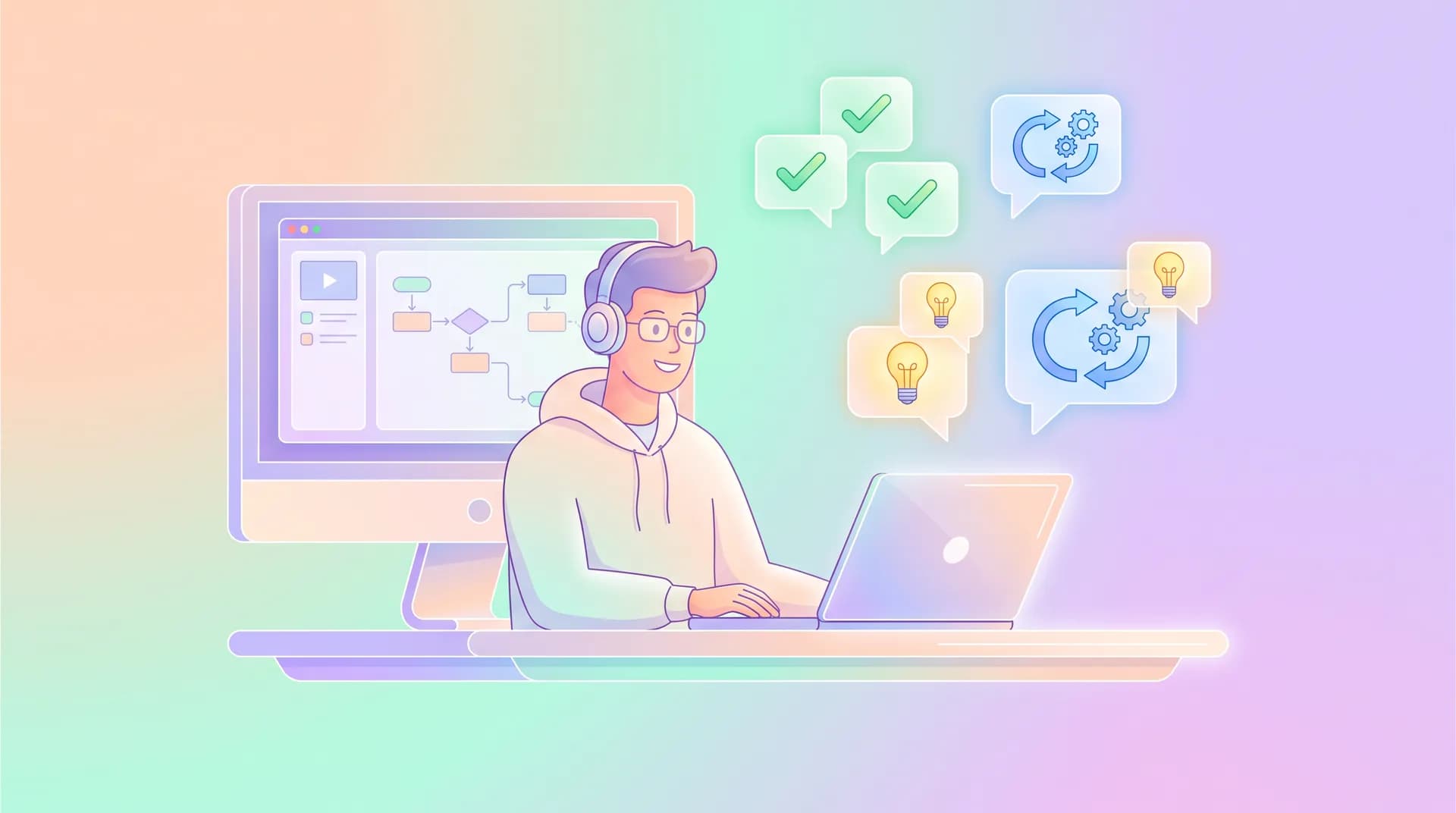
Creator-Led Product Education: Turning Expertise Into Onboarding
Creator led product education turns practitioner creators into onboarding educators who explain product value — not testimonials, not demos. Here's how it works.

Here's a pattern I keep seeing in B2B SaaS: the testimonial video gets the budget, the demo video gets the attention, and the thing that actually moves a hesitant buyer or a confused new user — a practitioner explaining why a feature matters — gets ignored entirely. That's the gap creator led product education fills, and almost nobody in the B2B creator space is doing it on purpose.
I've run Flare long enough to watch this play out across dozens of SaaS companies. Testimonials prove the product works. Demos show what it does. But neither one answers the question that actually stalls adoption: "okay, but why would I use this instead of what I'm already doing?" That's an education problem, not a proof problem or a feature-tour problem. And it needs a different kind of creator doing a different kind of job.
What creator led product education actually is
Creator led product education means a practitioner creator — someone who actually works in the role your buyer works in — explains your product's value using their own framework, their own language, and their own judgment about what matters.
It's not a script read by someone pretty. It's not a demo walkthrough hitting every menu item. It's a former RevOps manager explaining why attribution modeling in your tool solves a problem she had for three years, in her own words, with her own war stories attached.
The distinction matters because buyers can smell the difference between "I was paid to say this" and "I actually understand this." A testimonial says "this worked for me." Creator led product education says "here's how to think about this, and here's why it matters for someone in your seat." One is social proof. The other is a teaching asset that does real work during onboarding, not just during the sales call.
Why this is different from a demo video
A demo video is sequenced around the product — click here, then here, then here. It's useful, and I've written before about briefing workflows instead of scripts, but a demo's job is to show functionality exists. It doesn't argue for why the functionality matters to your specific job.
Creator led education is sequenced around the buyer's problem. The practitioner creator starts with the pain — "attribution reporting used to take me four hours every Monday" — and only gets to the product as the solution. That ordering is the entire trick. Buyers don't onboard faster because they saw more buttons. They onboard faster because someone credible told them which buttons actually matter and why.
Why this is different from a testimonial
Testimonial videos are retrospective and emotional: "I love this tool, it changed how my team works." Great for trust. I've covered the people side of that kind of content in picking your B2B voice between customer, employee, or creator, and it's worth doing well.
But testimonials aren't built to teach. They're built to reassure. Product education content has to be instructional — it needs a point of view, a sequence, a "here's what to do next." A happy customer saying "it's great" doesn't tell a confused new user which report to pull first. A practitioner creator walking through their actual weekly workflow does.
Why practitioner creators are the right fit for this job
Not every creator can do this work, and that's fine — it's not a knock on creators who are great at testimonials or polished demo footage. It's a different skill.
The creator needs three things:
Domain fluency first. They need to have actually done the job your buyer does, recently enough that their instincts are current. A marketing ops creator explaining attribution needs to have built attribution models, not just read about them.
A teaching instinct second. Some practitioners are fantastic at the job and terrible at explaining it. You want creators who've already built an audience by breaking down how they work — people who naturally narrate their thinking instead of just executing silently.
Independent judgment third. This is the part that scares a lot of marketing teams. A good creator led education piece includes opinions — "I skip this setting, it's not worth the time" — and that means ceding some control over the narrative. If your legal team needs every sentence pre-approved, this format will fight you the whole way.
I wrote a longer breakdown of how to source and vet these people in finding practitioner creators for your B2B influencer marketing strategy, and a deeper vetting framework in testing product knowledge first. Both matter more here than in almost any other B2B creator format, because the entire value proposition collapses if the creator doesn't actually know the domain.
Where this content actually lives in your funnel
Most teams default to putting creator content in top-of-funnel ads. That's a mistake for this format specifically.
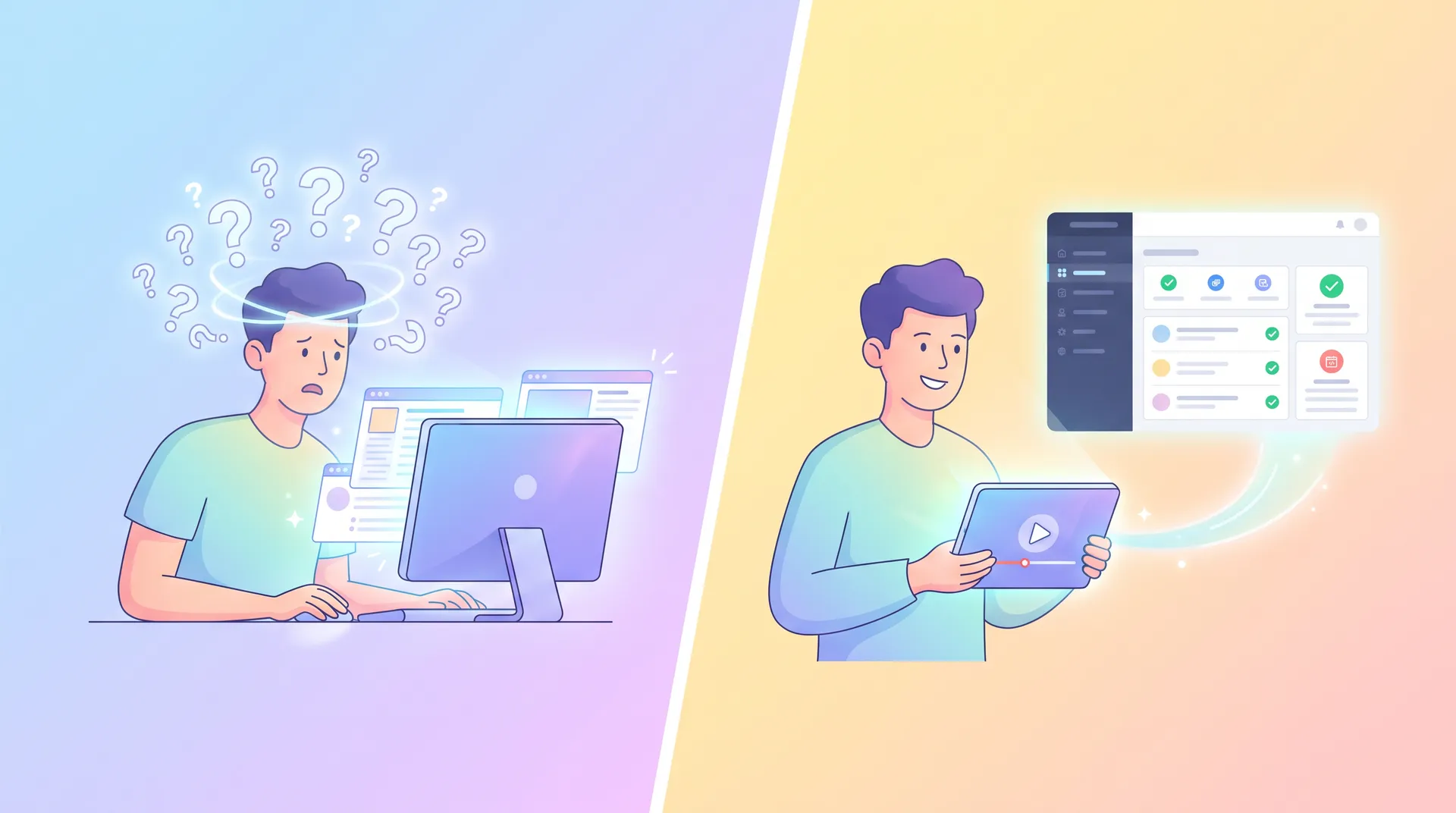
Creator led product education performs best inside onboarding flows, help centers, and post-signup email sequences — the moments where a user already bought in but hasn't found value yet. I've written before about how SaaS onboarding videos drive real user activation, and this is the content type that makes those videos land. A generic "here's the dashboard" tour doesn't activate anyone. A practitioner explaining why they check a specific metric every Monday morning does.
It also works well pre-sale, embedded on pricing or feature pages, for the buyer who's comparing three tools and needs someone to translate "what does this feature actually do for me." If your landing page is already matching promise, video, and CTA, swapping a generic feature video for a practitioner explainer tends to lift time-on-page and trial starts — we've seen this directly with Flare customers running side-by-side tests.
Don't gate this content behind a demo request. The whole point is removing friction for someone who's already evaluating or already signed up. Gating it defeats the purpose.
Picking the right practitioner for the right lesson
Match the creator's background to the specific job-to-be-done in the content, not to your broadest target persona. A practitioner creator who's great explaining reporting workflows isn't automatically good at explaining integrations or admin settings.
I'd rather use three narrow-fit creators across ten short modules than one broad-fit creator across everything. This connects to a point I keep making in job roles over follower counts: follower count tells you nothing about whether someone can teach your product. Relevant job history tells you almost everything.
A quick gut check before you brief anyone: could this creator explain your product's value to a stranger at a conference, from memory, without your deck? If not, they're not ready to be an educator — they might still be great for testimonials or demo-adjacent content.
Briefing for education, not for performance
This is where most B2B marketing teams mess it up. They hand the creator a script written like an ad and wonder why it feels hollow.
Brief the problem, not the lines. Give the creator the pain point, the outcome, and three or four things you want covered — then let them build the explanation in their own order, their own words. The same logic I use for demo briefs applies here even more strongly, because the whole value of this content is that it sounds like the creator actually figured something out, not that they're reciting your positioning doc.
Resist the urge to add every feature. Education content that tries to cover everything teaches nothing. One lesson, one outcome, one practitioner's honest opinion about what's actually worth the user's time.
This same discipline runs through the whole pillar conversation on B2B influencer marketing and creator partnerships — the brands winning with B2B creators aren't the ones producing the most content, they're the ones matching the right creator type to the right job in the funnel. Product education is one of those jobs, and it's consistently the most under-resourced one I see.
Measuring whether it's working
Don't measure this content like you measure ads. Views and clicks tell you almost nothing about whether education content is doing its job.
Track time-to-first-value in your product analytics for users who watched a lesson versus those who didn't. Track support ticket deflection on the specific topics the lessons cover. Track trial-to-paid conversion segmented by exposure to the content. If a practitioner's module on report-building correlates with users actually building reports in week one, that's the signal that matters — not watch time.
Resources like ProductLed's research on activation and Gainsight's work on customer onboarding back up the same point: activation metrics, not vanity metrics, are what tell you if education content is earning its keep. HubSpot's own state of customer onboarding data is worth a look too if you want benchmarks before you set targets.
Expect a lag. Education content compounds over months as it gets indexed in your help center and referenced in support tickets. Don't kill a module after two weeks of flat numbers.
FAQ
Frequently Asked Questions
What is creator led product education?
How is creator led product education different from a testimonial video?
Where should this content live in the funnel?
What makes a creator good at product education versus demos or testimonials?
How do you measure if creator led education content is working?
If you're building a B2B creator program and you've only budgeted for testimonials and demo assets, you're leaving the hardest part of the funnel — getting someone from signed-up to actually using the thing — completely uncovered. That's the part creator led product education is built for. Find the practitioners who can teach, brief them like educators instead of actors, and put the content where confused users actually are.
Related reading
- B2B Influencer Marketing: Building Creator Partnerships
- Finding Practitioner Creators for Your B2B Influencer Marketing Strategy
- B2B Creator Vetting Process: Test Product Knowledge First
- Software Workflow Demo Brief: Brief Workflows, Not Scripts
- SaaS Onboarding Videos: Driving Real User Activation
- Job Roles Over Follower Counts: SaaS Influencer Marketing