Marketing Channels for SaaS Companies: Pick Yours First
A founder's guide to picking marketing channels for SaaS companies based on where your actual buyer spends attention — not what's trending this week.

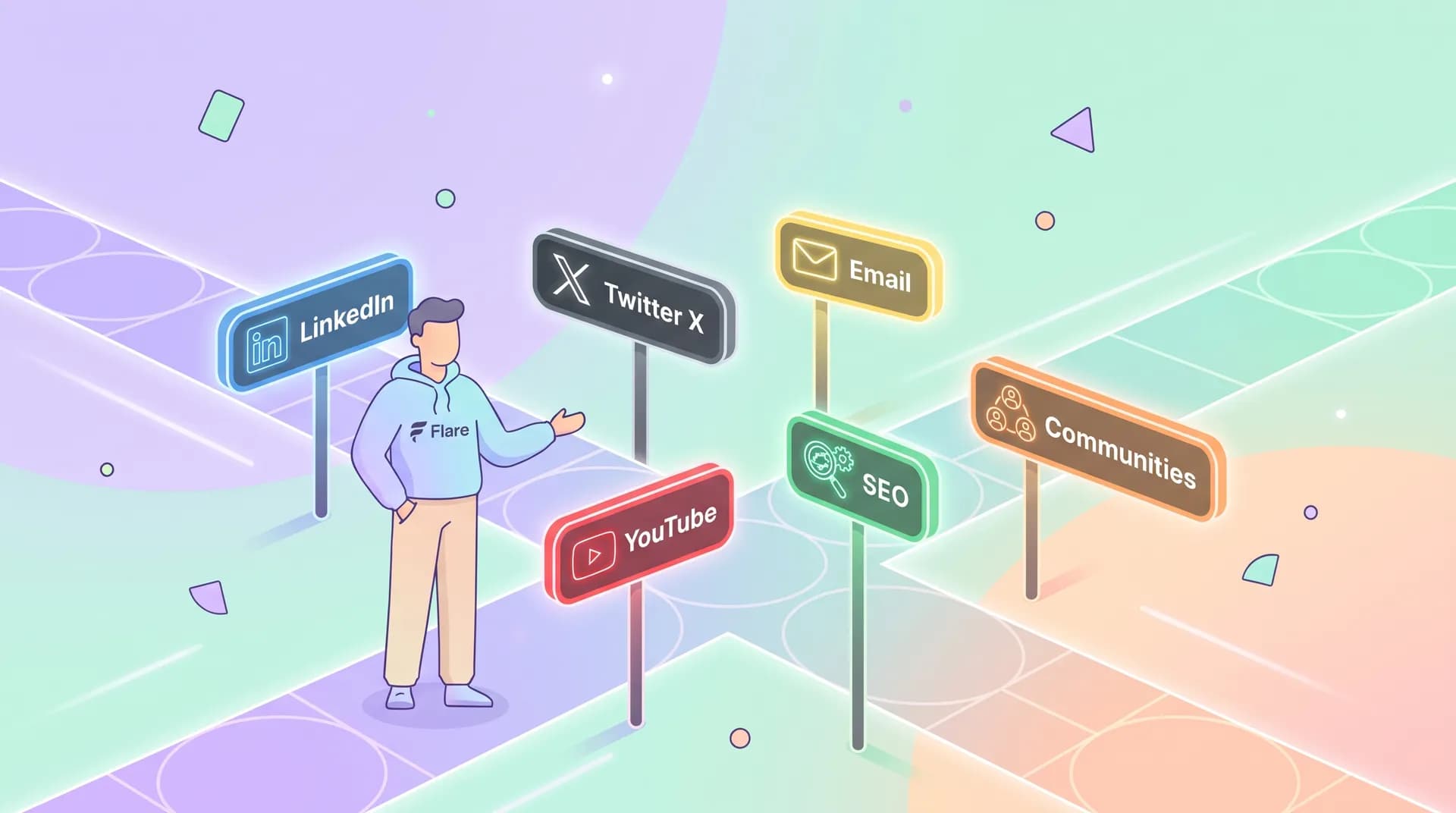
Most SaaS founders pick marketing channels the same way they pick a restaurant on vacation: whatever has the longest line. LinkedIn is hot right now, so they post on LinkedIn. A competitor ran a podcast tour, so they book one too. Six months later they've spread themselves across five channels, moved the needle on none of them, and burned the one resource they can't get back — their own time.
I did this in my first year running Flare. I had a newsletter, a LinkedIn habit, a half-started YouTube channel, and a Twitter account I posted to twice a week. None of it compounded because none of it was chosen on purpose. Picking the right marketing channels for SaaS companies isn't about being everywhere your competitors are. It's about figuring out where your specific buyer already pays attention, then showing up there consistently enough to become familiar.
This post is about that decision — not the tactics of any one channel, but the filter you run before you commit to one.
Marketing channels for SaaS companies start with the buyer, not the platform
Every channel decision I've seen go wrong starts with the question "what channel should we be on?" That's backwards. The right question is "who buys this, and where do they already spend unscheduled attention?"
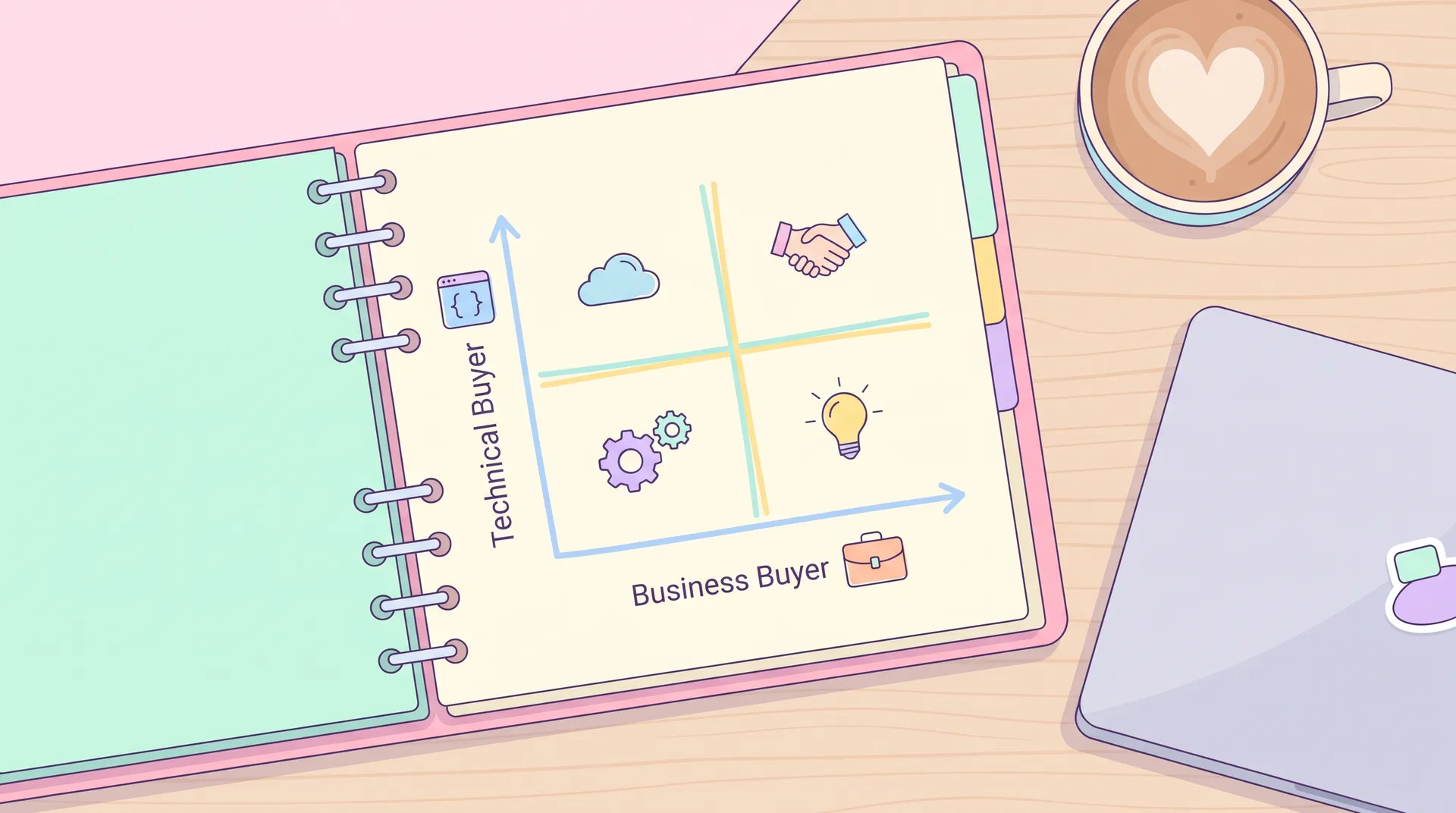
Technical buyers and business buyers don't live in the same places, and they don't respond to the same content. A developer evaluating your API doesn't care about your founder story on LinkedIn — they want a changelog, a GitHub repo, and maybe a technical deep-dive on Hacker News or a dev-focused subreddit. A VP of Marketing evaluating your analytics tool wants case studies, a peer recommendation, and a clean demo video on your landing page.
If you're building for developers, your channel mix probably looks like: documentation-as-marketing, GitHub presence, technical Twitter/X, Hacker News, and niche Discord or Slack communities. If you're building for operations or marketing leaders, you're closer to LinkedIn, industry newsletters, G2/Capterra reviews, and webinars.
I've watched SaaS founders burn a year trying to "do content" on LinkedIn for a product that developers buy. The content performs fine by vanity metrics — likes, comments from other founders doing the same thing — and converts almost nobody, because the buyer isn't reading LinkedIn during the day. They're in their IDE, in a technical newsletter, or scrolling a niche forum at 11pm.
Map attention before you map tactics
Before picking a channel, I ask three questions about the buyer:
- Where do they go when they have a real problem? Not where they're bored-scrolling — where they go with intent. Search, forums, Slack communities, colleagues.
- Who do they already trust? Is it other practitioners, analysts, their own network, or a specific influential voice in their space?
- What format do they actually finish? Technical buyers often finish long-form docs and short demo clips. Business buyers finish case studies and short video testimonials more often than long blog posts.
Answering those three questions honestly will eliminate half the channels people default to. It's a smaller list than most founders want, and that's the point.
Why founder-led content works across more channels than you'd think
Here's the thing that took me too long to learn: founder-led content isn't a channel. It's a supply of raw material that gets adapted for whichever channel your buyer actually uses.
A single 20-minute recorded conversation — you answering a real sales objection, or walking through why you built a feature a certain way — can become a LinkedIn post, a YouTube short, a quote in an email sequence, and a clip embedded on your landing page. The channel is downstream of the content, not the other way around.
I go deeper on how to structure this system in the pillar guide to founder-led marketing, but the short version for channel selection is this: don't pick a channel and then figure out what to say. Build a habit of capturing your actual expertise — the stuff that comes up on sales calls, support tickets, and churned-customer conversations — and then distribute it wherever your buyer already looks for proof.
If you're not sure what your raw material even is, start with how to find your founder point of view before you post. Most founders have opinions worth sharing; they just haven't noticed them yet because they sound obvious from the inside.
Matching channels to buyer type: a rough map
I'm going to give you a starting map. It's not gospel — every market has exceptions — but it's a far better starting point than "post everywhere."
Developer and technical buyers
- Documentation and changelogs that double as content
- GitHub, technical blogs, Hacker News
- Dev-focused Slack/Discord communities
- Short technical demo videos — not polished explainer-style, just screen-recorded proof
Mid-market business buyers (marketing, ops, sales leaders)
- LinkedIn, especially founder-voice posts, not brand-page posts
- Case studies and customer video testimonials — see matching video testimonials to your buyers' objections for how to pick the right proof points
- Industry newsletters and podcasts as guest appearances
- G2, Capterra, and peer review sites — buyers at this level check reviews before they take a call
Enterprise buyers
- Analyst relationships (Gartner, Forrester mentions carry real weight here)
- Warm introductions and account-based outreach over broad content
- Webinars co-hosted with a recognizable partner
- Detailed security/compliance documentation — often the actual deciding content
Consumer-adjacent or prosumer SaaS
- Short-form video (YouTube Shorts, TikTok, Reels) showing the product in actual use
- Creator and UGC partnerships rather than founder-only content — our guide to mobile app marketing with creator content covers this in depth if your product sits closer to consumer behavior
- App store optimization and in-store creative, if you're distributing through app stores — the funnel mechanics matter here too; see installs vs. activation if you're tracking the wrong number
Notice that founder-led content shows up in almost every category. The format changes — a technical screen recording looks nothing like a LinkedIn carousel — but the source is the same person with the same expertise.
Don't confuse "where I feel comfortable posting" with "where my buyer spends attention." Founders default to the channel they personally enjoy, which is a bias worth catching early.
The one-channel rule I wish I'd followed sooner
Pick one channel. Run it for 90 days before you add a second. I know that sounds slow when there are six channels screaming for your attention, but founder-led marketing dies from dilution more often than it dies from a bad channel choice.
Ninety days is roughly what it takes to figure out if a channel is actually working — long enough to post through a few dry weeks, test a handful of formats, and start to see which content resonates. Most founders quit a channel around week three, right before it would've started compounding.
When you do pick that first channel, pick based on two things: where your current best customers say they found you (ask them — this data is sitting in your CRM notes right now), and where you can sustain a weekly cadence without resenting it. A channel you hate will die regardless of how right it is on paper.
Once you have a working channel, repurposing gets a lot easier — I wrote about that system in how to repurpose founder video content into a content system, which is the natural next step once channel one is actually producing results.
Ask your last 10 closed-won customers one question: "Where did you first hear about us?" Don't guess. The answer is almost always more boring and more specific than founders expect.
Don't skip the content that sales already validated
One channel-selection mistake I see constantly: founders treat marketing channels and sales conversations as separate universes. They aren't. Every objection a prospect raises on a sales call is proof of what content is missing from your chosen channel.
If reps keep hearing "how is this different from [competitor]" on calls, that's a LinkedIn post, a landing page section, and a video script, not just a sales talk track. I wrote a full breakdown of this in turning sales call questions into SaaS founder content, and a companion piece on handling objections in sales video if your buyer type responds better to video than text.
This matters for channel selection specifically because it tells you what's actually converting attention into pipeline, versus what's just generating likes. A LinkedIn post that gets 40 reactions and zero demo requests is not a win, no matter how it feels to post it.
FAQ
Frequently Asked Questions
What are the best marketing channels for SaaS companies?
How many marketing channels should a SaaS startup use?
Is LinkedIn a good channel for B2B SaaS marketing?
Should SaaS founders do content marketing themselves?
How do I know which channel my SaaS buyers actually use?
Pick one channel this week. Not the one that's trending — the one where you can already name three customers who found you there. Everything else, including this whole cluster on founder-led marketing, works a lot better once that first channel is actually producing.