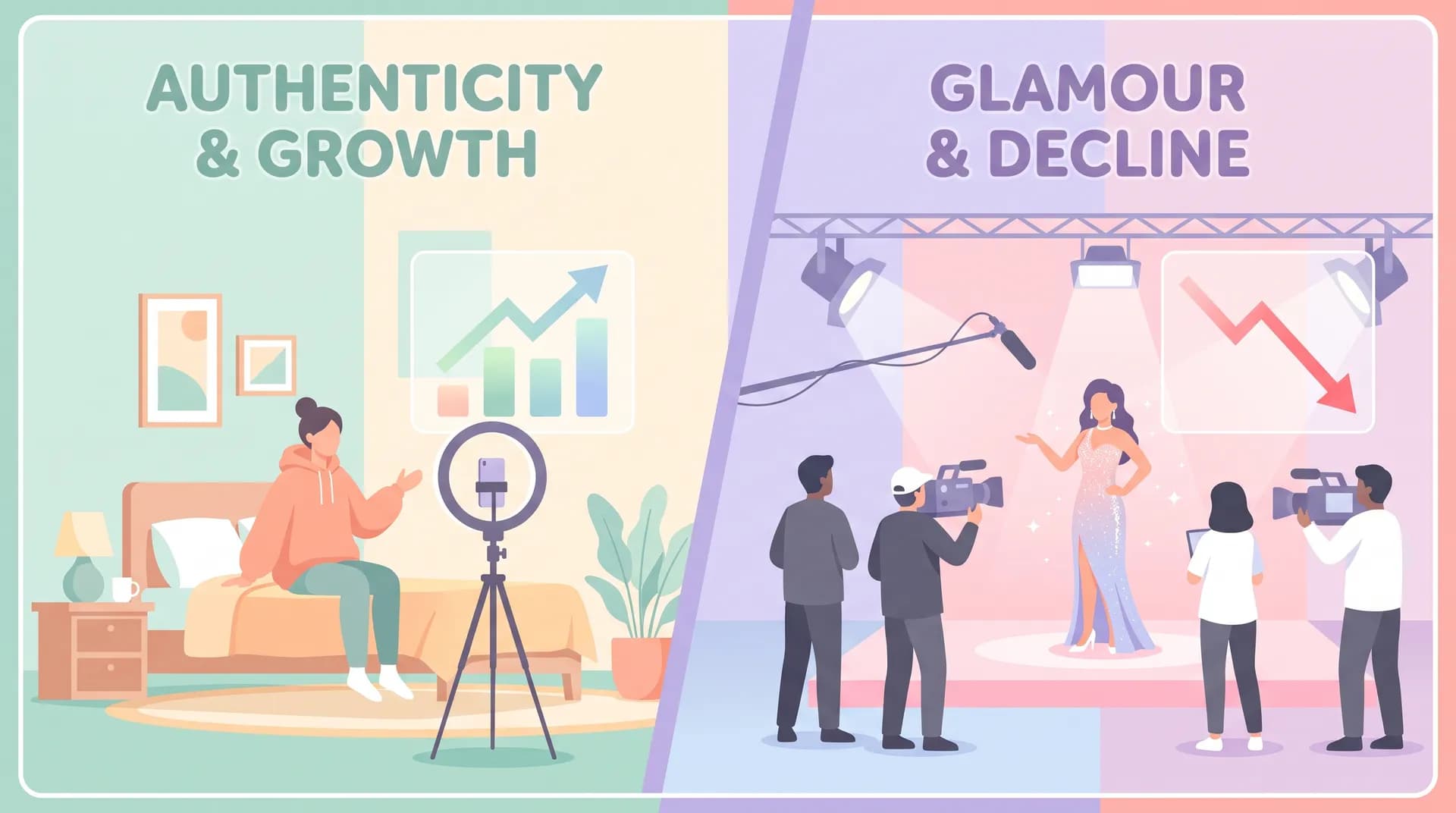
UGC Content vs. Influencer Ads: Which Performs Better?
I've watched brands waste $15K on influencer posts. Here's how paid UGC content stacks up against influencer sponsorships on ROAS, CPM, and brand safety.

A few months back, a DTC founder I know paid a mid-tier lifestyle influencer $12,000 for a single sponsored post. The post got 80,000 likes. It drove 43 orders. That's a ROAS of roughly 0.9 — she lost money on the deal.
Two weeks later, she spent $3,000 hiring three UGC creators, cut their videos into six ad variations, and ran them as paid social. Those ads returned 3.8x within a month and are still her top performers today.
Same product. Same audience. Same platform. The difference wasn't the product — it was the model. And after helping brands build UGC content pipelines at Flare for years, I've seen this exact scenario play out dozens of times.
Here's my honest breakdown of when UGC ads beat influencer sponsorships, when they don't, and how I'd split your budget if you're running paid social in 2026.
What UGC Content Actually Buys You (vs. What Influencers Sell)
Let's get the definitions out of the way fast, because people constantly conflate these.
Influencer ads = you're paying for distribution. The influencer has an audience, you rent access to it, they post (or you run their post as a whitelisted ad), and you hope their followers convert.
Paid UGC content = you're paying for creative. The creator makes the video, hands it over, and disappears from the equation. You own the asset, you run it as a dark post or Spark Ad, and you put it in front of whoever your ad platform thinks will convert.
That distinction — audience vs. asset — is the entire debate in one sentence. And it's why I think most brands are overpaying for influencers without realizing it. When you buy an influencer post, you're getting one shot at one audience with one creative. When you buy UGC content, you're getting an asset you can test, iterate, and scale for months. If you want the full framework, our UGC ads performance creative guide covers the whole system end to end.
The Numbers: ROAS and CPM Don't Lie
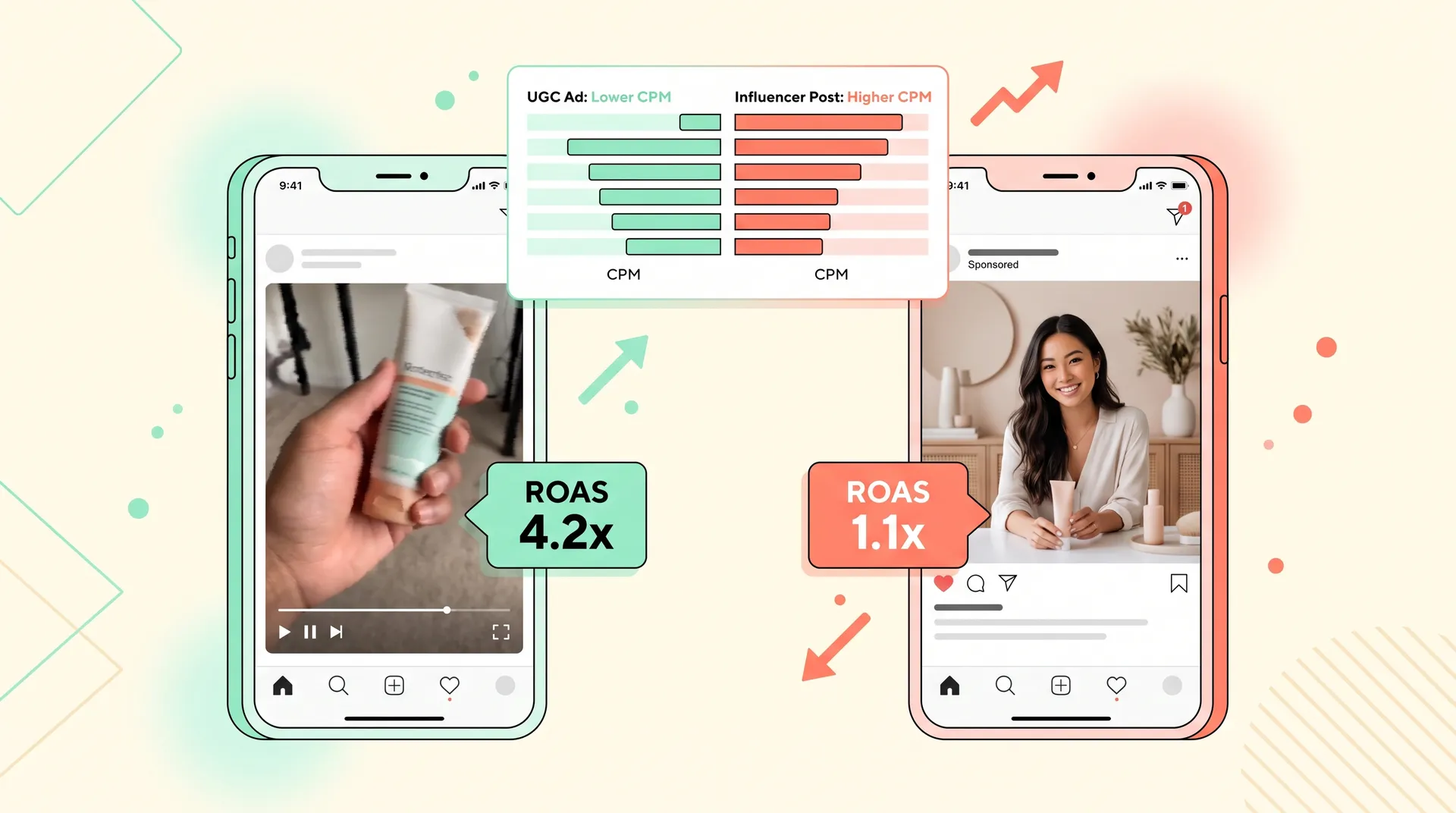
I'll be blunt: on pure performance metrics, paid UGC wins most of the time. Not always. But most of the time.
ROAS
Here's what I see across brands we work with at Flare:
- Well-run UGC ad programs: 2.5x–5x blended ROAS is realistic, and top creative hits 6x–8x on prospecting campaigns
- Influencer sponsorships: 1x–2x is typical, and honestly, plenty of campaigns never get measured at all
The dirty secret of influencer marketing is attribution. Brands track likes and comments and call it a win. Very few track incrementality properly. When they do — as several industry benchmark reports have found, including HubSpot's State of Influencer Marketing research — the measured return often disappoints compared to what the engagement numbers implied.
UGC ads have no such ambiguity. Every dollar in, every dollar out, tracked inside Ads Manager. If it doesn't work, you know within a week and you kill it.
CPM
Influencer posts feel "free" because there's no ad account line item. But do the math: $12,000 for a post that reaches 300,000 followers is an effective CPM of $40 — if the whole audience even sees it. Organic reach on a sponsored post is often 20–40% of followers.
Compare that to Meta or TikTok ad CPMs on raw, native-looking UGC content, which routinely clear $10–$20 on prospecting. And because UGC content doesn't look like an ad, it gets the engagement signals that keep CPMs low. That's exactly why UGC content outperforms polished ads on Meta and TikTok — the algorithm rewards what the audience rewards.
One more thing worth mentioning: creative longevity. An influencer post is dead in 48 hours. A winning UGC ad can run for 3–6 months before creative fatigue sets in, and when it does, you know the signals to watch for.
Why UGC Ads Win on Paid Social
Three structural reasons. None of them are about "authenticity" as a vibes-based argument.
1. You control the creative
With an influencer, you get what you get. They script it, they shoot it, and if the hook is weak, too bad — you already paid. With UGC creators, you brief them properly with a UGC ad shoot brief, review the cut, and request revisions before a single dollar goes to media. That's a different risk profile entirely.
2. You can test and iterate
Influencer content is a one-shot deal. UGC content is a testing asset. Cut six variations, A/B test the hooks, and scale the winner. If you want to be systematic about it, the A/B testing brief examples we wrote for UGC hooks will save you a lot of wasted spend. Brands that build a real creative iteration system don't rely on luck — they manufacture winners.
3. You're not hostage to one audience
The influencer's audience may not even be your buyer. I've watched brands pay premium rates to reach an audience that's 60% teenagers for a $180 product. With paid UGC, the ad platform finds your buyer wherever they are. You also avoid the awkward reality that a chunk of any influencer's following is bots and dormant accounts — industry analyses consistently estimate that fake follower rates across platforms run into the double digits.
The fastest way to blow your budget: buying influencer content AND paying premium rates to run it as an ad through whitelisting, without testing whether the creative actually converts. Buy the asset, test it cheap, then decide.
Where Influencer Ads Still Make Sense
I'm not telling you influencer marketing is dead. That would be lazy. Influencers still win in specific situations:
- Brand awareness at scale. If you're launching in a new market and want credibility transfer fast, a well-chosen influencer does something a UGC ad can't: they lend their reputation to you.
- High-trust categories. Skincare, supplements, finance — where an expert's face and name carry weight. A random UGC creator saying "this serum changed my skin" lands differently than a dermatologist-influencer saying it.
- Spark Ads from creators with proven content. The hybrid play. When an influencer's organic post already performs, running it as a TikTok Spark Ad gives you the best of both worlds. This is the one influencer tactic I'd genuinely endorse for performance budgets — and on Meta, the equivalent is creator whitelisting.
The mistake isn't using influencers. The mistake is using them for a job (direct response) they were never designed to do.
Brand Safety: The Comparison Nobody Talks About Enough
Here's an angle most comparisons skip, and it matters more every year.
When you sponsor an influencer, your brand is attached to a human being you don't control. They can post something controversial the week after your campaign. Their comment sections can turn. Their audience can turn on you — I've seen brands get brigaded for an influencer's offhand comment. There's no kill switch for someone else's reputation.
With UGC ads, the risk is contained. You vet the creator before hiring (there's a process for that), the content lives in your ad account, and you run it as dark posts — invisible to their profile, fully under your control. If a creator later does something damaging, the ad comes down in ten seconds. The influencer relationship? That's a press release problem.
For regulated industries, this control gap alone justifies the UGC shift.
How I'd Split Your Budget
If you're a brand spending, say, $20K/month on creator marketing, here's the allocation I'd defend:
- ~70% on paid UGC content. Hire 4–6 creators per product line monthly, brief them tight, and build a repeatable creator pipeline. Test relentlessly.
- ~20% on whitelisted/Spark Ads from creators whose organic content performs. This is the influencer-UGC hybrid at its best.
- ~10% on pure influencer sponsorships for launches, credibility plays, and category trust-building. Measure it with promo codes and hold out a control audience — or accept that this budget is awareness, not performance.
Will some influencer agency tell you this is heresy? Sure. But the brands quietly moving 70% of their budgets to creator-made ad content are the ones posting 4x ROAS while everyone else argues about engagement rate.
The future isn't UGC or influencers. It's creators making ad-ready content, brands owning the assets, and paid social deciding the winners. The brands that figure this out in 2026 will outspend — and outperform — everyone still paying $12K for one post.
Frequently Asked Questions
Do UGC ads perform better than influencer ads?
What's the difference between UGC content and influencer marketing?
How much should UGC content cost versus an influencer post?
Can I run influencer content as paid ads?
Why are UGC ads cheaper to run than influencer sponsorships?
Is influencer marketing still worth it in 2026?
Related reading
- UGC ads: the complete performance creative guide
- Why UGC content beats polished ads on Meta and TikTok
- Creator whitelisting for Meta ads: what you need to know
- Dark posts and UGC: how brands run ads invisibly
- How to Build a UGC Ad Creative Iteration System That Scales
- The UGC ad shoot brief: direct creators for paid social