Building a Repeatable UGC Creator Pipeline for Your Brand
Learn how to build a repeatable UGC creator pipeline that sources, briefs, delivers, and renews creators — producing 20-50 fresh assets a month, on schedule.

Last year I watched a DTC skincare brand burn through 14 ad creatives in three weeks. Not because the ads were bad — they were fine. They died because there was nothing behind them. The media buyer was waiting on a one-off creator collab that stalled in email, and by the time the new videos showed up, CAC had climbed 40% and the whole channel was bleeding.
That brand didn't have a UGC creator pipeline. It had a fire drill that repeated every month.
There's a difference, and it's the difference between UGC being your most predictable acquisition channel and UGC being a constant source of stress. If you're serious about creator content as an acquisition engine — not just a nice-to-have — start with the full UGC marketing framework, then come back here. This article is the operational layer: how to build the machine that produces 20–50 new assets a month without heroics.
What a UGC creator pipeline actually looks like
Most brands treat UGC like influencer marketing's cheaper cousin: find a creator, do a deal, get videos, move on. That's campaign-chasing. It guarantees two things — inconsistent volume and inconsistent quality.
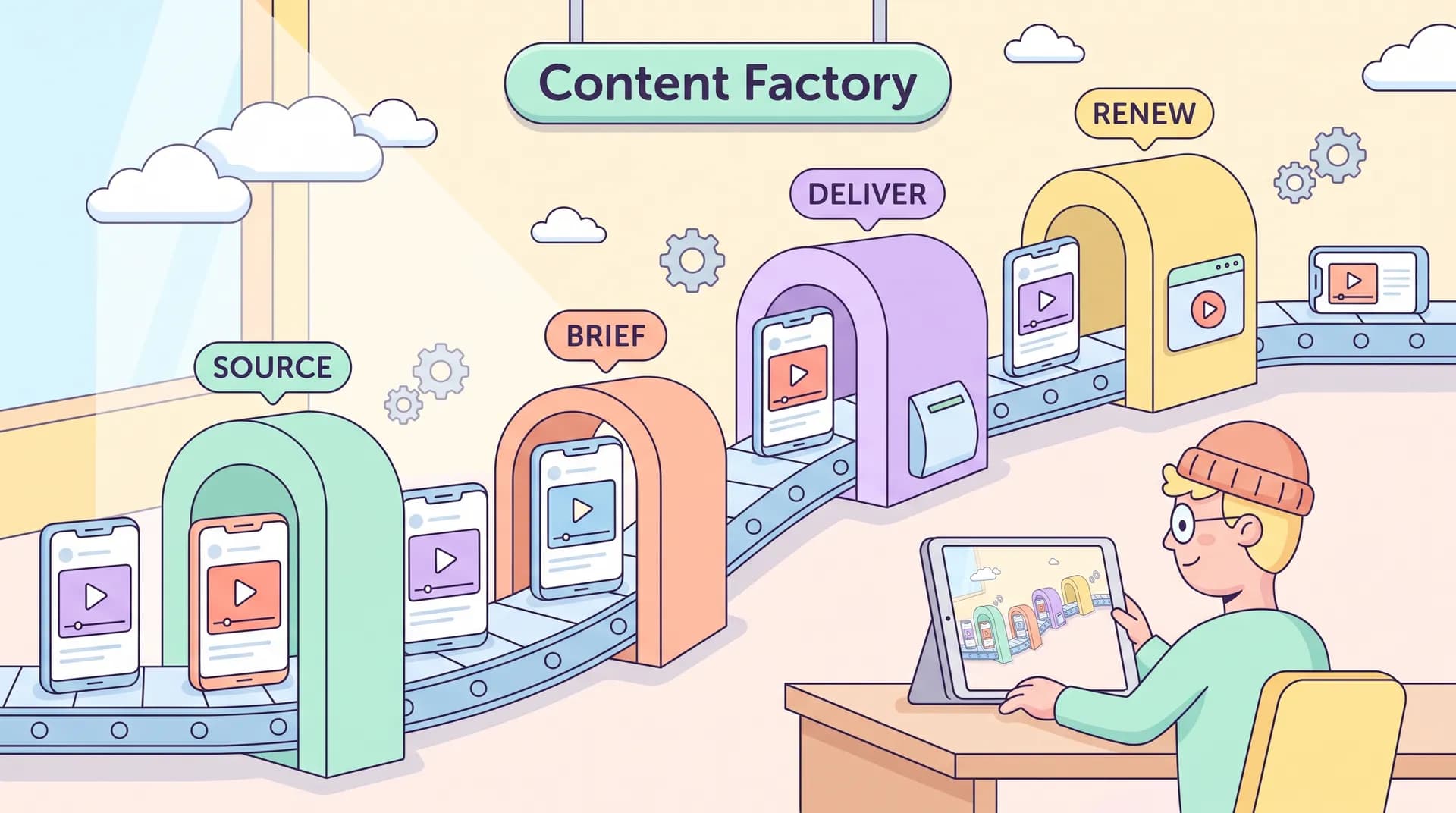
A pipeline is the opposite. It's always-on. Sourcing never stops, briefing is templated, delivery has deadlines and quality gates, and your best creators get renewed before they go cold. The output is predictable enough that your media buyers can plan around it.
Here's the part most teams get wrong: a pipeline isn't "more creators." It's stages with owners and SLAs. If nobody owns sourcing this week, you don't have a pipeline. You have a contact list.
I've seen teams of two run pipelines producing 30+ assets a month, and I've seen eight-person marketing teams fail to ship ten. Team size isn't the variable. Process is.
The four stages of a UGC creator pipeline
I think about a pipeline as four stages: sourcing, briefing, delivery, and renewal. Each one feeds the next, and each one has a failure mode that quietly kills your volume. Let's go through them.
Stage 1: Sourcing — always-on, not panic-driven
Panic-driven sourcing looks like this: ad performance dips, someone scrambles to a marketplace, posts a campaign, waits two weeks for applicants, screens them badly because they're rushed, and hires three creators who've never made a video in your niche.
Always-on sourcing looks like this: you add 10–15 vetted creators to a shortlist every single week, even when you don't need them. You keep a bench. When a brief goes live, you're picking from 40 pre-vetted people instead of gambling on whoever applies.
Practically, that means:
- Set a weekly sourcing quota. Mine is 15 new prospects reviewed, 5–8 added to the bench. Non-negotiable, even in good weeks. Especially in good weeks.
- Pull from multiple sources. UGC marketplaces and creator platforms are one channel — the fastest one — but the best creators I've found came from TikTok's Creative Center, comment sections of competitors' ads, and organic hashtags in our niche.
- Vet before you need them. We keep a one-page scorecard per creator: niche fit, past ad performance if visible, audio/video quality, response speed, price band. Our full creator vetting checklist covers the brand-safety side too — that part is not optional.
Aim for a bench of 30–50 vetted creators before you standardize anything else. A bench of ten will fail you the first time three deliverables are late in the same week. It always happens.
Stage 2: Briefing — templated, or it's chaos
The single biggest cause of unusable UGC isn't bad creators. It's bad briefs. I've reviewed hundreds of rejected videos, and the majority failed because the creator was guessing at what the brand wanted.
Your briefing stage should be almost entirely copy-paste:
- A locked brief template with product info, hook angles, deliverable specs, and must-say / never-say lists. If you don't have one, steal our UGC campaign brief structure — it's the one we use at Flare.
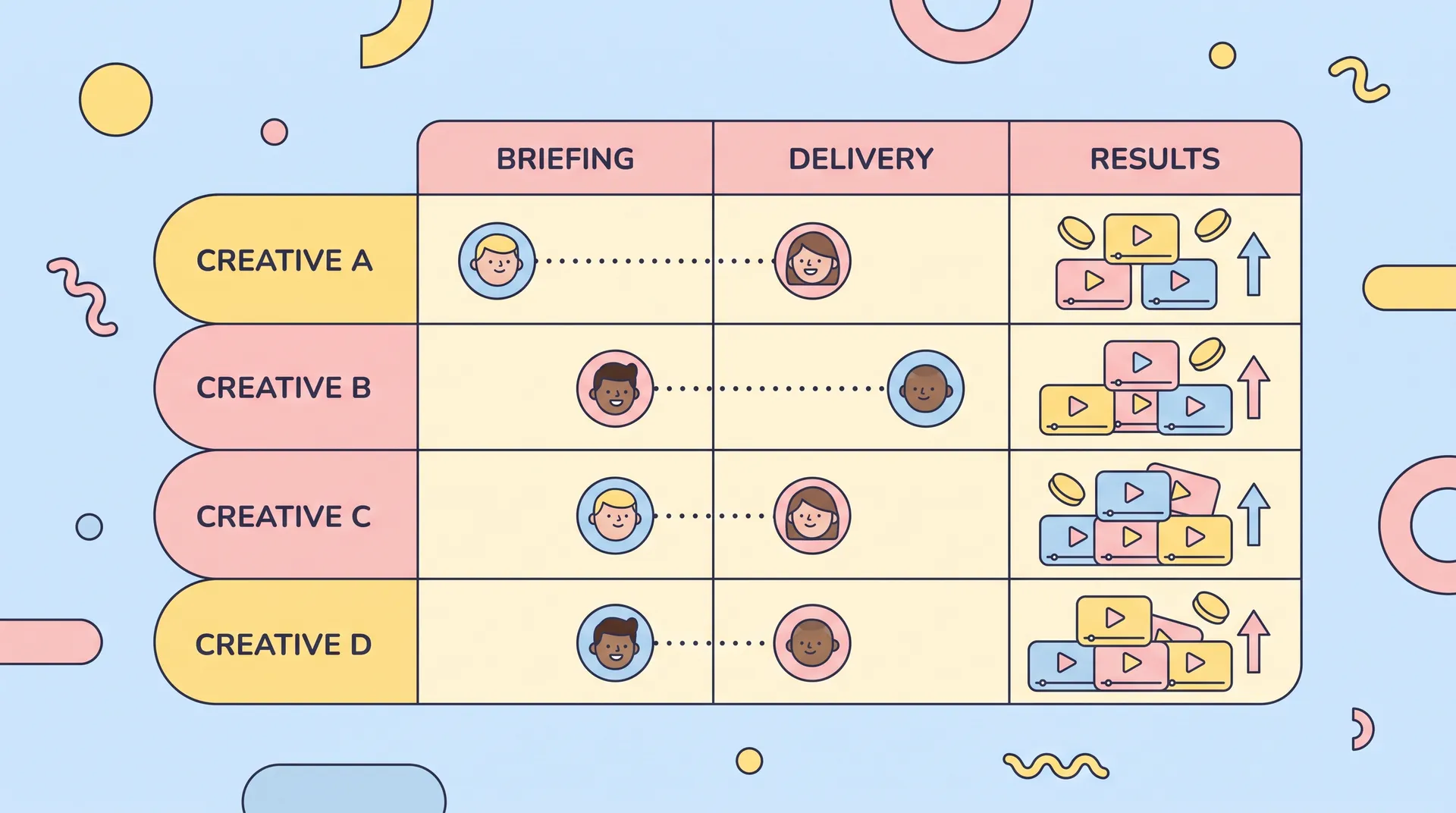
- A standard deliverable package. Ours is 3 videos per brief: 1 hero concept plus 2 hook variations, shot vertical, with raw files included. Standardized packages mean creators know exactly what to quote and you know exactly what lands in your ads manager.
- A capped revision policy — one revision round, included in the price. Uncapped revisions teach creators that your briefs are optional.
Briefs for paid social differ from briefs for organic. If you're running creator content as ads, be explicit about hooks, pacing, and the first three seconds — or better, give creators proven hook frameworks to test against rather than one script you wrote in a vacuum.
Stage 3: Delivery — deadlines, file standards, and a quality gate
This stage is unglamorous and it's where pipelines live or die. Set expectations in writing before anyone films anything:
- Delivery window: 7–10 days from brief acceptance. Pay half upfront if you want real compliance — creators who've been ghosted before will deprioritize unpaid-overn projects, and I don't blame them.
- File standards: raw plus edited, platform-native dimensions, named files (
brand_creator_video1_final.mp4, notuntitled_12.mp4). Sounds pedantic. Saves hours. - A quality gate before payment: one person reviews every asset against the brief before the invoice is approved. Ten minutes of review beats a week of back-and-forth after you've paid.
When assets land, they go into a shared library your media buyers can actually access — organized by product, hook angle, and creator. If your ads team is asking a coordinator to "email over that one video from last month," your delivery stage is broken.
Stage 4: Renewal — the most neglected, most profitable stage
Here's an uncomfortable stat for how most brands operate: the cheapest, best-performing creators you have are the ones you've already worked with. Yet most brands let relationships go cold after one project and re-enter the expensive sourcing lottery every month.
Build renewal into the pipeline:
- Tier your creators. Tier A (produced winning ads) gets first offer on every brief and premium rates. Tier B gets repeat briefs. Tier C gets one more chance or gets benched.
- Re-book fast. Within a week of a good delivery, offer the next brief. Creators plan income around reliable clients — the ones I talk to at Flare say predictable repeat work matters more than a 15% rate bump.
- Track performance per creator. Which creator's videos hold CPA after $50k in spend? That's your most valuable data. If you're not measuring UGC ROI and creative performance, you're renewing on vibes.
Renewal is also where usage rights get cheaper per asset — bundled multi-month deals almost always beat one-off rates. Know what rights you actually need before you negotiate; creators price usage rights carefully, and so should you.
The math: how 20–50 assets a month actually happens
Let's make this concrete, because "always-on pipeline" is meaningless without numbers.
Say you want 30 assets a month. At a standard package of 3 videos per brief, that's 10 active briefs per month. With a realistic 70% on-time delivery rate, you need 13–14 briefs out to stay at 30.
To launch 14 briefs a month, you need roughly 20–25 active creators rotating (assuming 2 briefs per creator per month for your best ones, 1 for newer ones). To support 25 active creators, you need a bench of 40+ vetted people, which at 8 additions per week takes about two months to build from scratch.
That's the honest ramp. Month one you're at 5 assets. Month three you're at 20. Month five you're at 35+ and your media buyer stops asking where the creative went. Budget accordingly — our UGC budget breakdown covers realistic spend bands, but plan for the ramp, not the fantasy version where volume arrives in week two.
Every brand I've worked with wanted month-five output in month one. The brands that won were the ones who protected sourcing time during the slow early weeks — that's when the bench gets built.
Mistakes that kill pipelines
A few failure patterns I see over and over:
One person owns everything. When your only coordinator goes on vacation, the pipeline stops. Split it: one owner for sourcing, one for delivery QC, even if they're the same person wearing both hats on paper.
No rejection data. Brands that can't tell me why an asset failed keep buying the same failing content. Log every miss: weak hook, off-brand tone, bad lighting, whatever. Patterns show up within a month.
Chasing follower counts. You're buying content, not audience. A 900-follower creator who ships clean, on-brief video is worth more to a pipeline than a 200k influencer with a manager and a three-week negotiation timeline. If you're still torn on this, read our UGC vs. influencer budget comparison — the economics aren't close.
No creative feedback loop. Your creative testing results should rewrite your next brief. If winning hooks from last month aren't in this month's brief template, the pipeline is producing content, not performance. Meta's business resource hub has good material on creative iteration if you want a second opinion on the testing cadence.