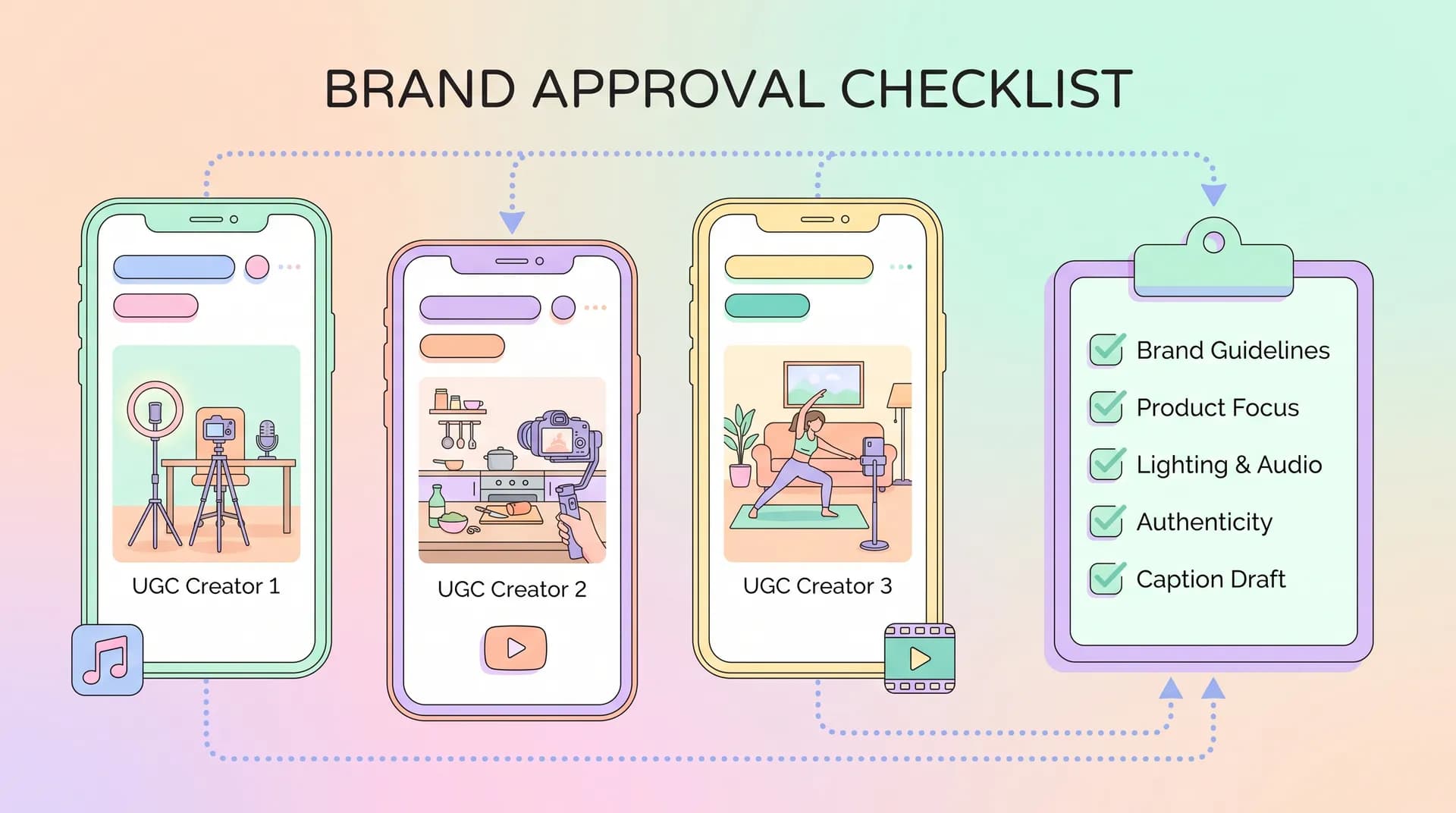
What Brands Expect From UGC Creators by Platform in 2025
What brands expect from UGC creators by platform in 2025: brief formats, approval steps, and output standards across TikTok, Reels, and Shorts.

I've read hundreds of UGC briefs from brands running campaigns across TikTok, Reels, and Shorts. The single biggest mistake creators make isn't bad lighting or a weak hook — it's treating all three platforms like the same deliverable with a different export ratio. They're not. Brands know this, even when their briefs don't spell it out clearly, and they judge your work against platform-specific standards whether or not anyone told you what those standards are.
I built Flare because I kept seeing creators get rejected or asked for endless revisions over things that had nothing to do with talent. It was almost always a mismatch between what the creator delivered and what the brand actually expected for that specific channel. So let's get into exactly what brands expect from UGC creators by platform, because the gap between "good content" and "content that gets approved" is smaller than you think — and it's almost entirely about knowing the rules of the room you're in.
What brands expect from UGC creators by platform: the baseline
Before we split things out by channel, there's a baseline every brand expects no matter where the content ends up:
- Raw, unedited footage delivered alongside (or instead of) a final cut, so their internal team or agency can re-cut for ads
- Vertical 9:16 filming, shot natively, not cropped from horizontal
- Clean audio with no background music baked in, since most brands add their own or run it through Spark Ads / Meta whitelisting
- A hook within the first 2-3 seconds that matches the tone of the brief, not just something you thought was catchy
- Multiple takes of the same script so they can pick the best delivery or split-test hooks later
That last point catches a lot of creators off guard. Brands running performance campaigns almost always want variations, not one "perfect" take. If you're new to how brands structure these asks, our guide on creative brief examples for UGC hook A/B testing breaks down exactly how that variation request usually looks in a real brief.
Once you clear that baseline, expectations diverge hard by platform. Here's where it gets specific.
TikTok: native-first, imperfect, fast
Brands commissioning for TikTok want content that looks like it was never meant to be an ad. That's not a nice-to-have — it's the entire value proposition of UGC on this platform. If your footage looks like a commercial, you've missed the brief.
What they're actually checking for:
- Trend-literate pacing. Cuts every 1-2 seconds in the first half, not slow builds. If you want to see what this looks like in practice, our breakdown of TikTok UGC hook examples shows the exact patterns brands keep re-requesting.
- Text overlays that read like captions, not ad copy. Lowercase, conversational, sometimes with a typo left in on purpose because it reads as more human.
- Sound choices that feel current. Brands increasingly ask for trending audio layered under voiceover rather than fully original scores — something we cover in our TikTok sound strategy piece.
- Shorter total runtime. Brands optimize for completion rate, and on TikTok that usually means 15-34 seconds unless it's a tutorial or demo format. There's a full data breakdown in TikTok UGC video length: what actually performs in 2025.
If you're building out a TikTok-specific workflow from scratch, I'd start with the TikTok UGC platform playbook — it's the deepest resource we've published on what "native" actually means mechanically, not just aesthetically.
One more thing brands expect on TikTok specifically: Spark Ads authorization. If the brief mentions running your video as a paid ad through your handle, they'll need a code from your account settings. Creators who don't know this ask exists slow down the whole campaign timeline and brands notice.
Instagram Reels: polished but personal
Reels briefs read differently the moment you open them. Brands still want authenticity, but they're more tolerant — sometimes expectant — of slightly higher production value. A stabilized shot, a color-graded feel, a few seconds of B-roll intercut with talking-head footage. None of that reads as "too polished" on Reels the way it would on TikTok.
Brands expect:
- Cleaner framing and composition. Rule-of-thirds product placement, steadier movement, better use of negative space for text overlay
- Slightly longer format tolerance, often 20-45 seconds, especially for demo or testimonial-style content
- Carousel-adjacent thinking, meaning some brands want a Reel plus 2-3 still frames pulled for feed or Story reposting
- Save-and-share triggers baked into the content — a tip, a stat, a before/after — because Reels' distribution still rewards saves heavily
If you're producing for a brand that's also running the same product across Reels and TikTok, don't just re-export the same file. Our piece on Instagram Reels UGC native formats goes deeper into what actually needs to change between the two, and it's usually more than people assume — pacing, framing, and even how explicit the CTA can be.
YouTube Shorts: the outlier brands still misjudge
Shorts is where I see the most brand confusion, honestly. A lot of marketing teams still treat it as "TikTok but on YouTube," and that assumption shows up in briefs that don't fit the platform at all.
What brands should be expecting — and increasingly are, once they've run a few campaigns:
- Slightly more informational framing. Shorts audiences skew toward search-driven discovery, so a video titled or hooked like "3 things nobody tells you about X" outperforms a pure trend-chase format
- Text-light delivery. Because Shorts autoplay and loop differently than TikTok's For You feed, heavy text overlay can feel cluttered rather than helpful
- Longer shelf life expectations. Brands often ask creators to make Shorts content that doesn't rely on a trending sound, because Shorts content tends to get discovered weeks or months after posting, unlike TikTok's faster decay curve
- Clear deliverable specs on thumbnail-adjacent framing, since the first frame functions almost like a thumbnail in the Shorts shelf UI
We wrote a full deliverables breakdown in YouTube Shorts UGC: deliverables brands can actually use if you're getting your first Shorts-specific brief and want to avoid the "wait, why did they reject this" conversation.
If a brief doesn't specify platform-specific specs, ask. I'd rather a creator send one clarifying message than deliver three versions of the wrong thing. Brands respect the question — it signals you've done this before.
Approval workflows: what actually happens after you hit send
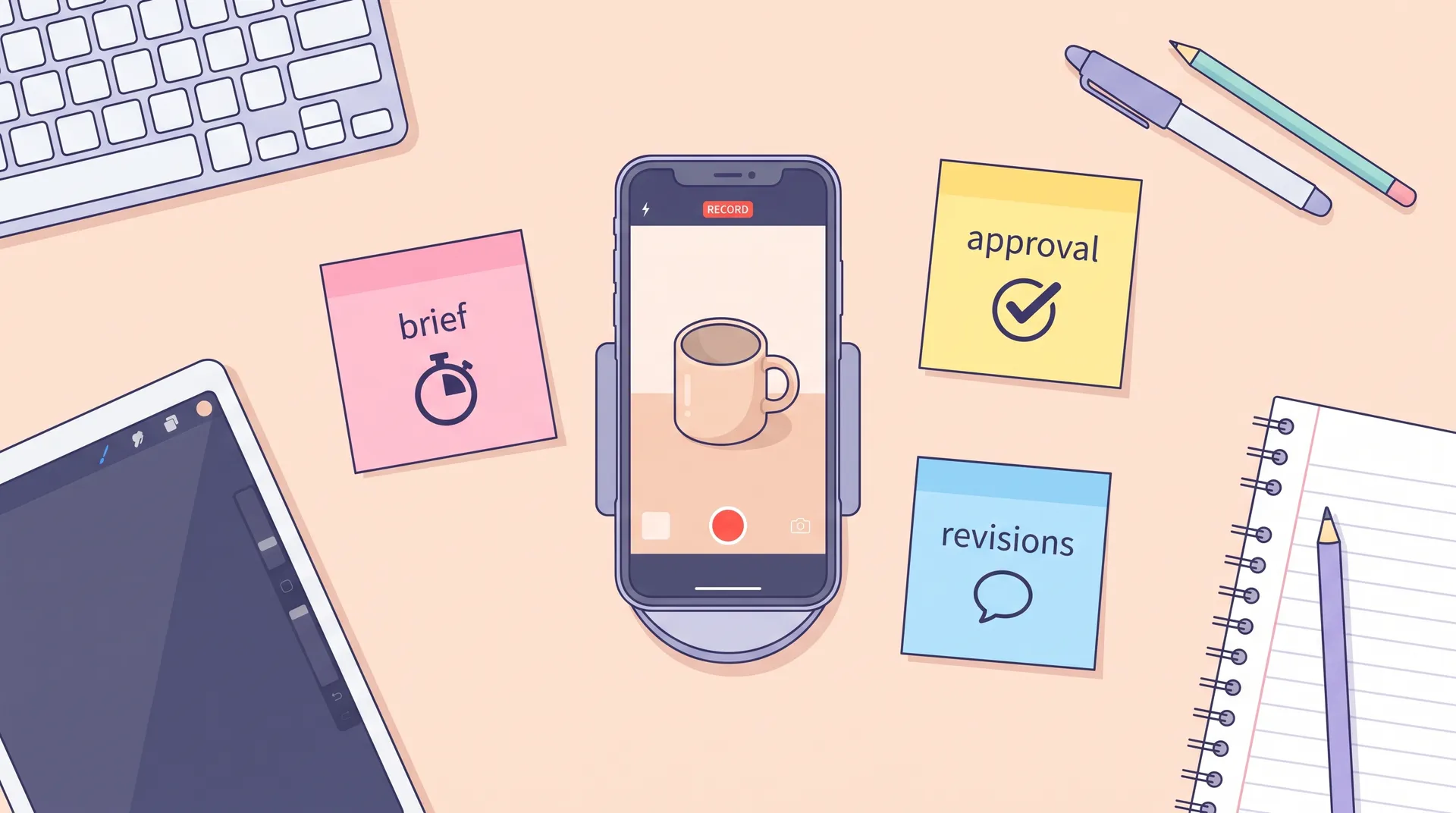
Here's the part nobody explains well. Brands don't just watch your video and say yes or no. Most run it through a structured approval chain, and knowing the stages helps you avoid getting stuck in revision purgatory.
- Script or outline approval — happens before you film, usually against a brief similar to what we cover in how to read a UGC campaign brief
- Raw footage or rough cut review — the brand or their agency checks pacing, product visibility, and compliance claims here
- Platform-specific formatting pass — this is where text overlay placement, caption style, and aspect ratio get checked against the target channel's norms, similar to what we outline in the UGC text overlay guide
- Legal/compliance sign-off — especially in regulated categories like supplements, finance, or beauty, where specific claims can't be made on camera
- Usage rights confirmation — before the brand runs your content as a paid ad, they'll confirm what rights they've licensed, which is a separate conversation from the organic post itself; our guide on UGC ad usage rights covers what to negotiate here
The revision requests you get almost always map back to one of these five stages. If you know which stage flagged your content, you can fix it in one pass instead of guessing.
Ask which stage of approval a revision note is coming from. "Compliance flagged the claim in your script" and "our creative lead thinks the hook is weak" require completely different fixes, and brands will tell you if you ask directly.
Output standards that separate pros from beginners
A few standards keep showing up in every serious brief I've seen, regardless of platform:
- File naming conventions — brands managing dozens of creators need your files labeled clearly, not "IMG_4821.mov"
- Delivery within 48-72 hours of filming, not weeks later when the campaign moment has passed
- A short caption suggestion included with your delivery, even if the brand writes their own final copy
- Willingness to do one round of free revisions, capped — which is also why your contract should specify that cap up front
If you're still building your process for taking on multiple brand deals at once, cross-posting the same core content across all three platforms without it feeling recycled is its own skill. We go deep on that in how to cross-post UGC across TikTok, Reels, and Shorts.
FAQ
Frequently Asked Questions
What do brands expect from UGC creators on TikTok specifically?
Is the same UGC video okay to post on TikTok, Reels, and Shorts?
How long does brand approval usually take for UGC content?
Do brands expect raw footage in addition to the final video?
What's the biggest difference between what brands want on Reels versus TikTok?
Why did my UGC video get rejected even though it looked good?
Every campaign I've watched succeed had one thing in common: the creator understood the platform's unwritten rules before the brand had to explain them. That's the actual skill brands are paying for now — not just filming ability, but platform fluency. Build that fluency once, and every brief you read afterward gets a lot easier to execute against.